




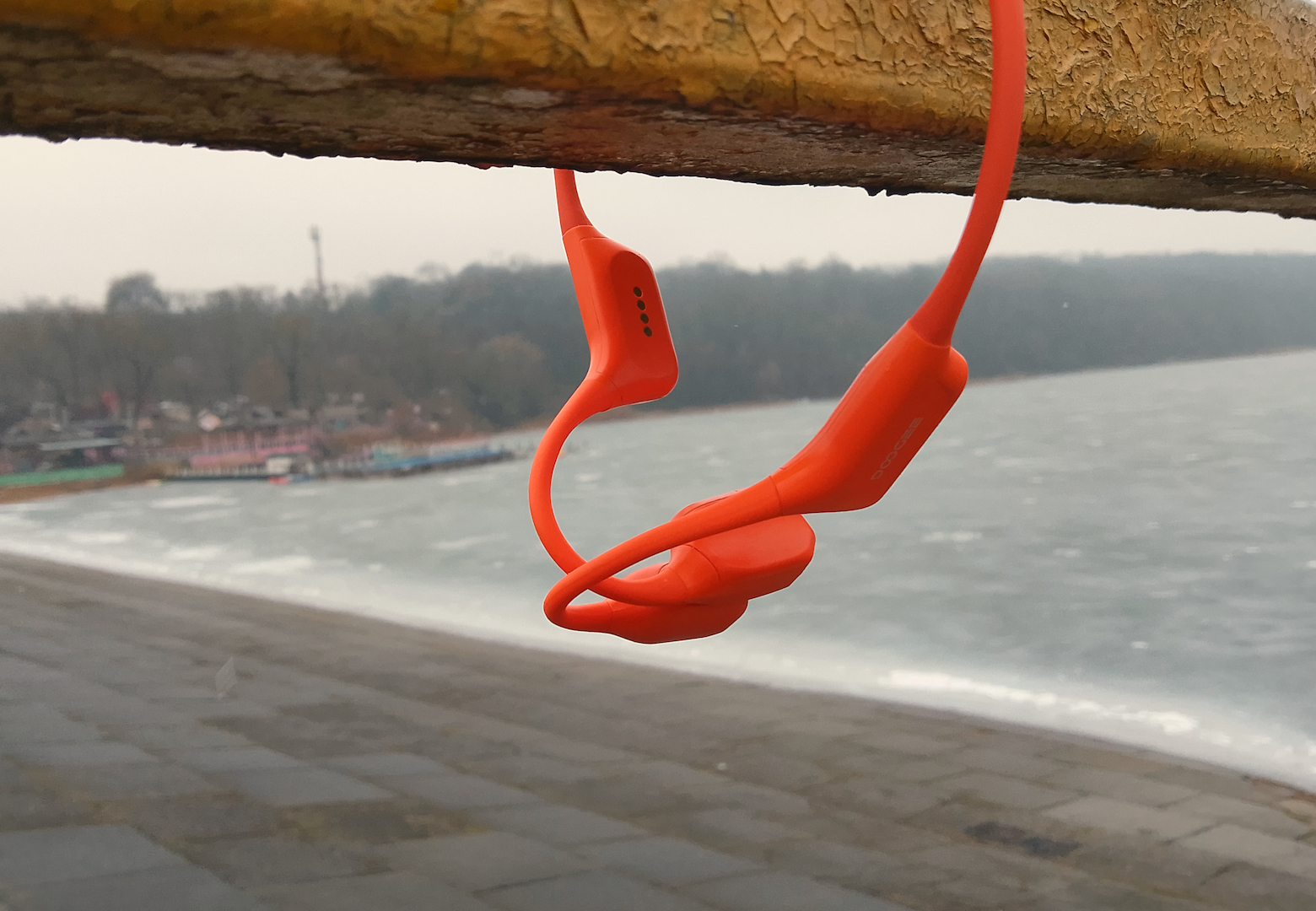
Doogee BoneAir Swim hands-on: The state of bone sound conduction in 2026
Versatile.
The Doogee BoneAir Swim is an IP68-rated bone-conduction headset aimed at sports use, offering 64 GB of onboard storage for phone-free playback, among other benefits. It can sound very different depending on how you use it and seems like a practical but ultimately rather niche way to get your music fix on the go.Sergey Tarasov Published 🇫🇷 🇪🇸 ...
While bone sound conduction has been around for a while, few high-profile brands have given the technology a go so far, Creative being a notable exception to the rule. Headphones of this kind just do not sound as nice as good ol' dynamic models with decently sized drivers.
On the other hand, dynamic-driver headphones and earbuds are not great for sports that involve lots of rapid movement, or frequent contact with water. This is where the product we are about to put through its paces shines, and it's no coincidence that Doogee's BoneAir Swim has the word "swim" in its name.
Priced at ~$86 on Aliexpress, the compact and lightweight enough headphones (Doogee website) are IP68-certified, meaning, not afraid of liquids like water, and are available in 3 colors - dark gray, a noticeably lighter gray, and orange. The headphones have 64 GB of built-in flash storage and can play music completely on their own, but that drains the internal 140-mAh battery faster than streaming music from a phone or smartwatch. Real multipoint is supported, meaning BoneAir Swim switches between the devices connected to it via Bluetooth instantaneously. Calls are supported as well (there is a mic built in).
Pros
Cons
Build and accessories
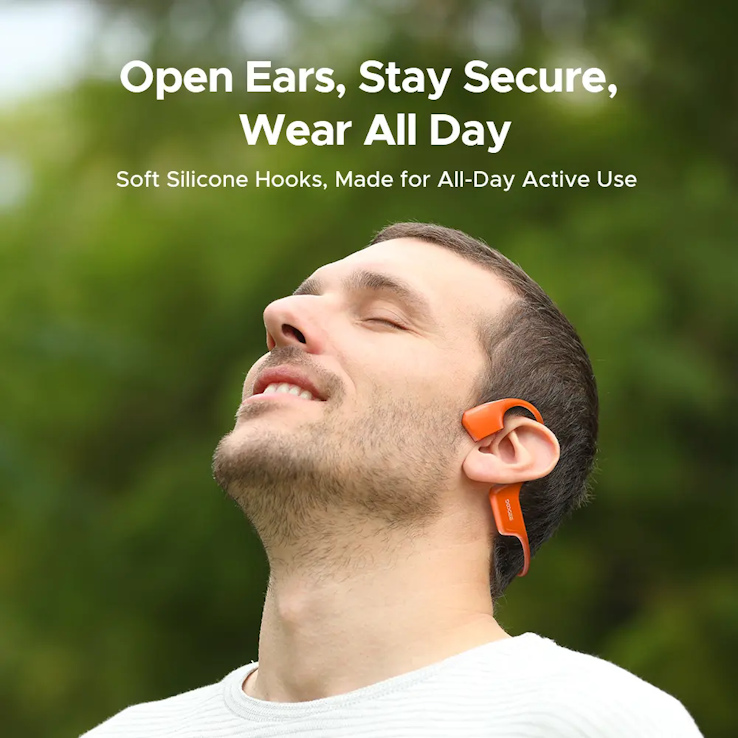
The Doogee headphones' plastic casing is rigid enough to keep its shape when in use but bends relatively easily when subjected to force, only to go back to the original shape right away. The sample unit survived a very bad fall with zero apparent damage. The maker's durability claims seem to have some real basis.
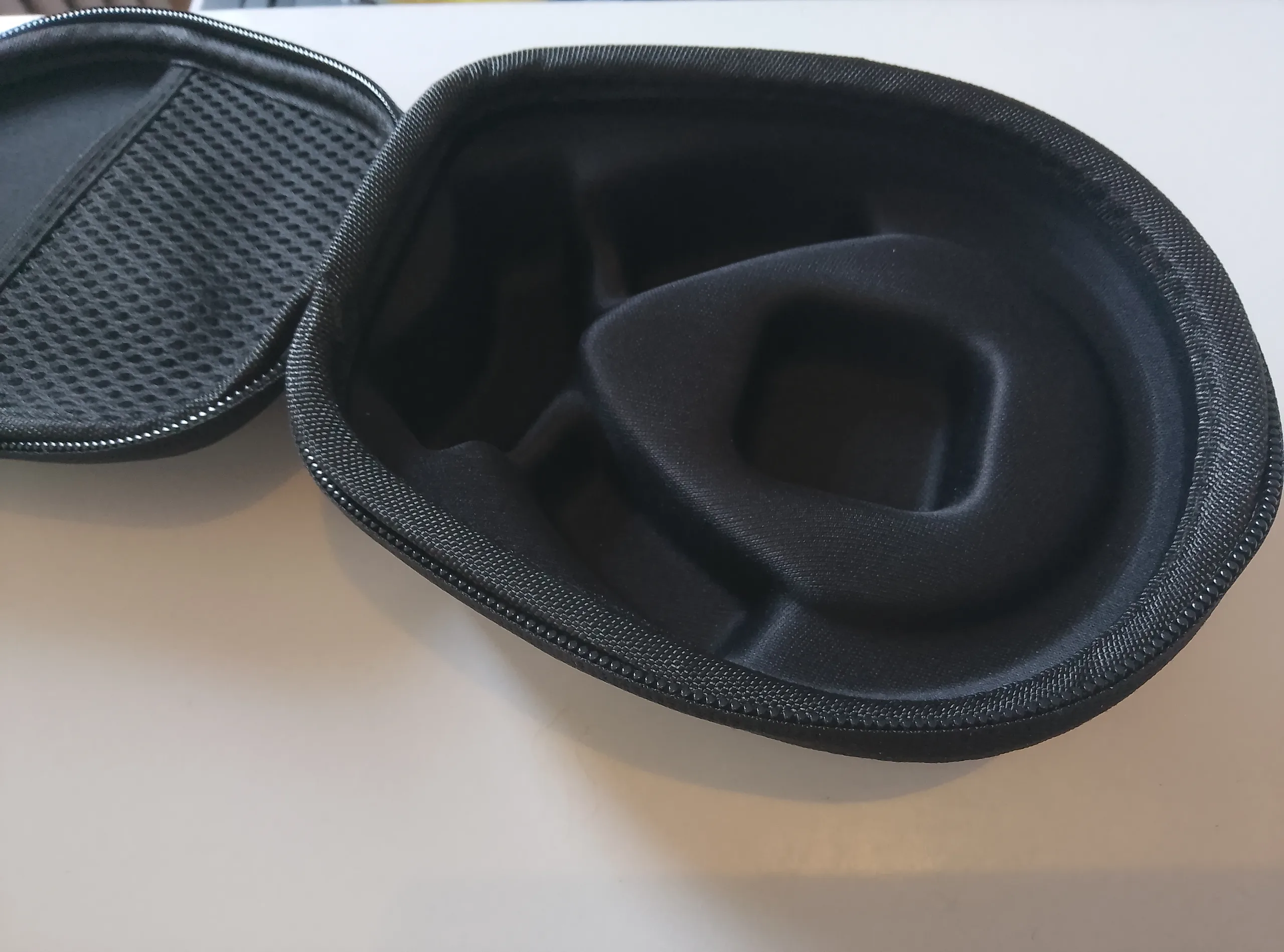
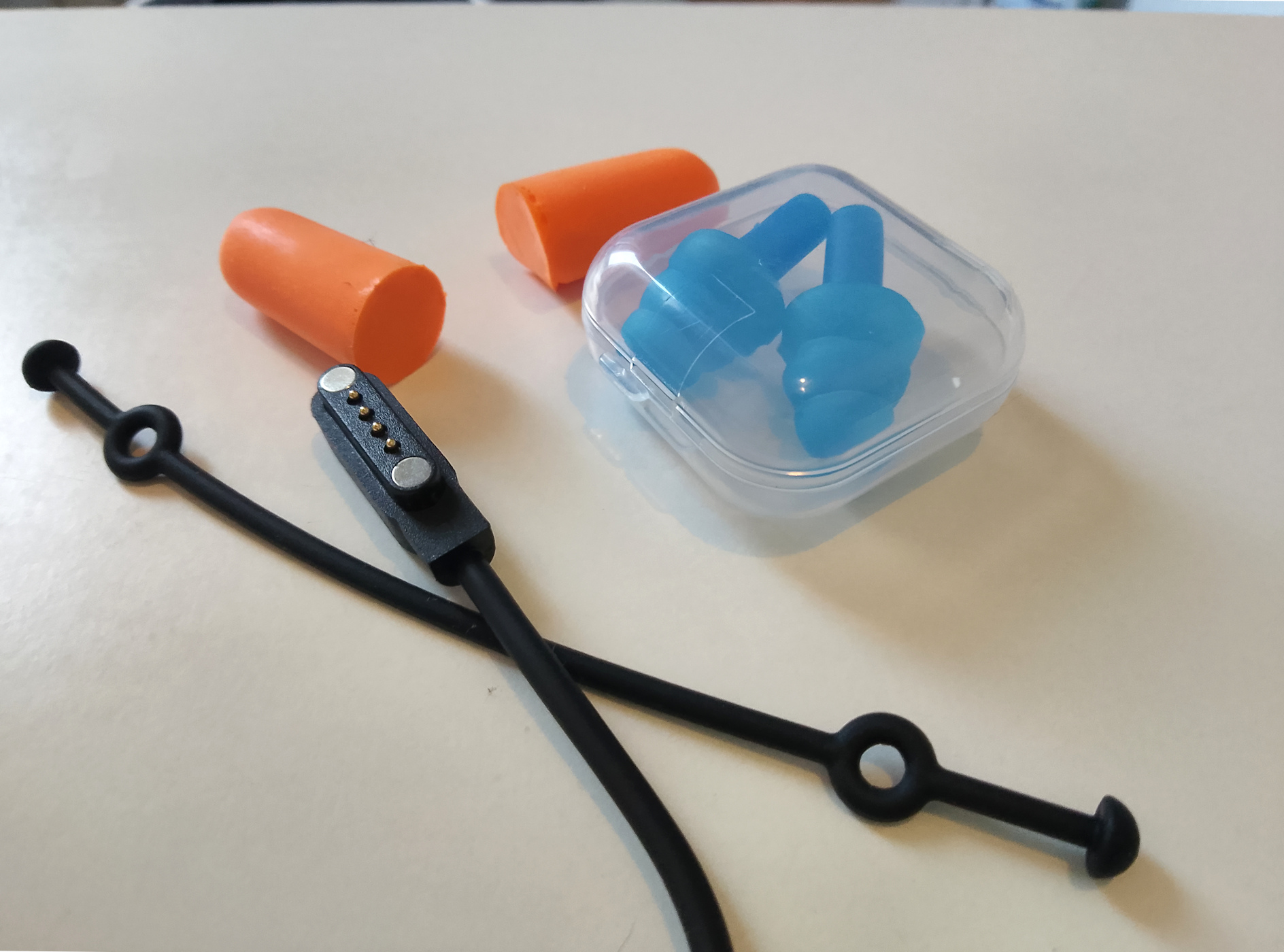
A hard black plastic case for transporting the BoneAir Swim comes standard. Also included in the box are two sets of earplugs (more on that down below), a magnetic charging cable, some documentation, and an elastic band for tightening fit if needed.
Setup, handling and performance
Setting the headphones up is as easy as turning them on by holding the (pretty rigid and rather small) physical power button found near the right-ear driver for a few seconds. Pairing mode will be enabled right away, meaning the user will be able to add the BoneAir Swim to the list of connected and trusted devices on their phone, tablet, laptop, PC, or smartwatch.
The model features Bluetooth version 5.4. Codec-wise, AAC is supported and prioritized, with SBC as a fallback option. As mentioned above, just copying music files to the headphones' internal storage using the included USB 2.0 cable is also an option, with lots of file formats supported, including even FLAC and WAV. When connected to a PC, the BoneAir Swim does not just act as removable storage; it also acts as any USB-C headphones would for noticeably cleaner sound than what Bluetooth allows for. Unfortunately, the way magnetic cable is connected, it's not even possible to put the headphones on properly so the feature is useless.
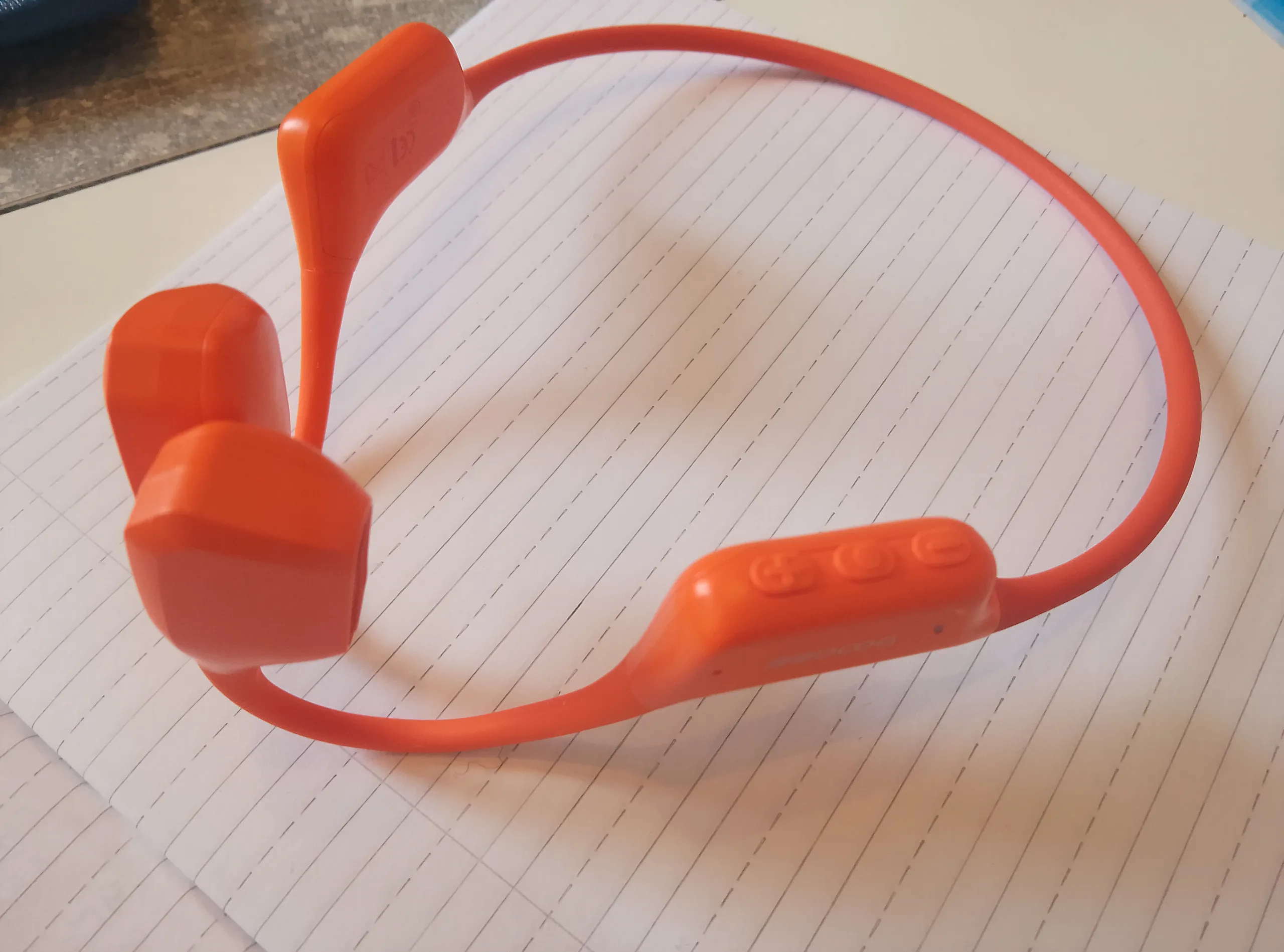
The BoneAir Swim are "dual-architecture" headphones, meaning they have a set of air sound transmission drivers, too - and there are multiple ways to use the product. Three were tested.
Walking and running; no earplugs. Sound comes off as entirely lacking bass in this case, but mids and highs are quite detailed and nice. The best thing about this scenario is, playing music does not drown out what's going on around the user at all. Everything remains perfectly clear and loud. Safety first! People standing close nearby won't hear much, either, so privacy is preserved. The downside is, you need to stick to near-maximum volume levels, which drains the battery much faster than the 8 hours promised in Doogee's marketing slides. If you can position the headphones so that the drivers are very close to your ear canals, which is possible, that will allow you to reduce volume levels somewhat but then, a single abrupt move is enough for the headphones to move significantly meaning you will have to readjust their position on your head over and over again.
Walking and running with earplugs inserted. Fit does not matter much in this scenario. The headphones' sound signature changes so much, one would be forgiven for thinking it's a different product. Gone are the airy mids and highs described in the paragraph above; instead, the user gets meaty, energetic sound that's enjoyable but far removed from what most tunes tested are supposed to be like. Thousand Foot Krutch's Courtesy Call comes to mind as possibly the most extreme example; the opening vocals and guitars sound as if from behind a very thick veil, or perhaps a closed door. While that does not make them unrecognizable or off-putting, audiophiles will not be pleased. In contrast, Christian Smith's 2010 Essential Mix seems to sound better with the BoneAir Swim than with many dynamic headphones. The many imperfections of aging low-fi techno and house beats, compressed with SoundCloud's standard 128-kilobit MP3 coding and then compressed again when transmitted from an Android phone to the headphones, get lost entirely, suppressed by the mighty (though admittedly not all that deep) bass line. Medium or so volume levels are more than sufficient. Somehow it's enough to stuff just 1 earplug into one's ears for magic to start happening.
Underwater, no earplugs. This is mostly similar to what was described in the previous use case. Fit does not matter; sound is best described as bass-centric at the expense of everything else, including fine details.
Battery life and verdict
Charging takes about an hour. Doogee's runtime claim - 8 hours - may not be reachable in practice depending on your routine. You definitely are getting 6 or 7 hours of listening to your music via Bluetooth on a single charge, though, which isn't bad. With battery charge down to a near-critical level, you will first hear a female-voice warning in English. Shortly after that, the Swim turns off.
Is this a good product? Is it worth the price? The answer mostly depends on what your needs are. Like virtually all Doogee products, the BoneAir Swim should work well for those exploring the nature often, or doing sports, or performing non-white-collar duties, like construction. It's robust and easy to use. Battery life and sound quality are behind many on-ear and over-ear headphones, as well as TWS earbuds priced from $30 to $90, though not by much. That being said, I have no prior experience testing bone sound conduction headphones and have no understanding of how the Swim stacks up to similar products from other brands.
Doogee does offer easy returns in case you change your mind, although the costs of shipping the box back might prove rather high depending on where you are. When it comes to warranty and repairs, Doogee has product service points in multiple countries; the closest one to the US is in Mexico.
Transparency
The selection of devices to be reviewed is made by our editorial team. The test sample was given to the author by the manufacturer free of charge for the purposes of review. There was no third-party influence on this review, nor did the manufacturer receive a copy of this review before publication. There was no obligation to publish this review. As an independent media company, Notebookcheck is not subjected to the authority of manufacturers, retailers or publishers.
 Add as a preferred source on Google


