


Chuwi UniBook - Reviews and Specs
Pros
Cons
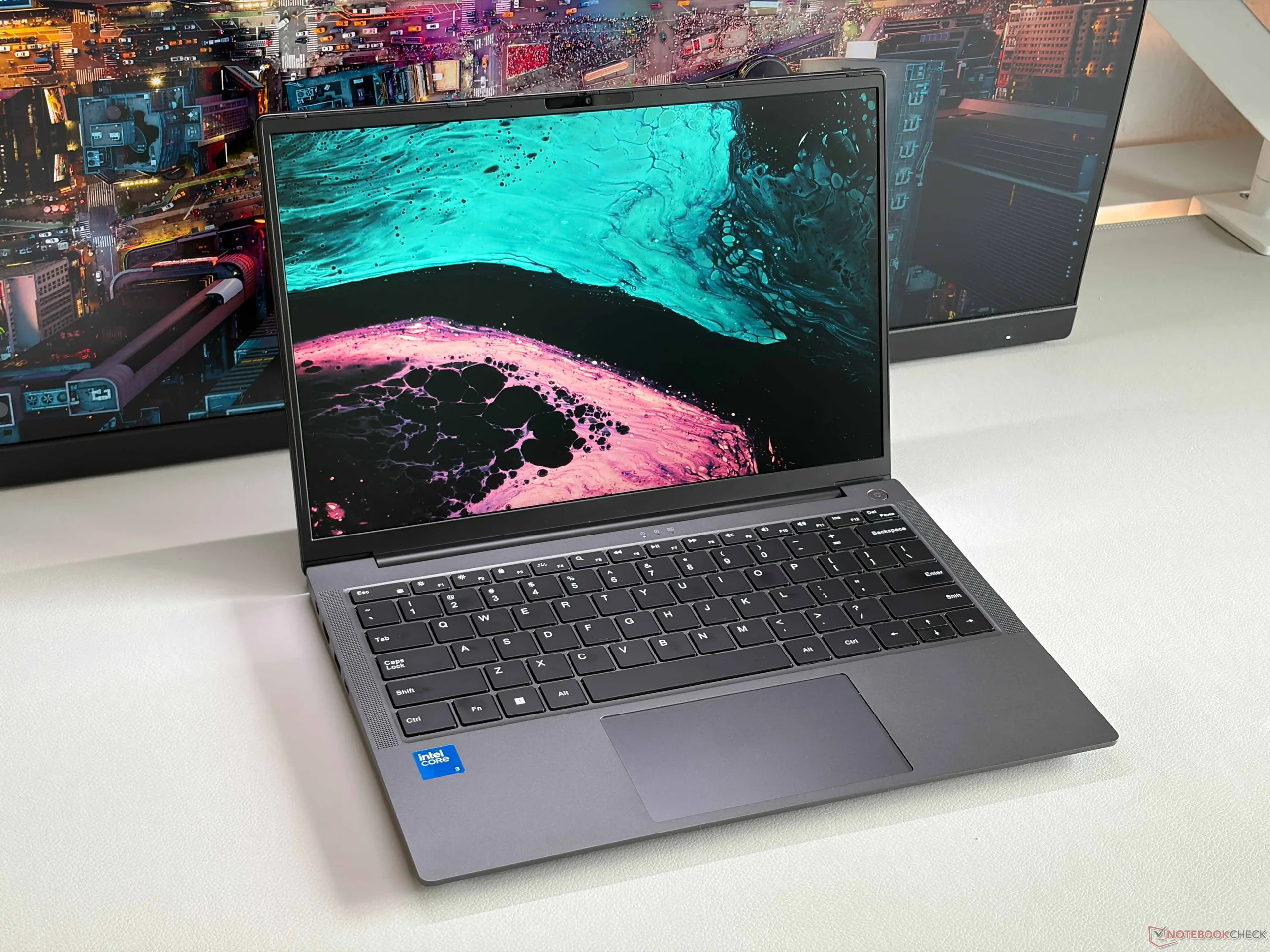
The Chuwi UniBook is an affordable 14-inch Windows 11 Pro laptop priced at €449. It uses Intel’s Core 3 304 Wildcat Lake processor with integrated Xe3 graphics. Its matte 1920 × 1200 IPS display has a 16:10 aspect ratio and 60 Hz refresh rate. The laptop includes 8 GB of non-upgradeable LPDDR5 memory and a 256 GB M.2 SSD. Connectivity is generous, with USB-C Power Delivery, HDMI, DisplayPort, Gigabit Ethernet, Wi-Fi 6 and Bluetooth 5.3. Reviews rate it around 80 percent, highlighting its value and portability while criticizing its limited memory, modest storage, trackpad and display quality.
Specifications
Primary Camera: 0.9 MPix
Price comparison
Average of 6 scores (from 7 reviews)
Reviews for the Chuwi UniBook
The Chuwi UniBook features a new Intel Wildcat Lake processor, a matte IPS panel and plenty of ports. But you only get 8 GB RAM, which is not much for Windows 11. Is it really a suitable MacBook Neo competitor or are there too many compromises? Update: Chuwi announces a new UniBook SKU with 100 % sRGB screen
Source: Digital Trends

I used it as my primary work laptop for much of the review period, replacing my usual Zenbook 14. My workload was realistic for what this computer is built to do, which includes lots of browser work, WordPress, meetings, writing, research, and multimedia consumption. It is a part of Team Blue’s Core 3 series, so efficiency was a big focus.
Single Review, online available, Long, Date: 10/20/2026
Rating: Total score: 70%
Source: PC World
The Chuwi UniBook impresses in situations where an affordable device needs to be practical. The metal casing is lightweight and well-finished. The keyboard is suitable for longer typing sessions, and the battery lasts a full working day. Five USB ports, HDMI, a card reader, and Gigabit LAN mean many users won’t need an adapter.
Single Review, online available, Long, Date: 10/08/2026
Rating: Total score: 75%
Source: Ars Technica
If a computer’s price in 2026 seems too good to be true, it probably is—Chuwi’s Unibook is interesting. Some of that comes down to the hardware—mainly the awful trackpad, but also the worse-than-expected screen—and some of it is that you’ll be mostly on your own for hardware and software support after you buy it.
Single Review, online available, Medium, Date: 08/24/2026
Source: Techradar
UniBook is a genuinely interesting proposition on paper. It is the first widely available laptop built around Intel's new Wildcat Lake platform; it undercuts Apple's MacBook Neo on price while offering more ports and a bigger screen, and early third-party benchmarks of the Core 3 304 hinted at unusually strong single-core performance for the money. However, a Windows 11 system with 8GB of RAM that can’t be upgraded and a storage drive that undersells the socket it sits in combine to undermine what could be a much more useful system than it ultimately is. None of that rules the UniBook out.
Single Review, online available, Short, Date: 08/07/2026
Rating: Total score: 80% price: 90% performance: 90% features: 70% workmanship: 80%
Foreign Reviews
Source: PC Welt
 DE→EN
Single Review, online available, Long, Date: 09/25/2026
Rating: Total score: 70%
Source: WCM
DE→ENSingle Review, online available, Long, Date: 08/31/2026
Source: Xataka
 ES→EN
Single Review, online available, Long, Date: 09/18/2026
Rating: Total score: 78% performance: 70% display: 70% mobility: 90% workmanship: 80%
Comment
Intel Intel Graphics 1 Xe3 WCL: An integrated graphics adapter of certain Wildcat Lake SoCs with just one of the two Xe3 cores enabled (8 EUs / 128 ALUs), and one raytracing core.
Modern games should be playable with these graphics cards at low settings and resolutions. Casual gamers may be happy with these cards.
» Further information can be found in our Comparison of Mobile Graphics Cards and the corresponding Benchmark List.
Core 3 304: The Intel Core 3 304 is a small SoC from the Wildcat Lake family. It uses 5 CPU cores in two clusters. A fast performance core from the Cougar Cove series clocks at 1.5 to 4.3 GHZ. In addition, the chip contains four low power cores (Darkmont architecture) with 1.4 to 3.3 GHz. » Further information can be found in our Comparison of Mobile Processsors.
Devices from the same Manufacturer
 Add as a preferred source on Google


