China claims 3.2 Pb/s optical fiber record — could send 20,000 4K movies per second
A Chinese research team has achieved a data transmission rate of 3.2 petabits per second (Pb/s), or 3,200,000 Gb/s, in a real-time, bidirectional optical fiber test, setting a new world record. The result was achieved using a 24-core fiber and is fast enough, in theory, to transfer more than 20,000 4K movies in one second.
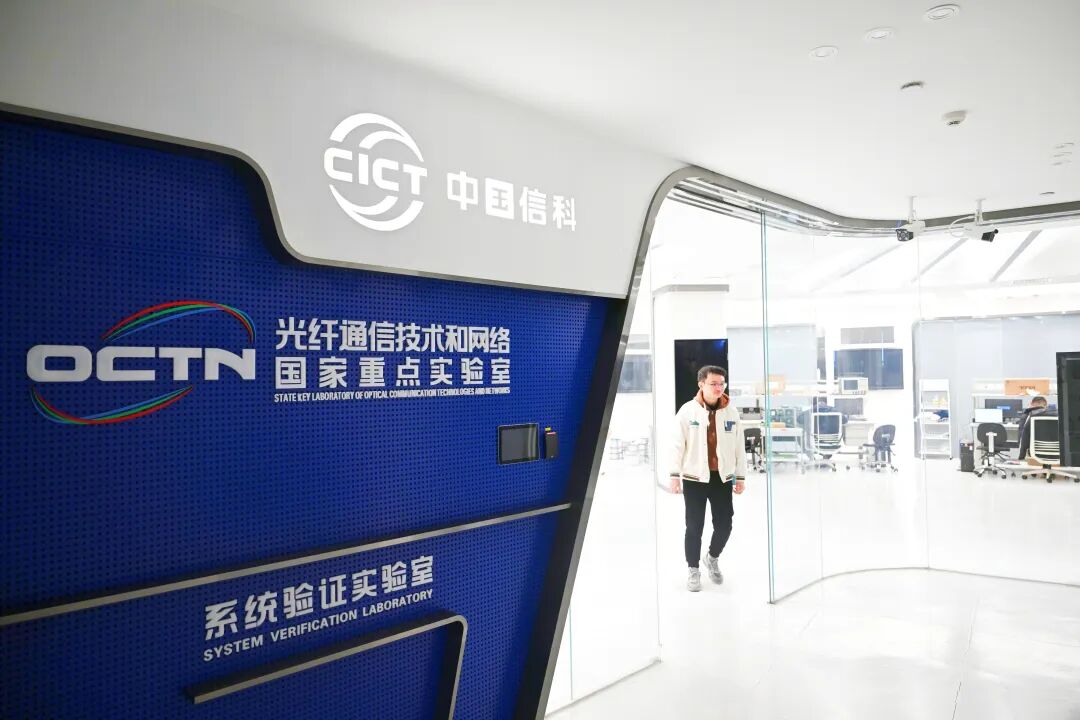
The experiment was conducted by researchers from the National Key Laboratory of Optical Communication Technology and Network at China Information and Communication Technologies Group (CICT), together with Pengcheng Laboratory and Fiberhome Fujikura Fiber Optic Technology. The team used 10.3 km of multicore optical fiber to demonstrate simultaneous data transmission in both directions.
The system relies on a 24-core fiber, which carries data through multiple cores within a single cable. The researchers combined three wavelength bands — S, C and L — with space-division multiplexing to create thousands of parallel transmission channels. They also used commercial coherent optical modules and advanced modulation techniques to maintain stable, real-time transmission while reducing interference between the cores.
According to the team, the result delivers 32 times the total transmission capacity of conventional commercial single-core G.652 optical fiber systems, which typically reach around 100 Tb/s using the C and L wavelength bands. The researchers also demonstrated real-time transmission at 400 Gb/s per wavelength in the S band and 1.2 Tb/s per wavelength in the C and L bands using optical modules developed by the team.
The new result improves on a previous 2.5 Pb/s demonstration by the same team earlier this year, representing an increase of roughly 28 %. Unlike some laboratory experiments that rely on specialized equipment and experimental signal processing, the Chinese researchers say their system uses commercially compatible hardware architectures, bringing the approach closer to practical deployment.
The achievement could help address growing demand for network capacity as AI training, large language models and data centers generate increasing amounts of traffic. The researchers see multicore fiber as a potential technology for connecting large computing facilities, expanding backbone network capacity and supporting future 6G infrastructure.
 Add as a preferred source on Google