



Canon unveils new ArF Lithography Scanner after 24-year gap to support chip manufacturing
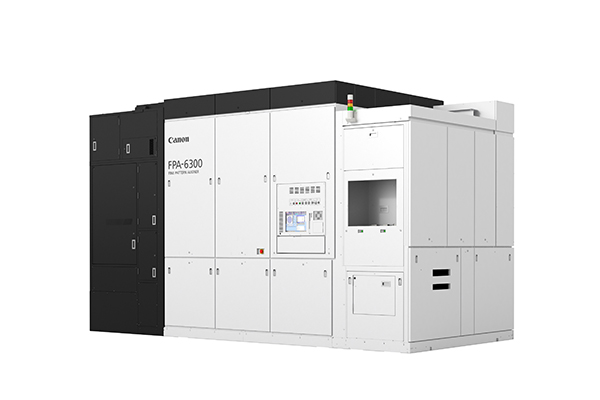
After a wait of 24 years, Canon is once again back in the ArF dry lithography market with the FPA-6300AS6, a chipmaking scanner designed for memory, power devices, sensors, and other mature-node production. The product will be available for sale from December 2026.
According to a press release by Canon, released on November 24, the company has developed the FPA-6300AS6, which is the first ARF dry semiconductor lithography system after FPA-6000AS4. The earlier version was released in 2002, after which the company stepped away from advancing this segment. However, with the recent shift towards more advanced lithography, the company is back in the game.
The abbreviation ArF means "argon fluoride", and these systems utilize a 193 nm light source to print circuit patterns onto silicon wafers. Despite the current hype about EUV equipment in the context of the development of the most advanced semiconductor devices, ArF dry lithography is still used in high-volume production of memory, automotive power, sensors, and other types of devices.
What is the function of FPA-6300AS6?
Canon’s latest scanner utilizes its well-tested FPA-6300ES6a KrF platform. However, it integrates an innovative projection lens along with enhanced wafer stage and illumination systems. Canon claims that this combination is designed to handle a wide variety of device types, substrate materials, and manufacturing requirements.
The specifications for this scanner include a numerical aperture of 0.93, a throughput of up to 235 wafers, and increased overlay precision of 4 nanometers. This is important because semiconductor manufacturers require not only advanced patterning techniques but also the ability to manufacture the chips fast enough to ensure factories are economically viable.
One thing to note here is the timing of the launch. The chip will be released at a time when the demand for mature and specialty chips is increasing. The demand for the chip has increased because they are being used everywhere, be it in electric vehicles, industrial equipment, power management, image sensors, or data centre infrastructure. These types of chips may not feature the enticing "3nm" or "2nm" stickers, but they are crucial for the general semiconductor supply chain.
Canon's comeback brings additional flexibility for producers since lithography equipment has become increasingly important from a strategic perspective. According to Canon, with this move, its product range now includes i-line, KrF and ArF optical lithography systems, along with its nanoimprint lithography systems.
 Add as a preferred source on Google


