




Atlas Data Storage unveils EMP-resistant Atlas Eon 100 DNA-based data storage designed to last for millennia
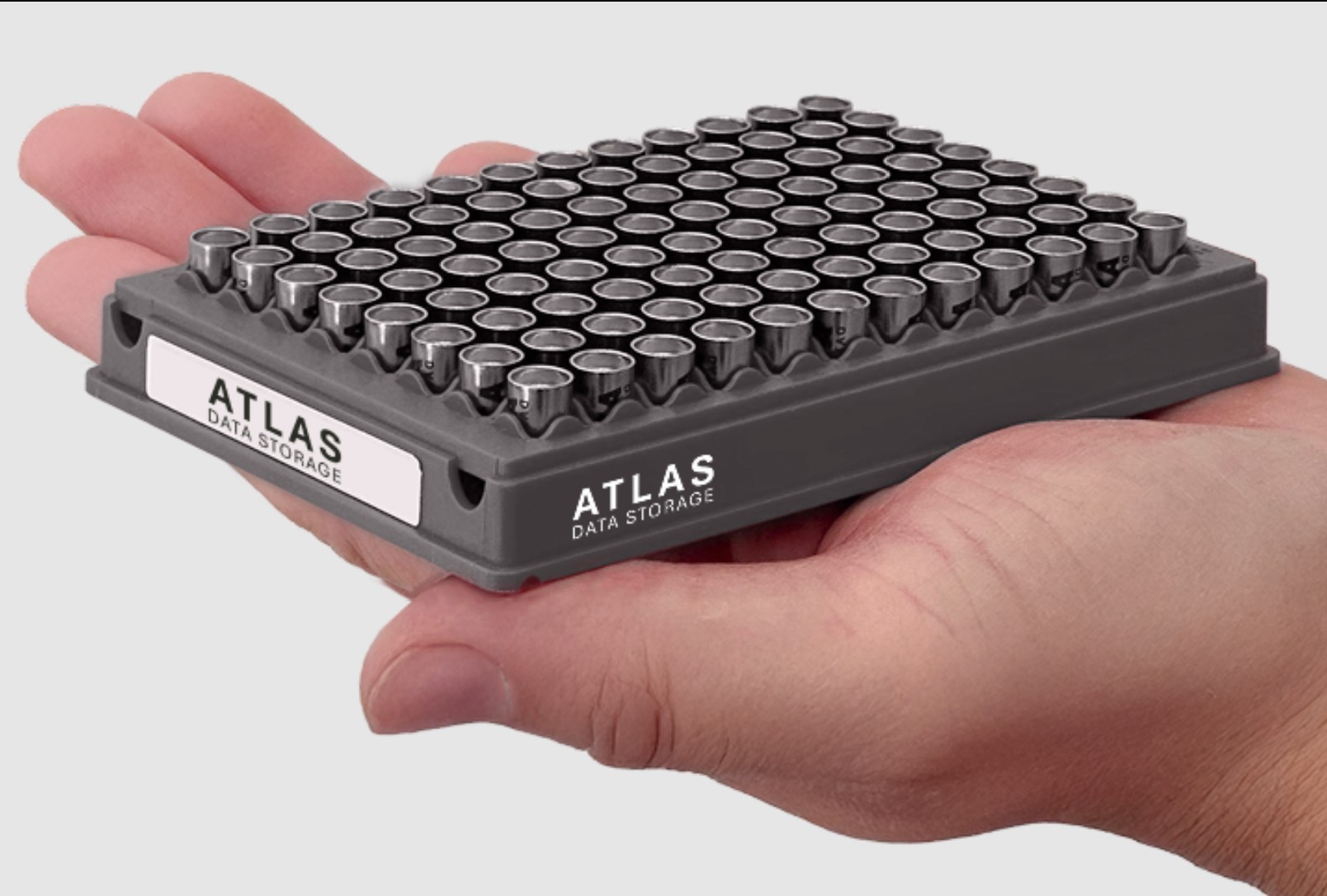
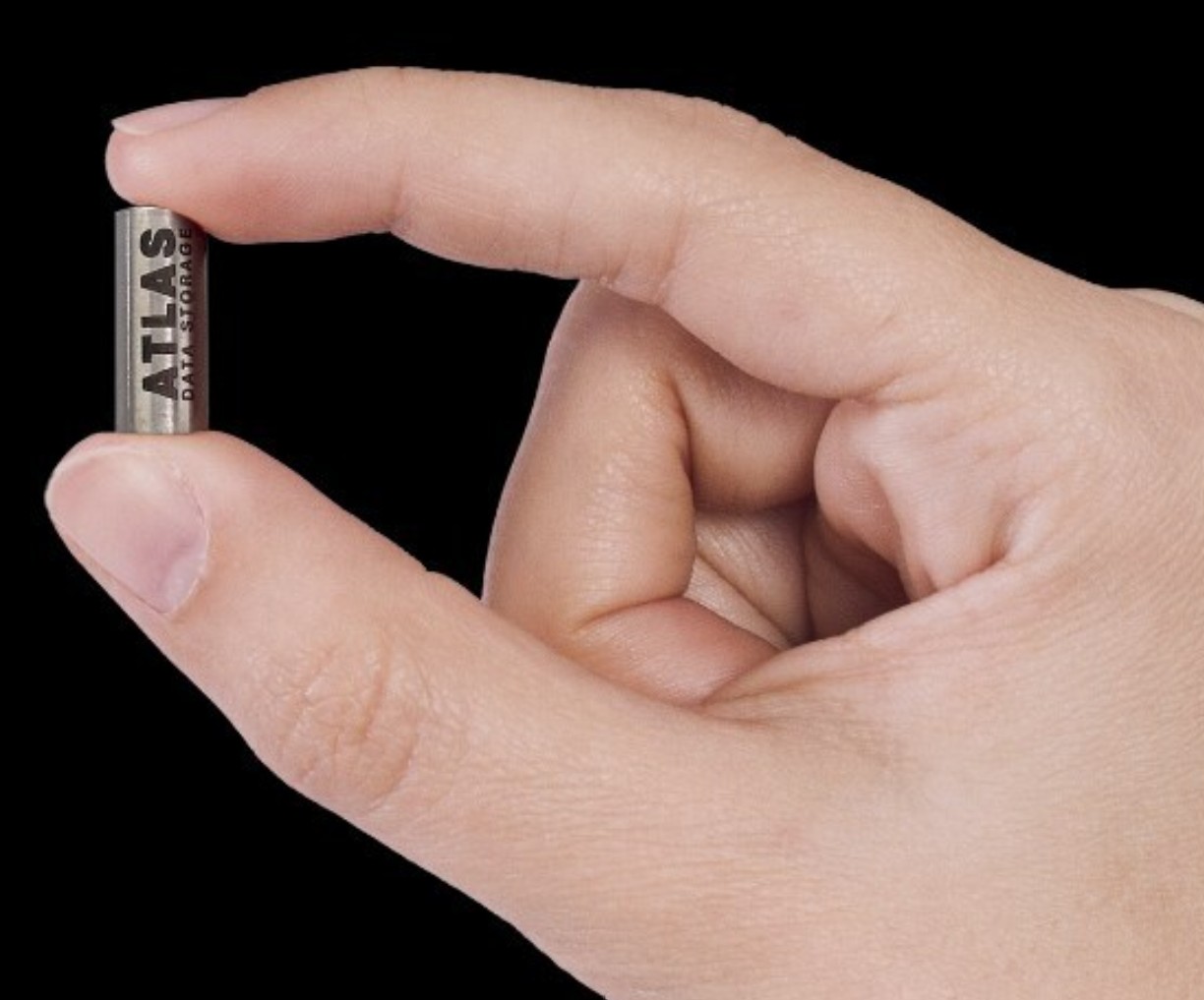
Atlas Data Storage has announced the Atlas Eon 100 data storage device to store files, photos, and videos much longer than conventional computer storage media can.
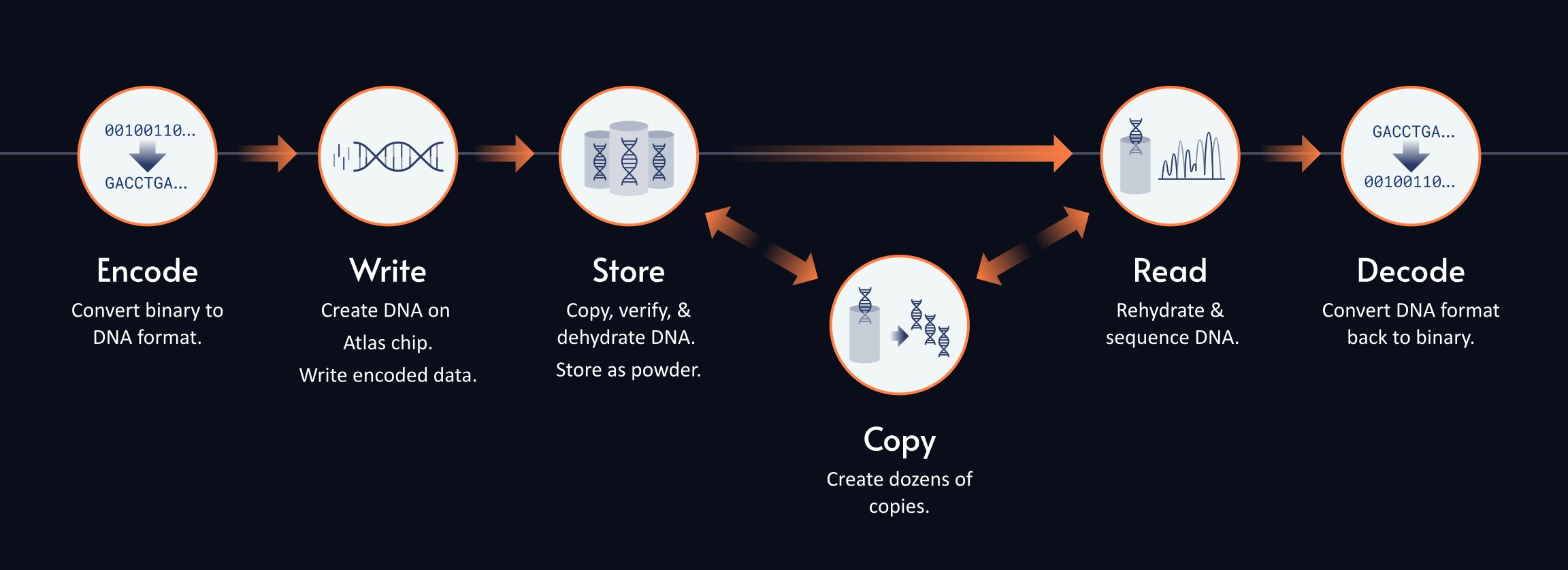
The Eon 100 encodes data using dehydrated synthetic DNA, which has a much higher data storage density than conventional computer storage media, which face many issues regarding data density and longevity:
- 1-10 years: Hard drives are subject to motor failure and magnetic recording media density limits.
- 1-25 years: Optical discs that use organic dye for the recording layer, such as CDs and DVDs, are subject to rapid data loss under exposure to sunlight, while those that use inorganic media, such as Blu-ray recordable discs, will likely fail due to corrosion of the metal reflective layer and plastic base degradation.
- 1-10 years: Flash memory, especially modern designs that use triple-layer (TLC) and multi-layer cell (MLC) designs, suffer from unavoidable electron migration, which increases dramatically with the ambient storage temperature.
- 10-50 years: Tape has been used to store analog and digital recordings successfully for decades, but is subject to changes in humidity and temperature affecting its magnetic recording layer.
DNA from animals, insects, plants, and humans has been recovered and successfully decoded from archaeological site samples, including that of a 4,000-year-old Egyptian man, and current knowledge suggests DNA might be a sensible long-term storage medium.
Although Atlas Data Storage touts its Eon 100 system has a data density 1,000 times greater than tape, with a reliability of 99.99999999999 percent, no DNA storage system has been in existence long enough to withstand the true test of time over a millennium. Additional information will be presented at the annual conference of The Association of Moving Image Archivists this week.
 Add as a preferred source on Google


