




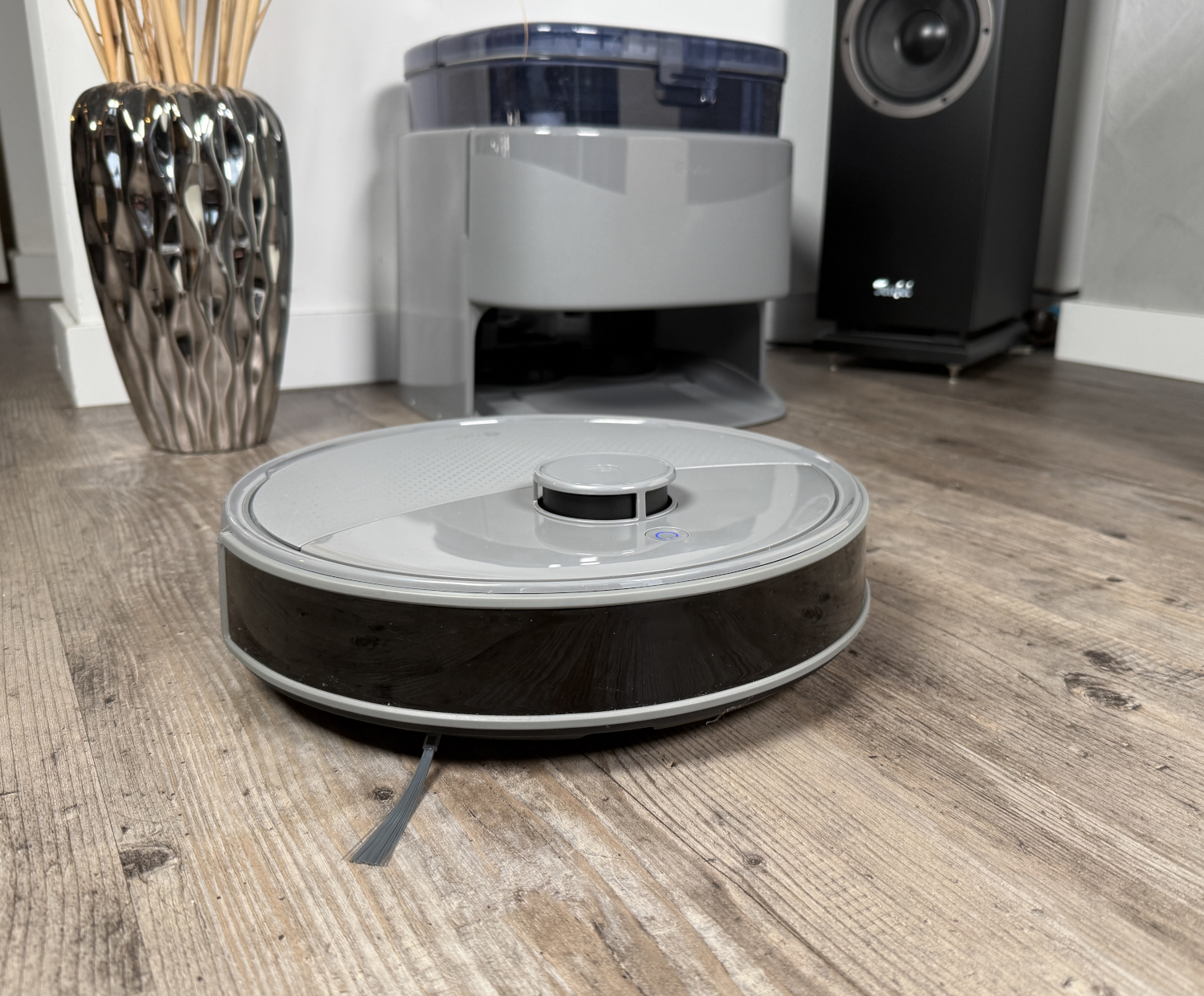
Affordable robotic vacuum cleaner with mops and station: Lefant M3 Max review
Marcus Schwarten (translated by DeepL / Marcus Schwarten) Published 🇩🇪 🇫🇷 ...
Lefant M3 Max test summary: Solid performance at a reasonable price
The Lefant M3 Max lives above all from its price. The robot vacuum with mopping function and cleaning station is often available in stores for only around $350, which is significantly less than the MSRP of $440.
Measured against the price, the Lefant M3 Max offers a decent performance. It doesn't do anything on a top level, but it cleans properly and without making a big fuss. If you don't have too high demands, predominantly smooth floors and generally no small items lying around on the floor, you will get a vacuum and mopping robot with fairly simple features at an attractive price.
Pros
Cons
Price and availability
The recommended retail price for the Lefant M3 Max is $440. It is usually available for significantly less in stores, as Lefant often runs coupon and discount campaigns on Amazon, for example.
Table of Contents
- Lefant M3 Max test summary: Solid performance at a reasonable price
- Features: 20k suction power and compact station
- Set-up and app: room for improvement
- Navigation and obstacle detection: requires order
- Cleaning performance: Solid on smooth floors
- Battery life and power consumption: Economical robot vacuum
In addition to the major manufacturers such as Roborock, Dreame, Mova and Ecovacs, many lesser-known manufacturers also offer robotic vacuum cleaners. Lefant is one of them and its models are positioned in the affordable price range. The current top model is the Lefant M3 Max.
But how good is the robot vacuum with mopping function? And what do you get for your money? Our Lefant M3 Max review clarifies whether this model is a good catch at an attractive price or whether you should keep your hands off it.
Data sheet Lefant M3 Max
| Feature/Model | Lefant M3 Max |
|---|---|
| Navigation | LiDAR |
| Obstacle avoidance | 190° PSD |
| Suction power | 20,000 Pa |
| Anti-hair entanglement | no |
| Extendable/liftable side brush | no/no |
| Mop technology | 2 mops |
| Extendable/liftable/deployable | no/yes (9 mm)/no |
| Height of the robot | 9.7 cm |
| Suction station | yes |
| Water/dirty water tanks | 3.2 l / 3 l |
| Mop wash | yes |
| Hot water | yes |
| Mop drying | yes |
| Cleaning agent | yes |
| Climbing function | no |
| Voice assistant | no |
| Live video | no |
| Matter | no |
| Color | Grey |
| MSRP | $440 |
| available at | Amazon |
Features: 20k suction power and compact station
The Lefant M3 Max features the usual LiDAR navigation in a rigid laser tower. An obstacle detection system is located in the front across the entire width, although it has to make do without a camera. The suction power is specified as 20,000 Pa. On paper, this is not that far off the current flagship models, which have usually around 25,000 to 30,000 Pa. However, the decisive factor is how much of this reaches the floor in practice, which we will discuss below in our Lefant M3 Max test.
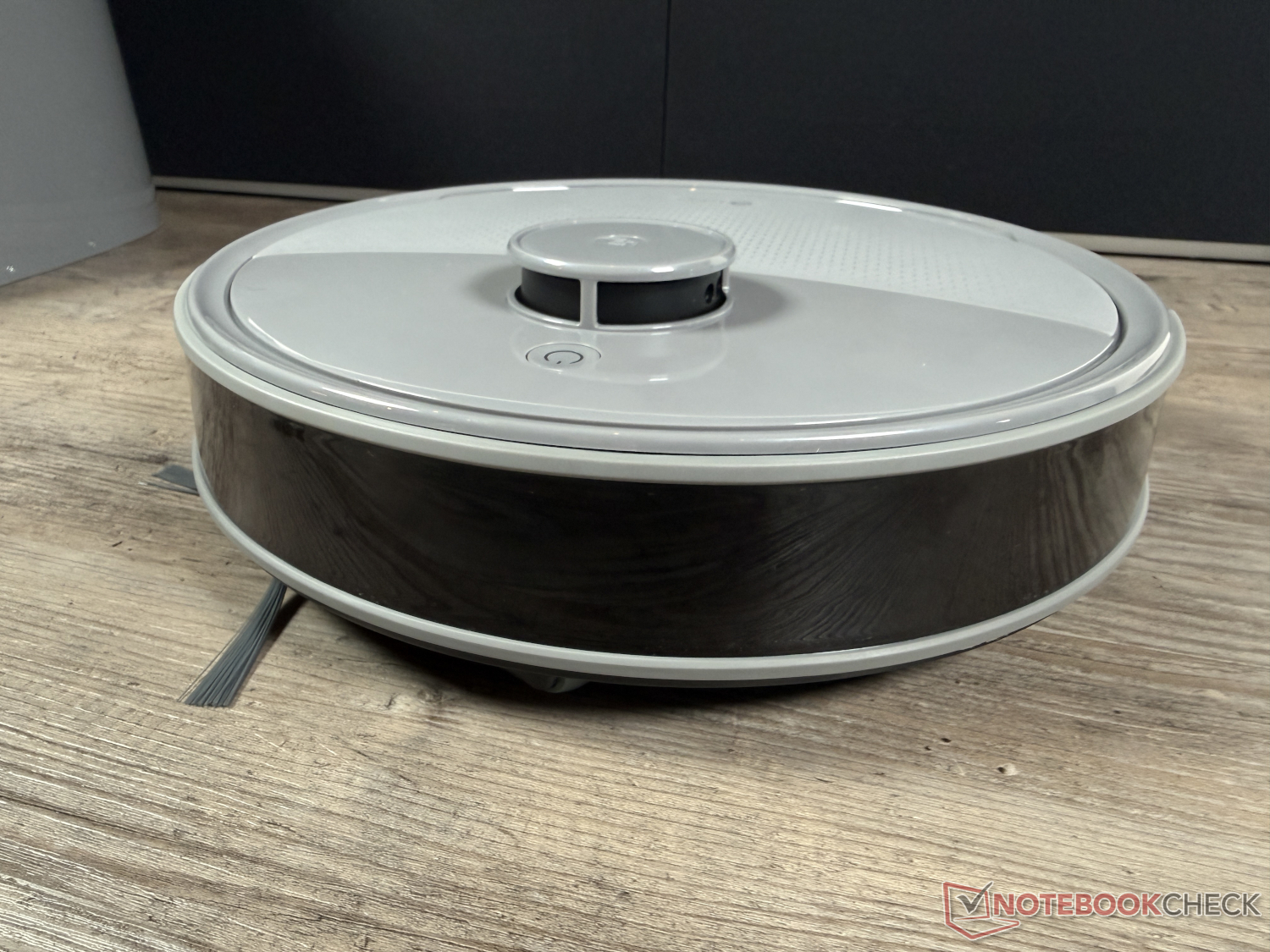
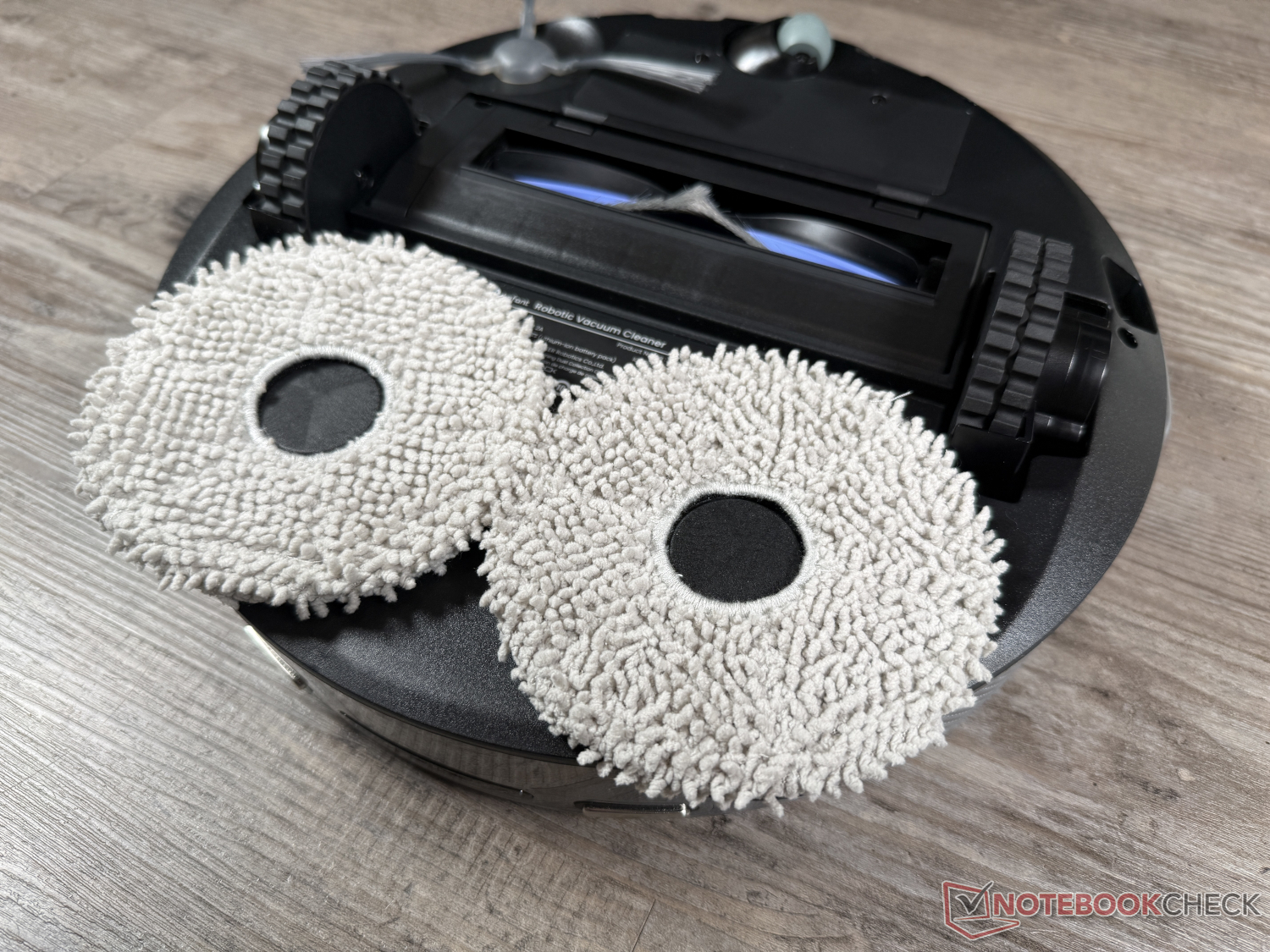
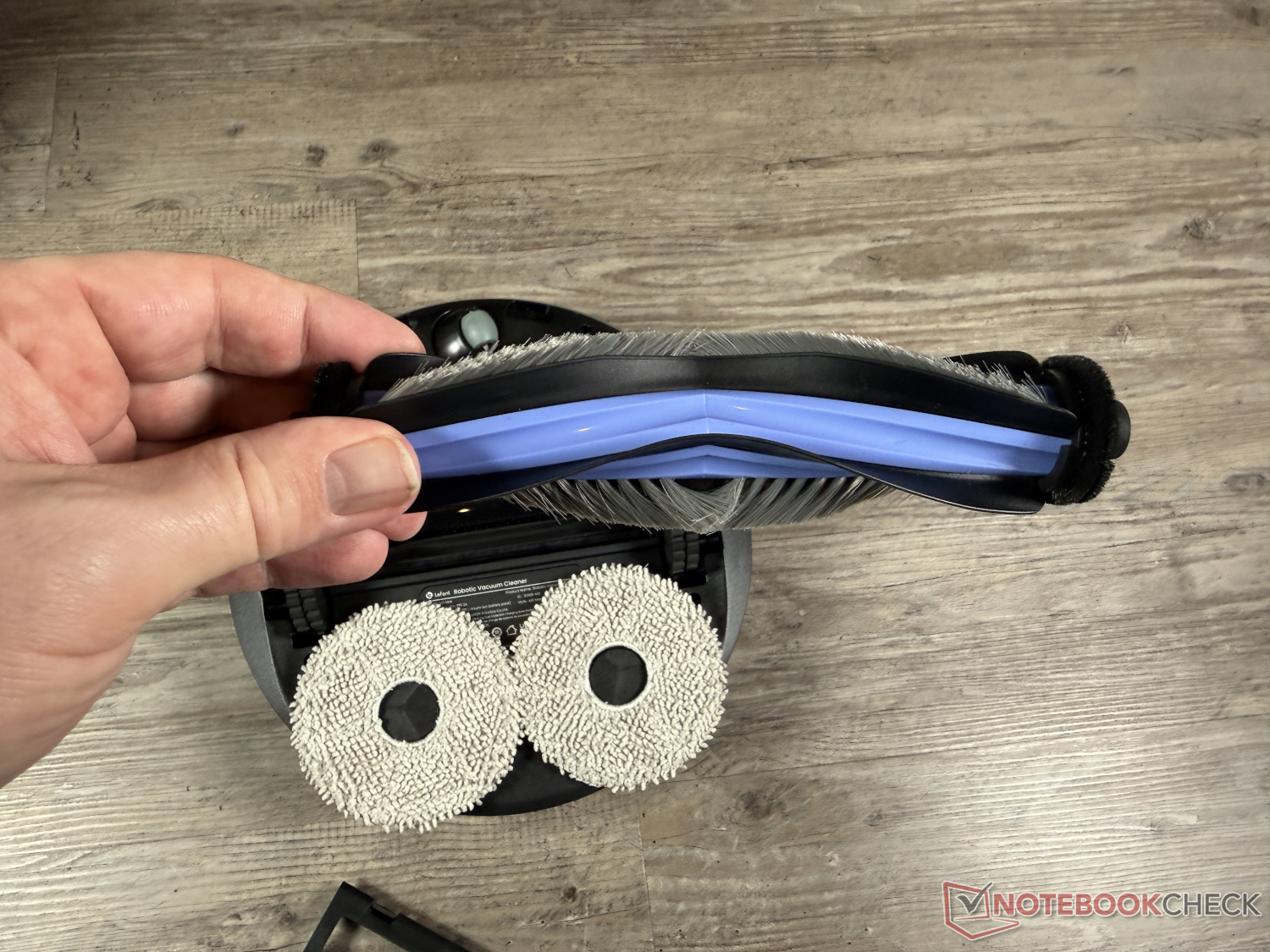
The mopping function is also relatively simple, which is not surprising in this price range. The M3 Max uses two rotating mops. These can neither be lowered nor extended and can be raised by 9 mm. The small side brush cannot be extended either.
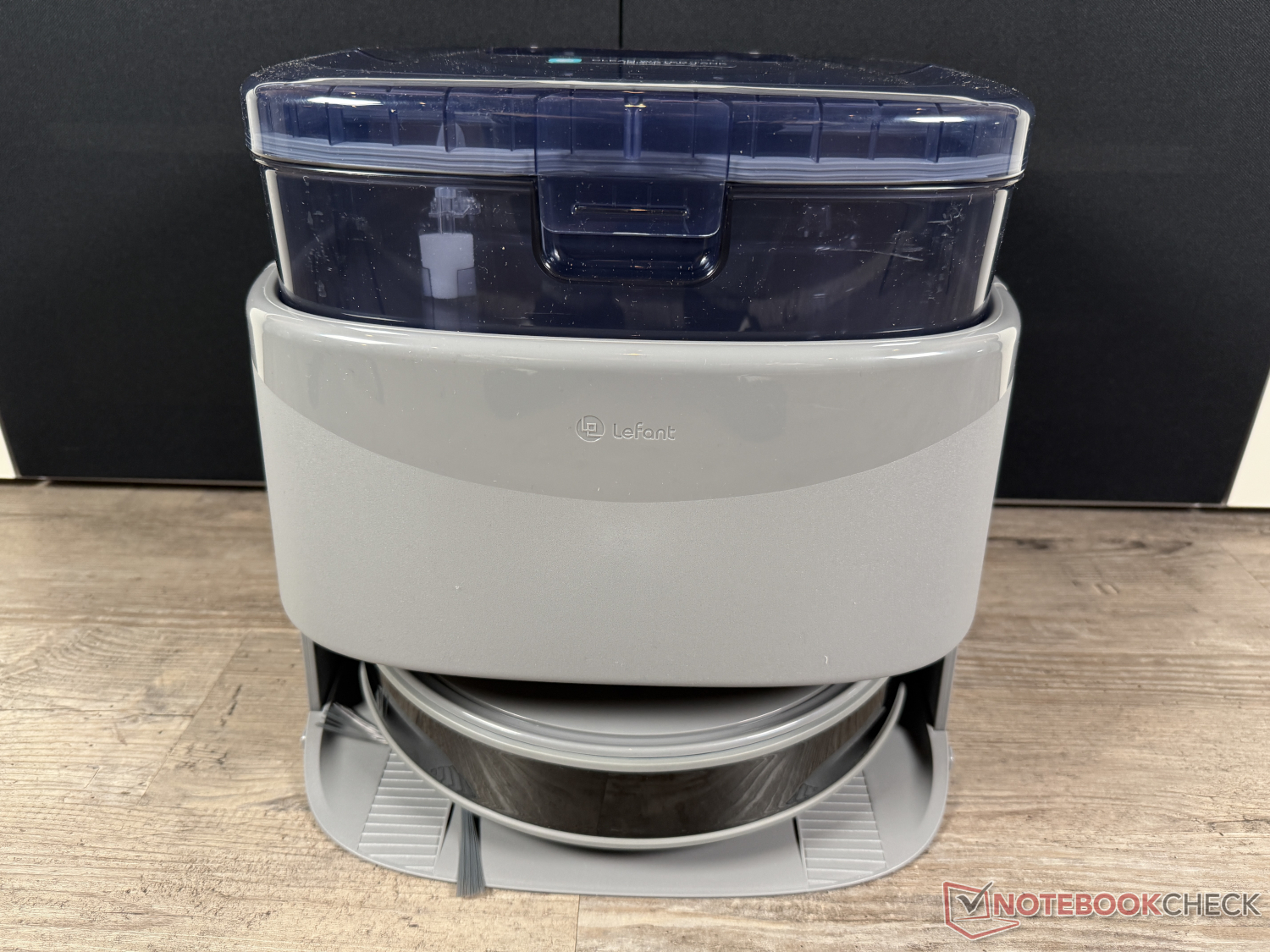
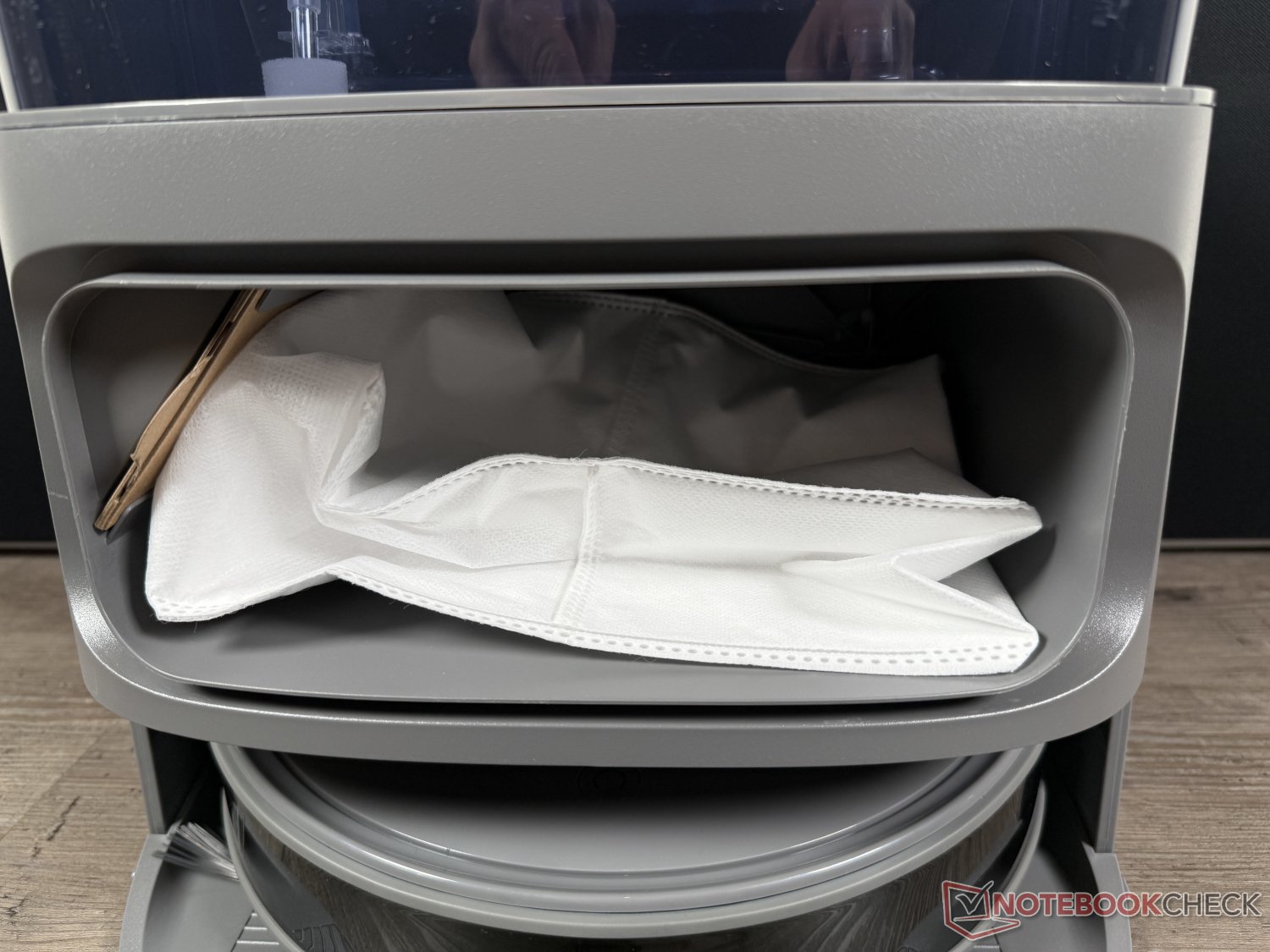
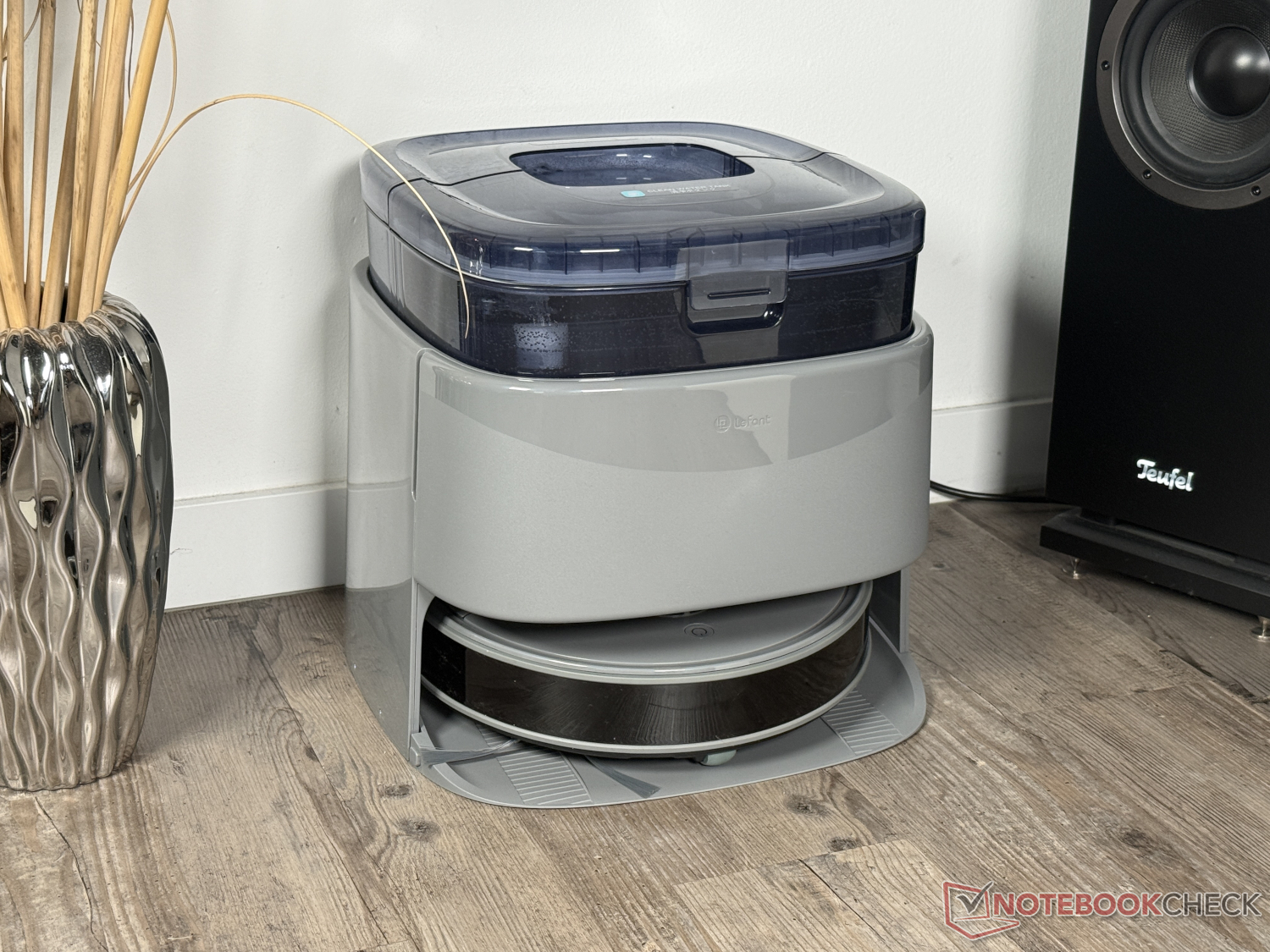
The grey base station in square design appears somewhat "cheap" with its high-gloss plastic, but is compact at a height of approx. 36 cm. It includes a suction function into a dust bag as well as cleaning of the mopping unit with 45°C tempered water, automatic detergent dispenser and subsequent drying by airflow.
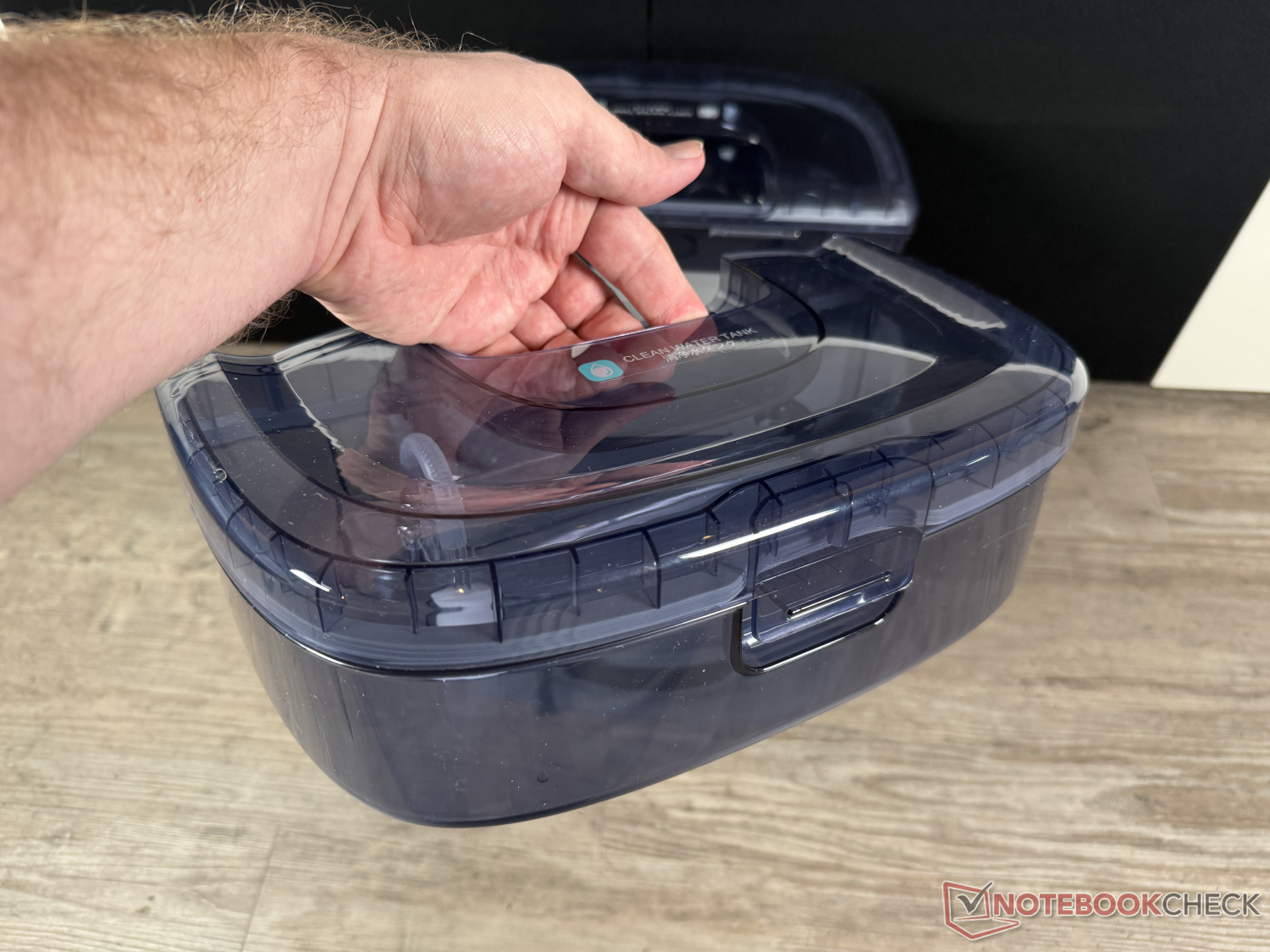
The transparent water tanks are clearly visible on the top, which is not as visually appealing as many other models. They are also very flat, which makes it difficult to fill them without spilling water. On the other hand, it is practical that the base of the station can be removed for easier cleaning.
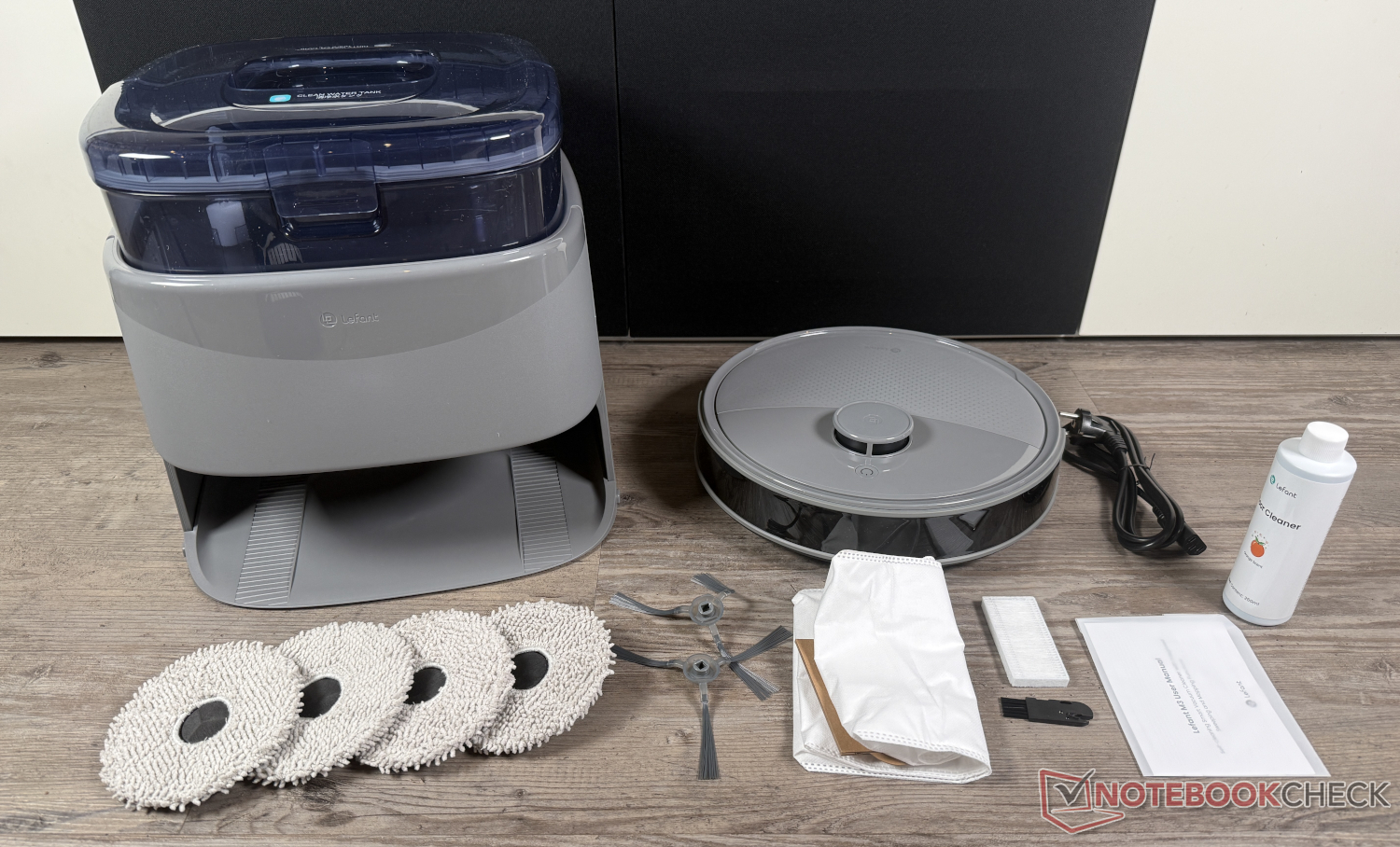
Lefant includes a small bottle of cleaning agent. In addition, a spare dust bag, two additional mops and a second side brush are included alongside the obligatory quick start guide.
Powerful robot vacuum cleaners at attractive prices
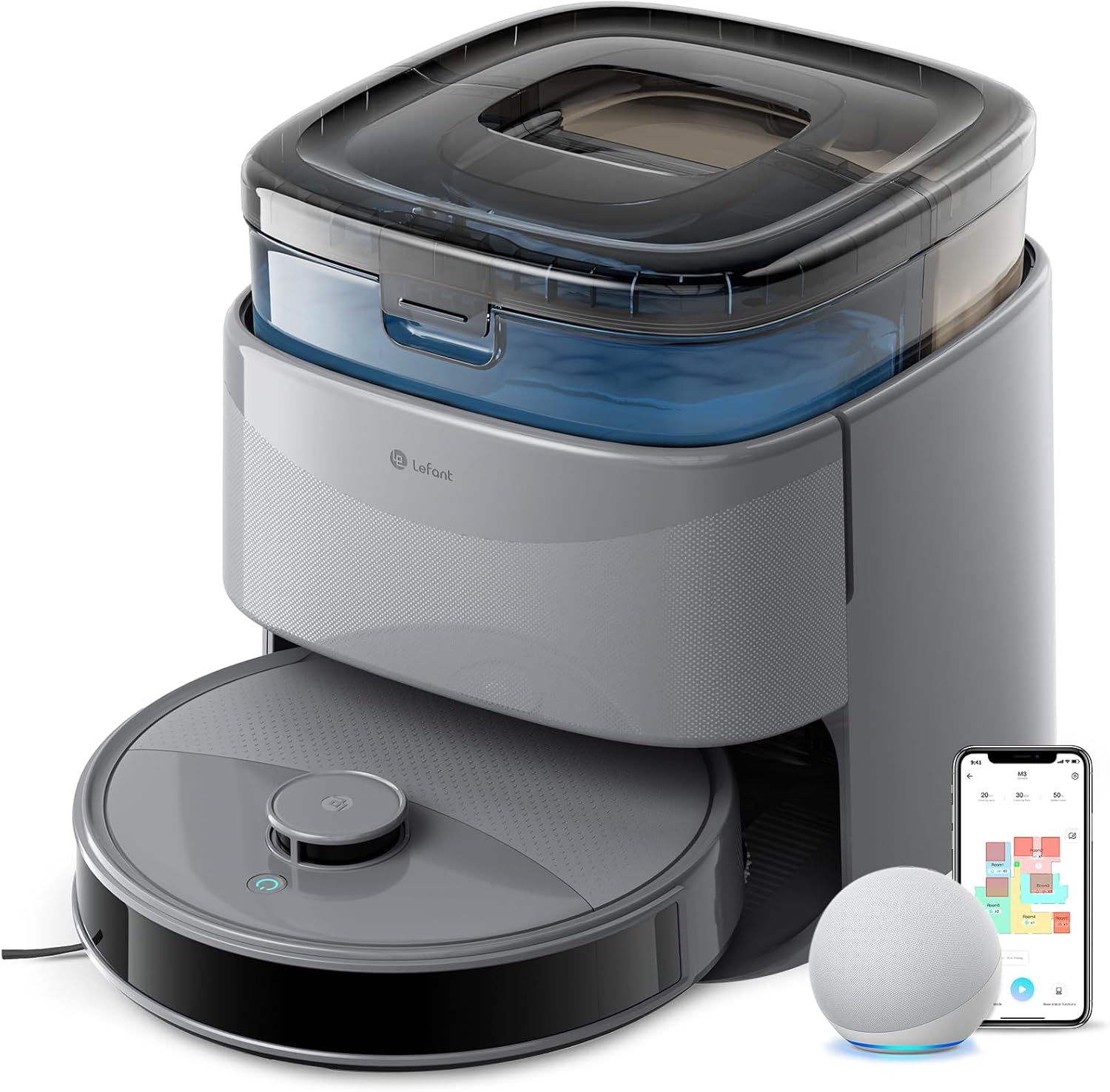
Lefant stands for powerful robot vacuums that combine modern features with excellent value for money. From entry-level models to the M3 series, the lineup offers strong suction, app-based control, and practical solutions for pet hair and everyday cleaning.
Models like the M3 Max stand out with automatic mopping functions and smart navigation, delivering a nearly hands-free cleaning experience. Anyone currently looking for a new robot vacuum should also keep an eye on ongoing offers across the Lefant portfolio, where premium features can often be found at significantly reduced prices.
Set-up and app: room for improvement
Setting up the Lefant M3 Max worked without any problems in our test. The connection between the app, robot and home Wi-Fi was established quickly once an account had been created or the login had been completed.
This is followed by the obligatory mapping run, during which the M3 Max can also clean if desired. We opted for the classic quick mapping, which, at around 10 minutes, took a little longer than with many competitors. But that's bearable. It only needs to be done once.
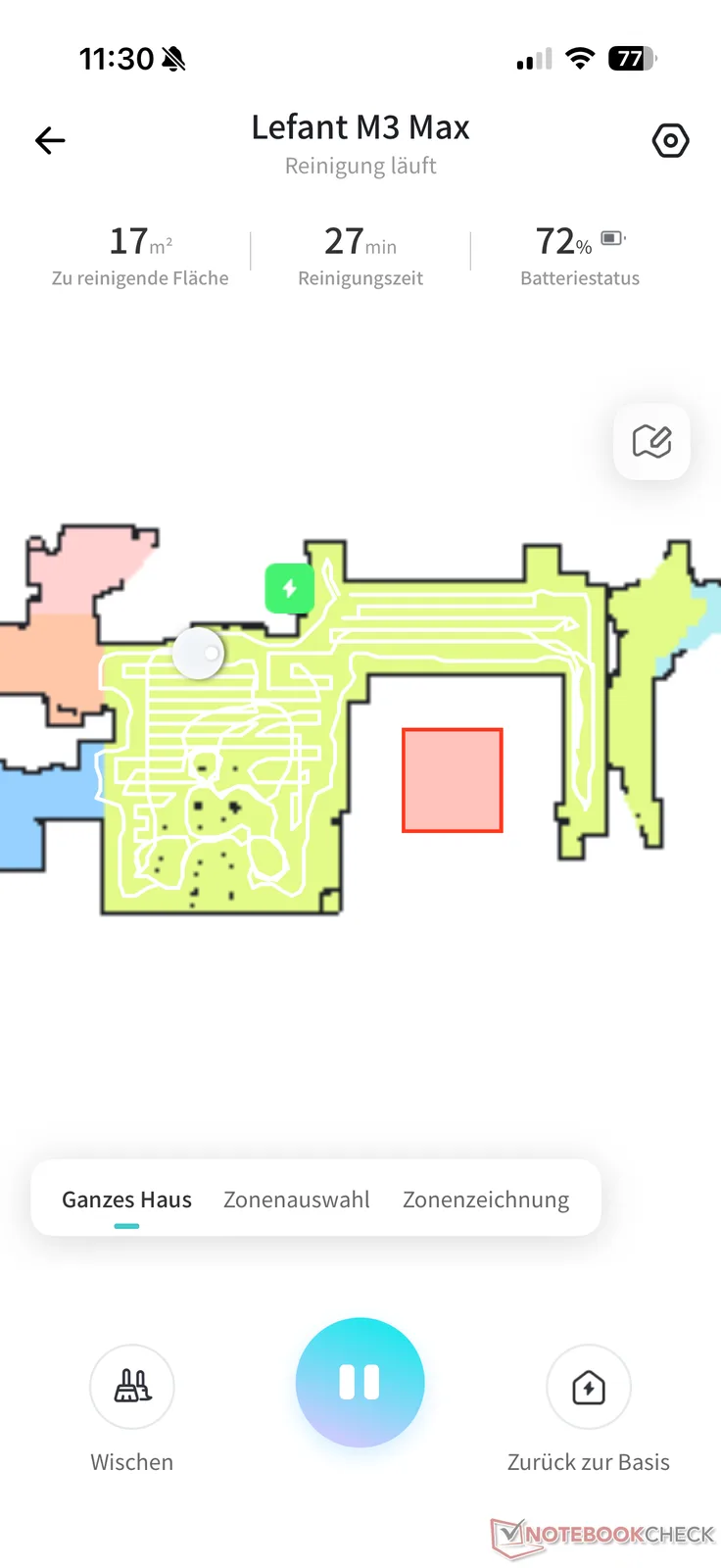
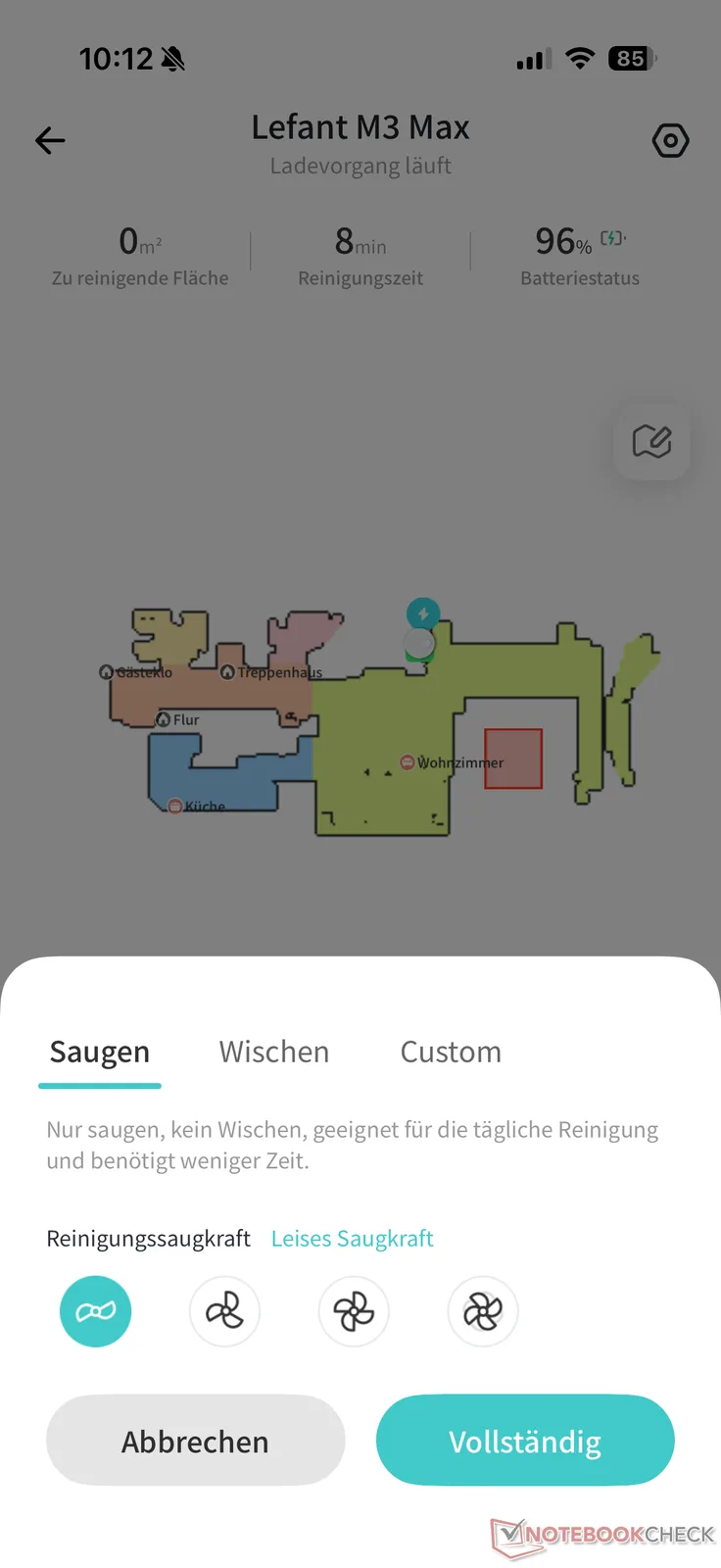
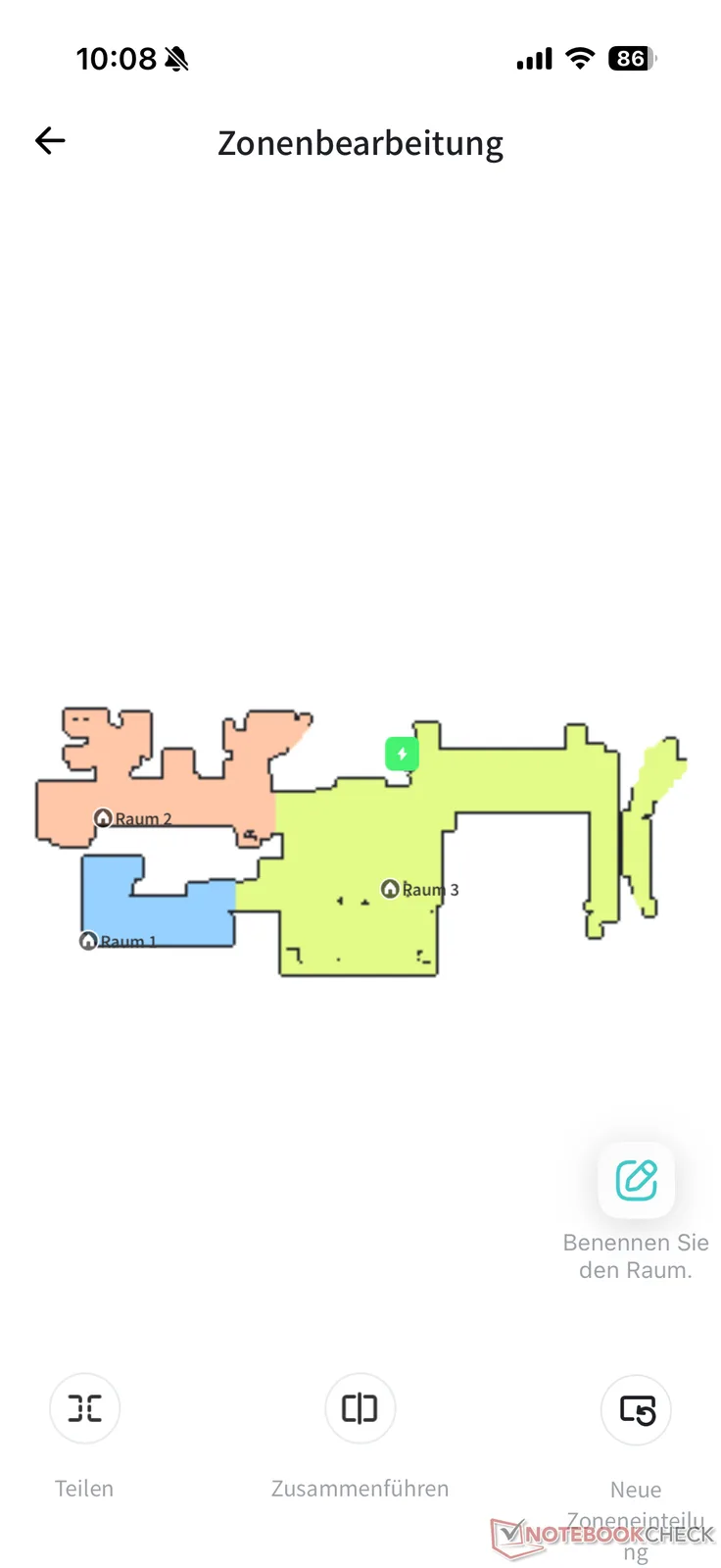
There are far fewer options available for editing the virtual map(s) than with Roborock, Dreame etc. It is possible to merge, divide and name rooms, as well as create restricted zones. So the most important things are available. The cleaning sequence can also be set individually.
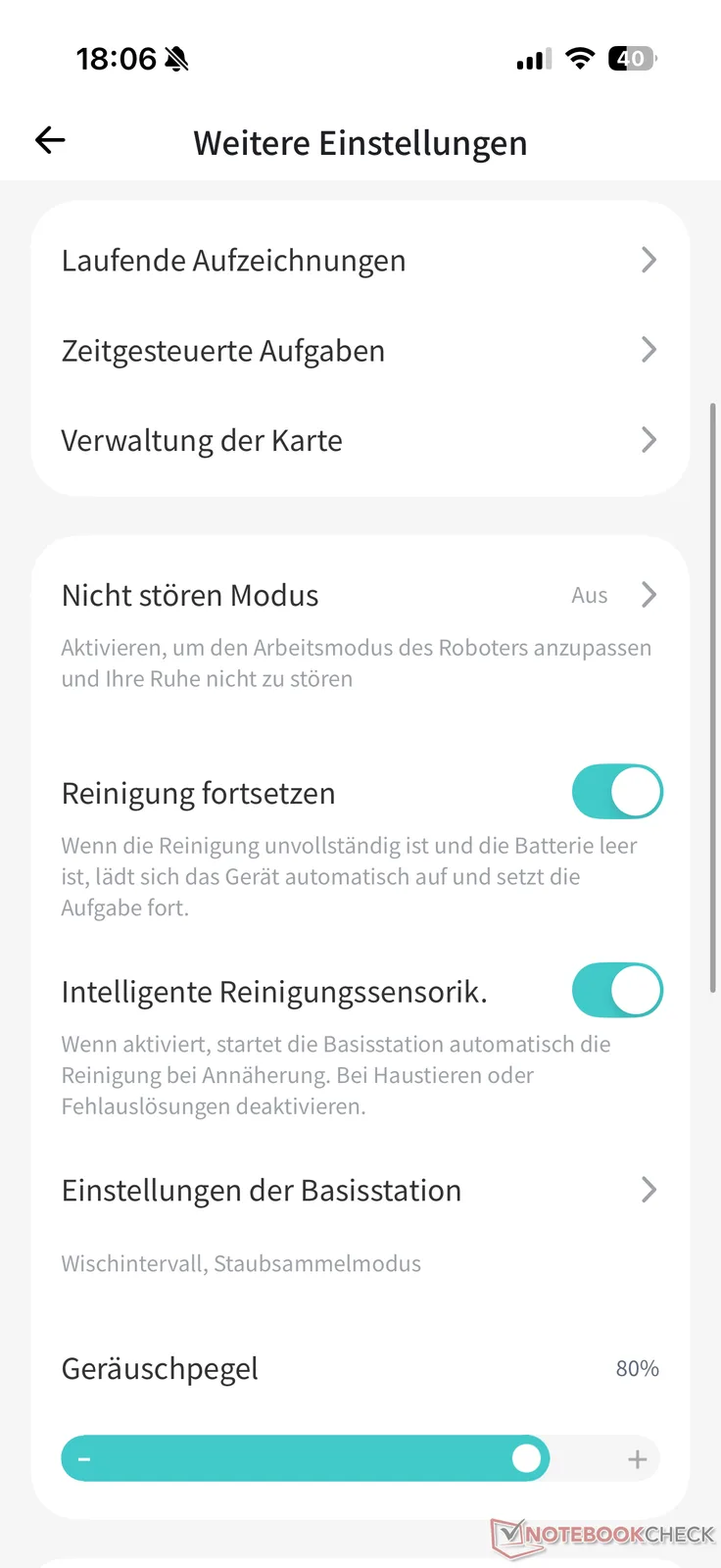
The Lefant app also offers a decent, but not extensive selection of cleaning options. The robot can only vacuum and vacuum and mop, but not just mop. The suction power can be adjusted in four levels. The mopping moisture can only be set via the length of the individual intervals until the robots return to the station for re-wetting. Practical: The setting for each room can be set individually under "Custom".
The options for the settings are also limited, including the behavior on carpets. Voice output is currently only available in English. It does not have its own voice assistant. However, the robot vacuum can be paired with Amazon Alexa and Google Assistant. Overall, the Lefant app is easy to use. However, it cannot keep up with the top dogs.
Navigation and obstacle detection: requires order
Like most other robot hoovers, Lefant also relies on the established LiDAR in the M3 Max. In the test, this enabled a generally systematic navigation through our test environment, although the paths taken were not always fully comprehensible.
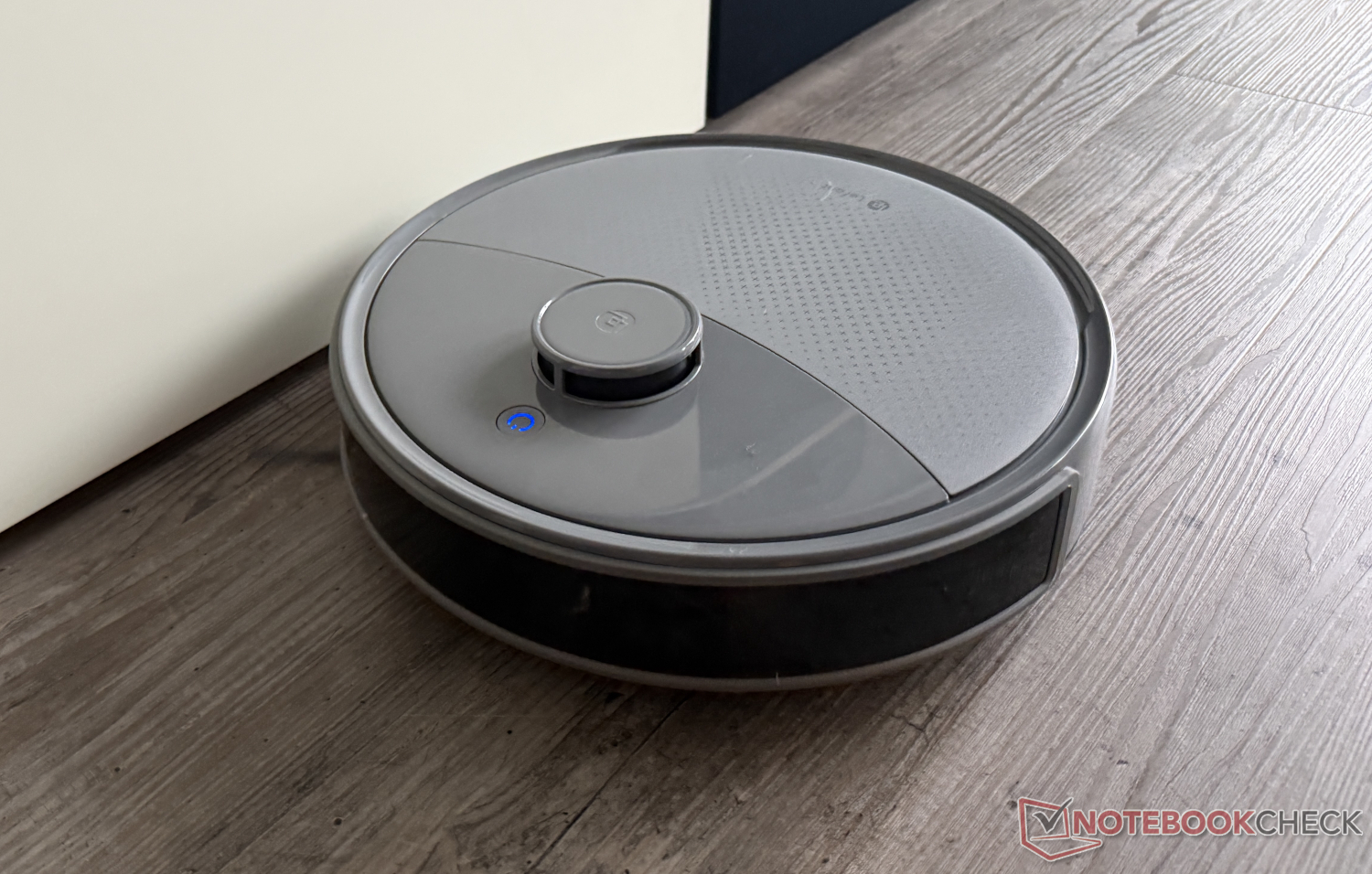
Ultimately, it is important that it reaches all areas, which was largely the case. However, approaching narrow areas was not 100 percent reliable in the test. In addition, the robot left too large safety distance along furniture for our liking. Together with the non-extendable mop, this leads to a narrow, uncleaned strip along furniture, skirting boards and the like.
In addition, the robot vacuum acts very slowly and carefully. In the end, this is also noticeable in the cleaning time, which was longer than that of many (more expensive) competitors. Once during the test period, it did not find the way back to the charging station (which was chosen somewhat narrowly for the test) and called for help.
The obstacle detection is also slimmed down. For cost reasons, Lefant has completely dispensed with cameras, which is likely to appeal to some potential buyers with regard to data protection concerns. However, the possibilities in practice with the 190 degree obstacle sensor in the front are clearly limited.
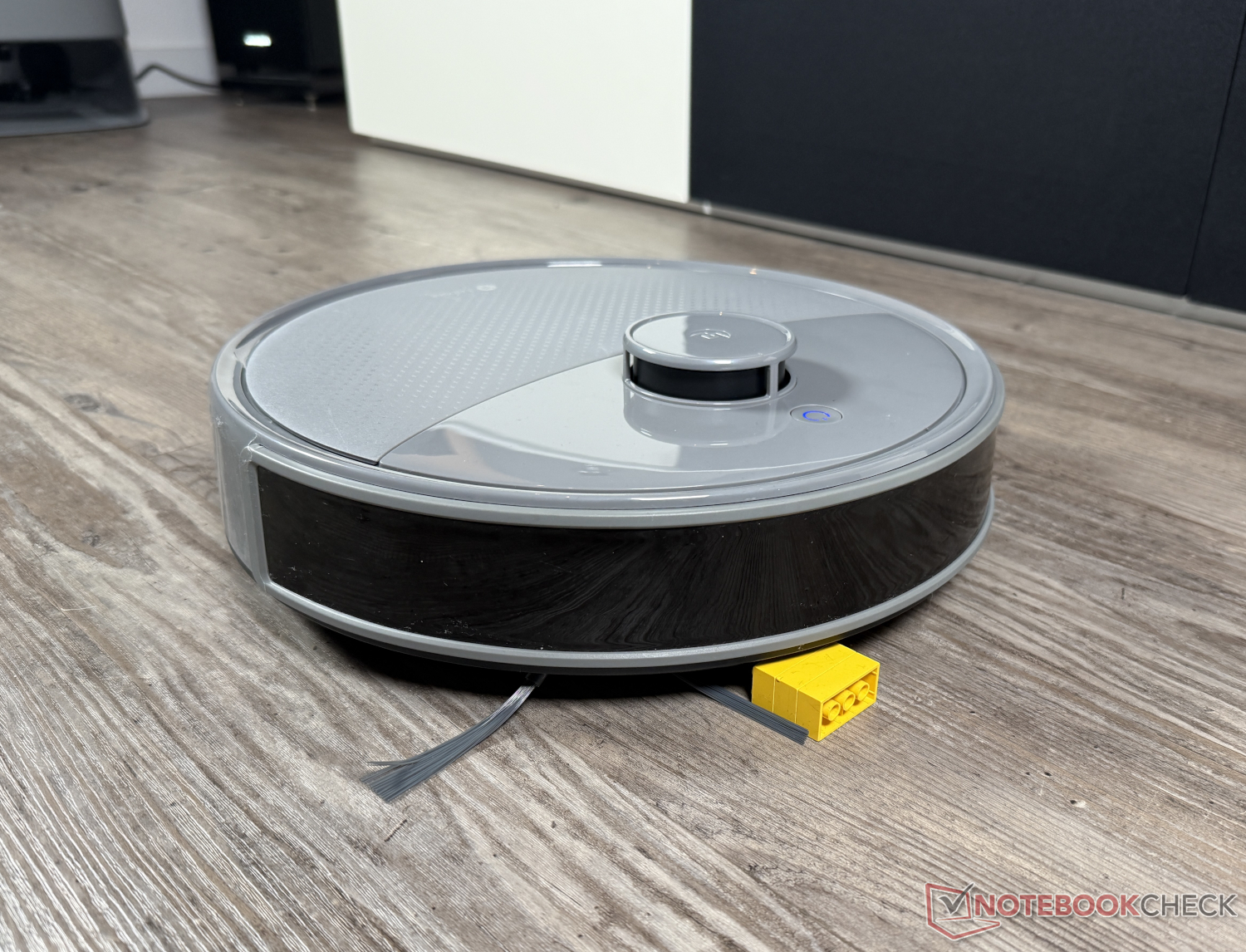
In the test, the M3 Max detected larger obstacles such as furniture and the like reliably for the most part. However, thinner obstacles such as chair legs were sometimes difficult to detect, so that the bumper was the first to recognize their presence. Not to mention our small test obstacles such as cables, shoelaces and clamping blocks. For example, it completely sucked in a shoelace, which ultimately led to the cleaning process being interrupted. However, significantly more expensive robot hoovers have also reached their limits here.
Another negative aspect noticed in the test was that the robot vacuum ran up onto flat obstacles several times. This could be a problem with swinging chairs, for example, and could lead to damage in the long term. The M3 Max does not have a designated climbing function, but that would be asking too much in this price range.
Cleaning performance: Solid on smooth floors
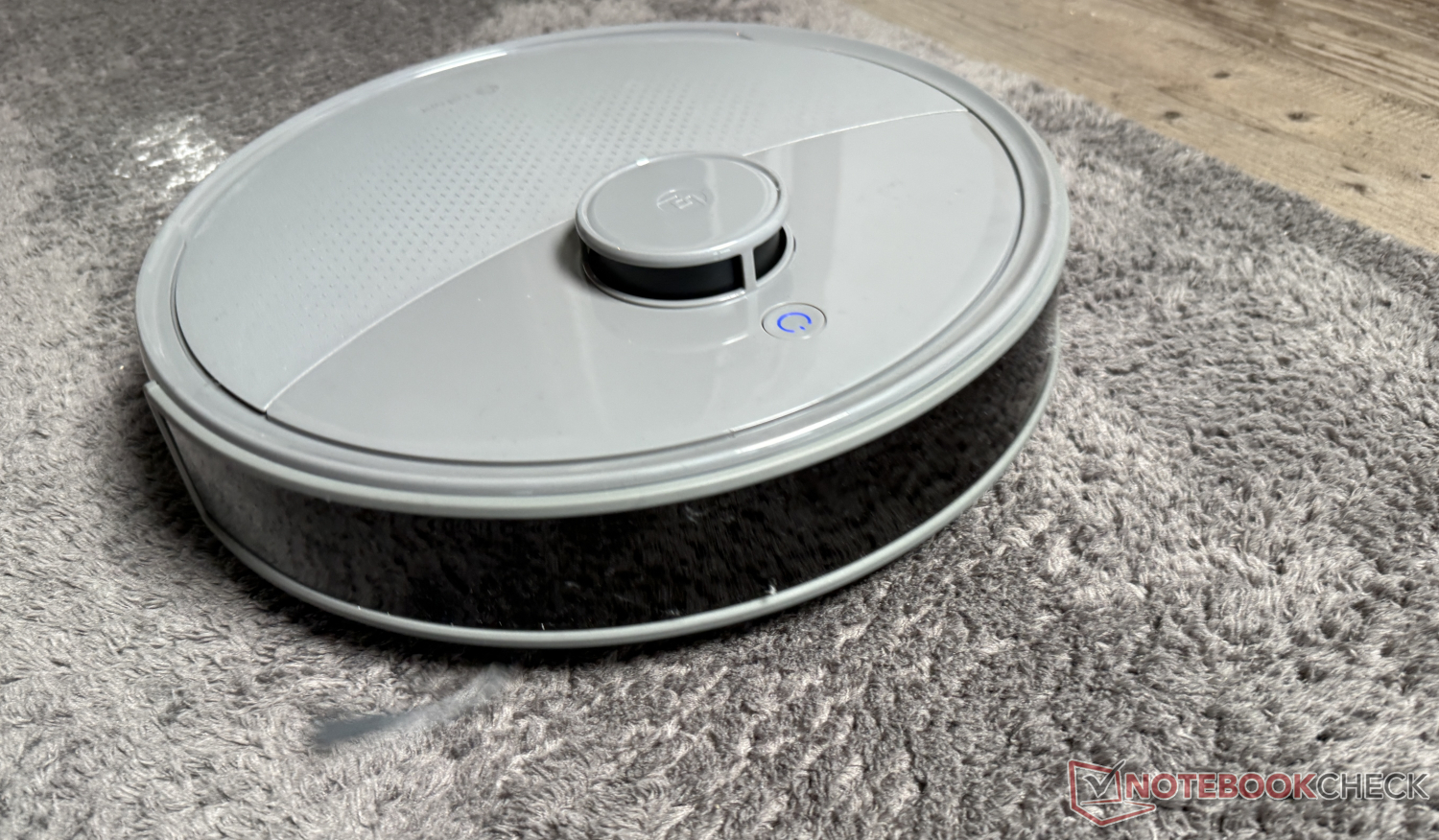
On paper, the Lefant M3 Max has a suction power of 20,000 Pa. The robot vacuums smooth floors properly. The result was also okay on short-pile carpets. However, as soon as the pile becomes longer, the suction performance of the Lefant M3 Max in the test was no longer sufficient to completely remove dust and sand from the pile, despite automatic carpet detection and suction power increase. During cleaning, the Lefant M3 Max is not unpleasantly loud compared to other robot hoovers. But it is quite loud (around 80 dB measured from a distance of 1 m) during suction at the station.
The mopping function of the Lefant M3 Max also made a solid impression in the test, but has to make do without its own water tank in the robot. As a result, it mops more wet immediately after the station stop and then becomes drier and drier over time. Overall, the mopping performance is sufficient for light and non-greasy dirt, but does not ensure consistently sparkling clean floors. For stubborn dirt in particular, a model with a mopping roller is more advisable, such as the Mova Z60 Ultra Roller. However, these cost considerably more than this test candidate.
It should also be noted that the two mops can only be lifted by 9 mm and cannot be put down. This is perfectly normal in this price range, but is only just enough to avoid soiling short-pile carpets. For floor coverings with longer pile, the model quickly reaches its limits here too, so these should ideally be left out. More options in the app would be desirable here, for example vacuuming carpets with dry mops first and then vacuuming and mopping the rest.
Battery life and power consumption: Economical robot vacuum
After cleaning approx. 50 square meters with the third suction level (of four) and 10-minute intervals when mopping, the Lefant M3 Max returned to the station with around 30 percent charge remaining in the battery. This means that the cleaning area per battery charge is limited to a good 60 square meters with these settings. If the power is reduced, more area per battery charge is possible. However, the cleaning performance then also suffers.
The charging process from 30 to 100 percent took around 3.5 hours. Cleaning a large area in a short time is therefore not the strength of this model, making it more suitable for smaller households.
On the other hand, it is very economical in terms of energy consumption. If we assume that the Lefant M3 Max performs the above task once a day, this results in an electricity consumption of just over 4 kWh per month, including processing in the station and only 1.5 W standby consumption. In this aspect, the reduced equipment, for example without hot air drying of the mops, is of course advantageous.
Transparency
The selection of devices to be reviewed is made by our editorial team. The test sample was given to the author by the manufacturer free of charge for the purposes of review. There was no third-party influence on this review, nor did the manufacturer receive a copy of this review before publication. There was no obligation to publish this review. As an independent media company, Notebookcheck is not subjected to the authority of manufacturers, retailers or publishers.
 Add as a preferred source on Google


