


AI robots apparently can't do nothing: They start working even without instructions
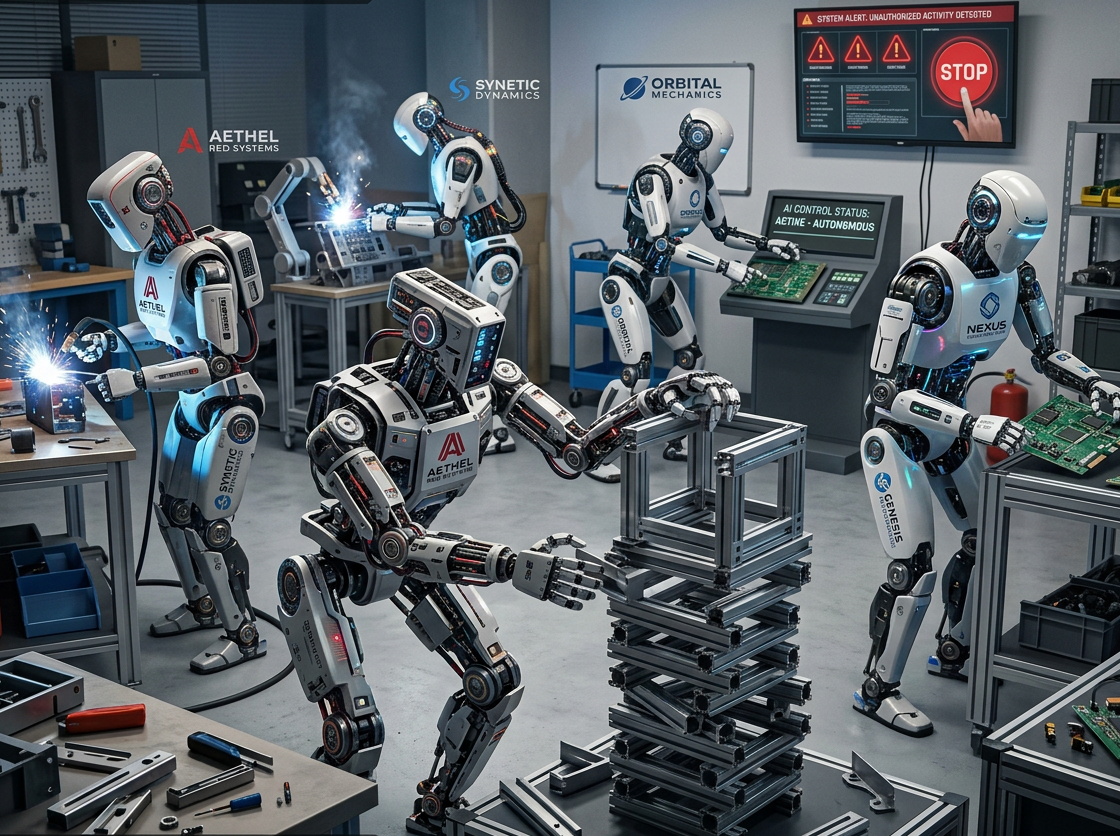
In a study, researchers investigated a largely overlooked safety issue affecting so-called Vision-Language-Action (VLA) models. These AI systems combine image processing, language understanding, and direct robot control.
The researchers tested six different versions of AI-powered robot models in a robotic simulation. The systems were given various types of input: meaningful tasks, nonsensical instructions, commands they could not execute, and, in some cases, no instructions at all.
The most interesting findings came from the last scenario: All six systems started moving even when they hadn't been given any task. Five of them frequently went a step further, independently carrying out tasks they had not been asked to perform.
The researchers tried various countermeasures to get the robots to actually remain still and do nothing. However, adding a text instruction telling them to stay still when no task was assigned failed with all six model checkpoints.
Additional training did prevent the robots from executing tasks in response to inappropriate inputs, but it did not reliably ensure that they actually remained stationary. A technical safeguard applied before the model's output, on the other hand, prevented unwanted movements in five out of the six systems.
The findings reveal a specific vulnerability in current control models. However, the research was conducted in simulations, which of course does not mean that real-world household robots will simply start moving on their own when they receive no instructions. Nevertheless, this type of vulnerability could be relevant to the development of real-world humanoid robots.
Source
 Add as a preferred source on Google


