




AI could flood the Earth with millions of tons of e-waste, report warns
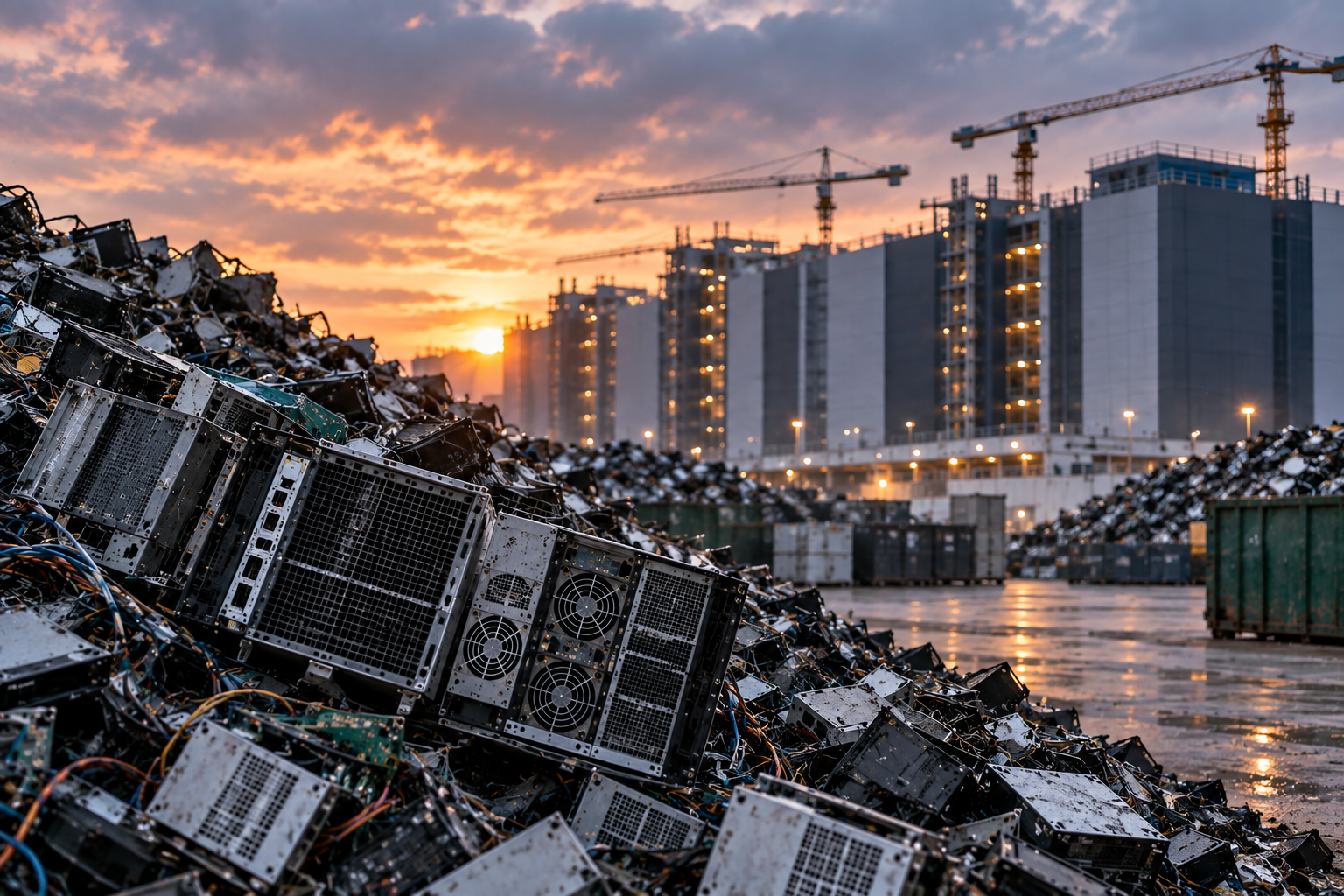
The global race to build AI data centers could create a massive new stream of electronic waste as servers and other equipment are replaced at increasingly short intervals. A new report from the environmental group Basel Action Network (BAN) estimates that AI-driven infrastructure could triple the world’s annual output of e-waste over the next 25 years.
The environmental nonprofit projects that AI-driven equipment retirement could generate up to 13 million metric tonnes of e-waste per year by 2030. BAN’s estimate covers more than the servers used to run AI models: it also includes networking hardware, power-distribution systems, cooling equipment, energy-storage gear, cabling and other physical infrastructure required to operate large data centers.
The report projects that the volume of discarded hardware generated by AI over the coming decades could fill enough shipping containers to circle the globe six times. That equipment can contain hazardous materials including lead, mercury, cadmium and so-called “forever chemicals,” as well as valuable metals that can be difficult to recover economically. BAN says only around one-fifth of electronic waste is currently properly managed.
BAN’s calculations are based partly on the expected scale of new data-center construction. Analysts cites estimates of roughly 100 GW of new computing capacity being added globally by 2030, and then models the physical hardware required to support it. A typical server rack can weigh about 1,360 kg, while networking switches, cabling and supporting systems add further material demand.
A key assumption behind the forecast is rapid replacement. The report projects that much of the hardware associated with AI infrastructure would need to be replaced every two to five years, rather than designed for repair, reuse or long service lives. The group also assumes that AI’s growing computing requirements could accelerate upgrades to consumer PCs, smartphones and telecommunications equipment, as users seek devices capable of handling increasingly demanding workloads.
The group argues that governments and technology companies need plans for repair, reuse, recycling and responsible end-of-life management before the AI infrastructure boom creates a larger waste problem. Its figures are projections, not measured outcomes, and depend on assumptions about the pace of data-center construction and how often operators replace their equipment.
Source(s)
 Add as a preferred source on Google


No comments for this article
