




A rice-sized bionic eye implant helps legally blind people read letters again in a successful trial and brings artificial sight closer to reality: here is how it works
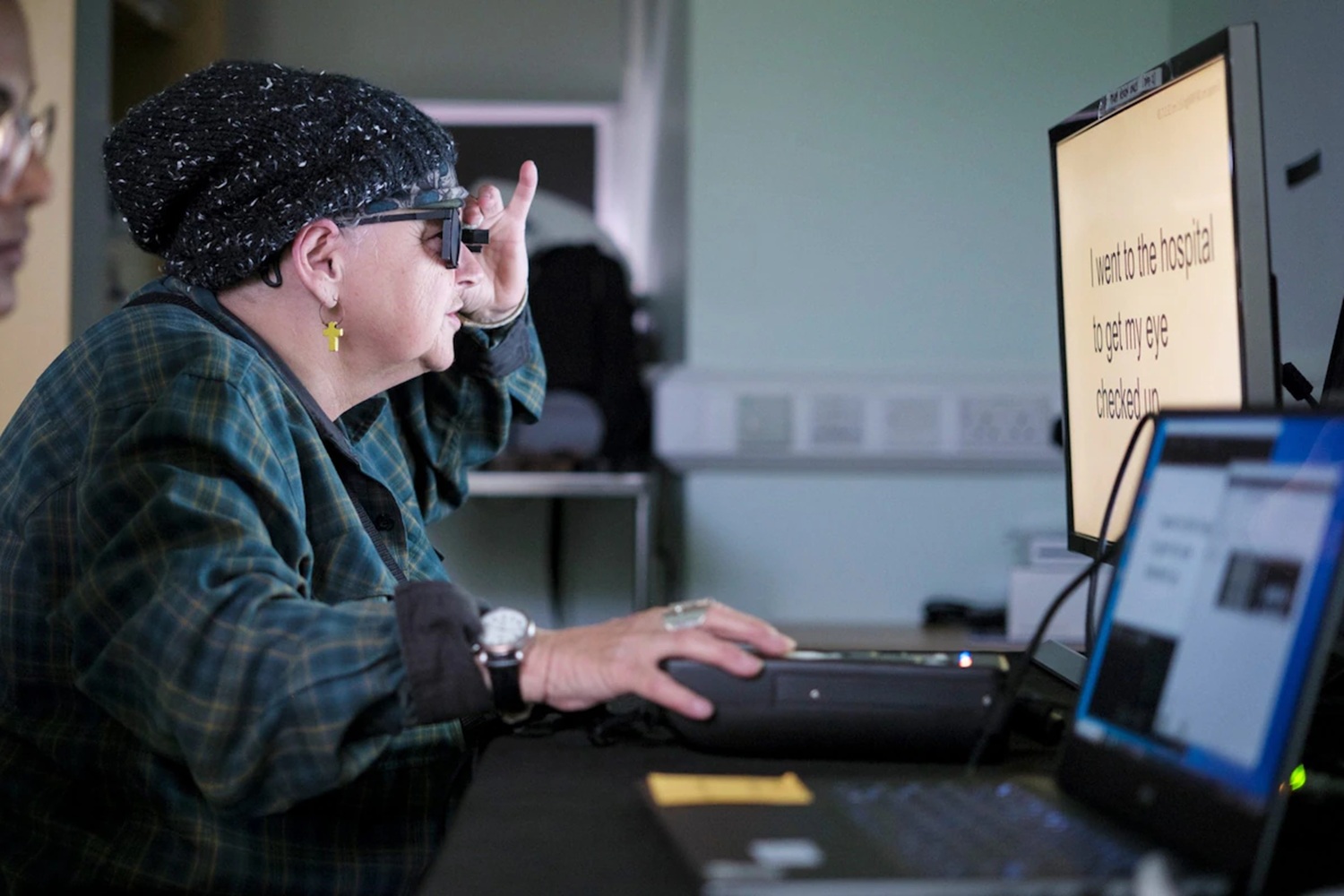
A wireless bionic eye implant, smaller than a grain of rice, has restored enough vision to legally blind patients for them to read letters and recognize faces again. The implant, called the PRIMA implant, was developed by Science Corporation, a California-based biotech company specializing in neural engineering.
The 2-millimeter-square device is placed under the retina during a 2-hour surgical procedure. Once activated, it connects wirelessly to a pair of augmented-reality glasses equipped with a tiny video camera. This trial is likely the most significant step yet toward functional artificial sight.
How does it work?
The system copies the way healthy eyes process visual information, but this time, it replaces damaged light-sensing cells with electronics. The glasses then capture video of the wearer’s surroundings and feed it to a pocket-sized processor. This processor uses AI algorithms to convert the image into infrared light patterns, which are then projected onto the implant.
The PRIMA chip contains an array of photodiodes and microelectrodes that transform these light patterns into tiny electrical signals. Those signals stimulate the surviving retinal cells around the damaged macula, which relay them through the optic nerve to the brain. The implant essentially “rewires” around the dead cells, allowing the brain to reconstruct visual information where none existed before.
Because the brain must relearn how to interpret these new electronic signals, patients undergo months of visual rehabilitation after activation. A “zoom-in” feature on the smart glasses allows them to magnify text, helping with early reading exercises.
Legally blind patients regain reading ability
In a multicenter clinical trial across the UK, France, Germany, Italy, and the Netherlands, 38 participants with advanced macular degeneration were fitted with the device. Many were unable to read even the largest letters on a vision chart before surgery. After one year, more than 80% of patients reported meaningful improvement, with an average gain of 25.5 letters, about five lines, on an eye chart. One participant improved by 59 letters, or 12 lines.
Dr. Mahi Muqit, senior consultant at Moorfields Eye Hospital, described the results as “a new era for artificial vision,” adding that patients “went from being in darkness to being able to start using their vision again.”
Dr. Frank Holz, lead author of the New England Journal of Medicine paper, said the implant “represents a paradigm shift” for treating late-stage macular degeneration, one of the leading causes of blindness in older adults.
Bringing artificial sight closer to reality
According to the Royal National Institute of Blind People (RNIB), one in four legally blind people in the UK has vision loss caused by advanced macular degeneration. There are presently no cures to restore sight once the cells are damaged; treatments can only slow the disease. The PRIMA implant changes that equation by offering genuine central vision restoration, a feat never before achieved in human trials.
Science Corporation co-founder Max Hodak called the results “a milestone in neural engineering,” adding, “This breakthrough underscores our commitment to pioneering technologies that provide hope to patients in need.”
The company is now seeking European regulatory approval, with hopes that the device could soon become available through public health systems such as the NHS. If approved, it could mark the first time that a brain, a computer interface designed for vision restoration moves from experimental research into real-world clinical practice, turning the dream of artificial sight into a reality.
Source(s)
 Add as a preferred source on Google


