


 Deutsch
 Español
 Français
 Italiano
 Nederlands
 Polski
 Português
 Русский
 Türkçe
 Svenska
 Chinese
 Magyar
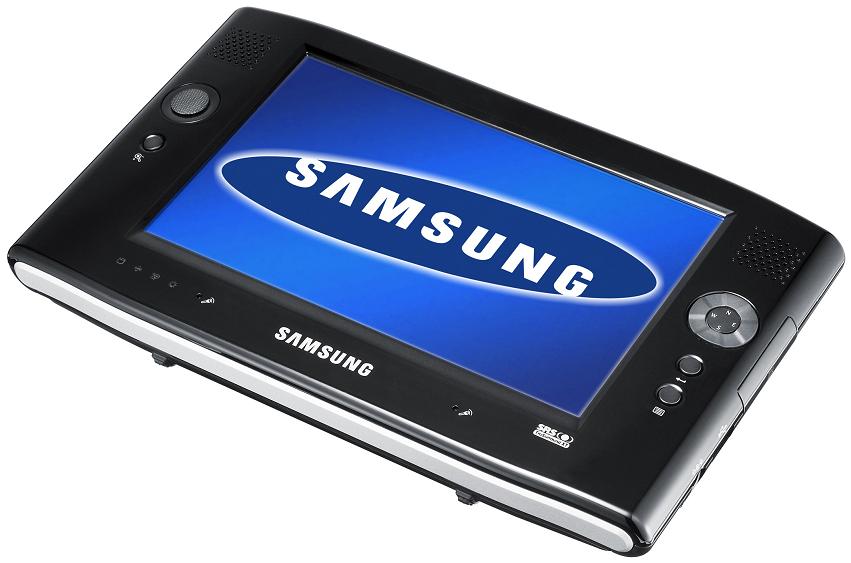
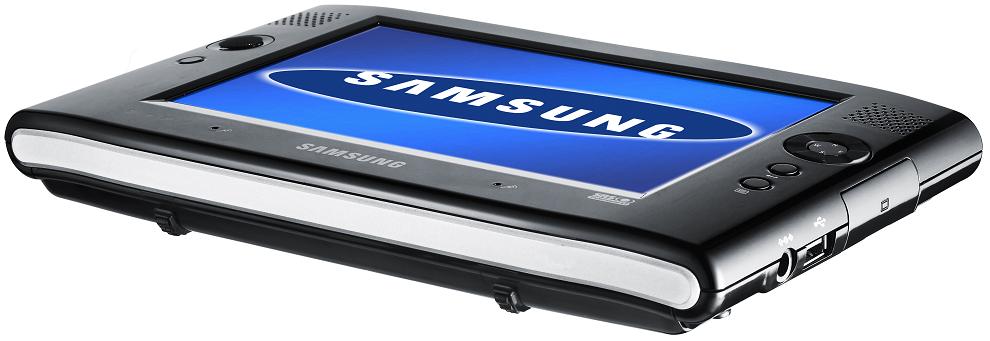
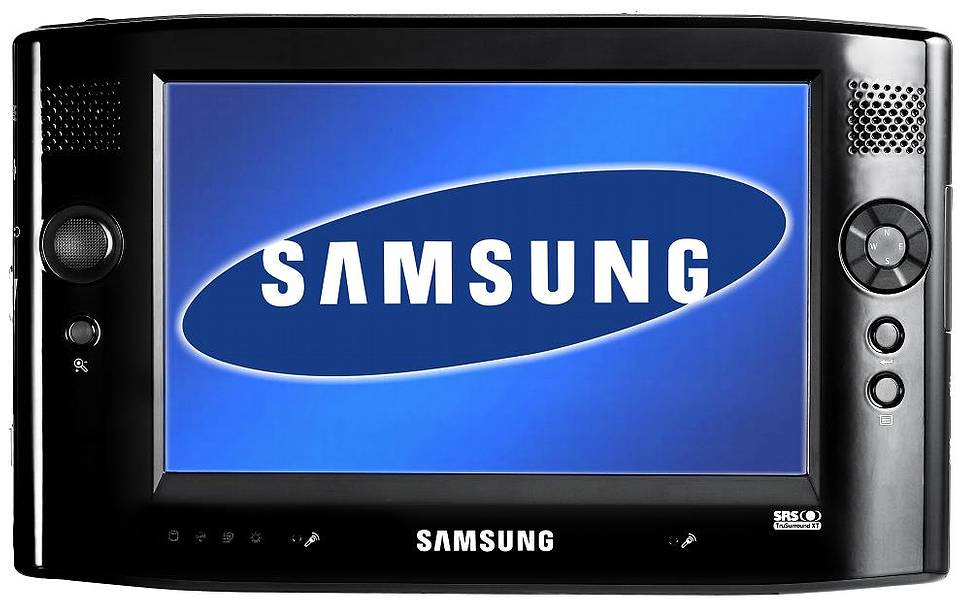
Samsung Q1
Specifications
Pricecompare
Average of 14 scores (from 18 reviews)
Reviews for the Samsung Q1
Source: PC Pro
 Archive.org version
Externally, the Q1 hasn't changed at all since we last saw it, but there have been changes on the inside. There's a 32GB solid-state hard disk, the RAM has been bumped up to 1GB from 512MB and you also get 802.11a/b/g wireless. Despite the improved specifications, the Q1-SSD is anything but mobile computing nirvana.
eher kurz gehaltener Test; online abrufbar
2 von 6
Single Review, online available, Short, Date: 03/15/2007
Rating: Total score: 33%
Source: Wired Magazine
Archive.org versionSporting a glossy, curvy bidy, the 1-inch thick Q1 is a temptress, A feature called AVS Now launches multimedia features without booting Windows. And the battery gave us enough power for two hours and three minutes of use.Wired: Side switches let you control functions like volume. Multimedia playback without booting to Windows. Top-notch sound and an LCD as brigth as any. Pretty. Includes battery-charge indicator, but... Tired: ...you have to pull out battery to read ti. Unresponsive nav keys. Slow. No camera.
kurzer Vergleichstest von Notebook-Modellen; Test nur in der Zeitschrift verfügbar
6 von 10, Leistung langsam, Akkulaufzeit gut
Comparison, online available, Very Short, Date: 11/01/2006
Rating: Total score: 60% performance: 40%
Source: Trusted Reviews
Archive.org versionThe Q1 SSD is a technology showcase for Samsung; a halo effect product if you like. Creating a portable device with 32GB of solid state storage is nothing to be sniffed at, and Samsung has raised the bar when it comes to mobile technology. Is the Q1 SSD worth the money? That depends on whether you like to be at the bleeding edge of technology, and of course, whether you think that the UMPC platform is worth having in the first place. Whether or not you like the idea of an Ultra Mobile PC doesn’t change the fact that Samsung has created an impressive technology demonstration with the Q1 SSD. The solid state drive means that there are no moving parts and thus reduces the chance of failure, even if the user is rough. The performance improvements are obvious, while the reduction in battery drain is welcome. What I’d really like to see though, is one of Samsung’s ultra-portable notebooks with one of these drives inside it.
ausführlicher Test mit Geräteaufbau und Testwerten und Bildern; online abrufbar
(von 10): 7, Preis/Leistung 6, Leistung 8, Ausstattung 8
Single Review, online available, Short, Date: 09/24/2006
Rating: Total score: 70% price: 60% performance: 80% features: 80%
Source: Tablet PC2
Archive.org versionThe Ultra Mobile PC was designed for ease of mobility and convenience and the Q1 provides that. If you enjoy the convenience of having all of your desktop applications, email, MP3, Pen and Ink capabilities, GPS and other computer features all in a 1.7 pound package doesn't weigh you down when your out and about the Q1 is worth looking into.
umfangreicher Erfahrungsbericht eines Benutzers; online abrufbar
Display sehr gut
Comparison, online available, Very Short, Date: 07/15/2006
Rating: Total score: 90%
Source: Pocket Lint
Archive.org versionOrigami, the art of folding paper to make something delicate and new. At least that’s what it meant until Microsoft turned it into their codename for the Ultra Mobile PC (UMPC), where they’ve created a specification that allows manufacturers to turn Windows XP into a full-fledged mobile platform. First out of the gate is the Samsung Q1, which weighs in at 800g and looks a little like an overblown PSP. The concept is all based around the use of a 7-inch digitised screen, a smaller version than those found on Tablet PC devices.
eher kurz gehaltener Test; online abrufbar
6 von 10
Single Review, online available, Short, Date: 06/26/2006
Rating: Total score: 60%
Source: Trusted Reviews
Archive.org versionTop marks to Samsung for creating a beautifully designed and constructed ultra mobile PC. The Q1 really does look the part and in many ways it has the ability to back up its stylish appearance. The inclusion of the USB keyboard travel pack is more of an obvious necessity than a good idea, making the Q1 a usable mobile computer. General browsing and even watching video is a joy on this little machine, but you really want to do these things on the move, without being tethered to a power socket. Ideally I’d like to see the next Q1 (the Q2 maybe?) ship with a higher resolution screen – preferably 1,024 pixels wide – and better battery life. Considering that Sony can squeeze seven hours out of the TX2XP, I have no doubt that Samsung can manage better battery life in the next Q1, but as the current Q1 stands, it’s not the ultimate mobile computer that it should be.
ausführlicher Test mit Geräteaufbau und Testwerten und Bildern; online abrufbar
(von 10): 7, Preis/Leistung 8, Leistung 7, Ausstattung 7
Comparison, online available, Very Short, Date: 05/24/2006
Rating: Total score: 70% price: 80% performance: 70% features: 70%
Source: vnunet.com
Archive.org versionWindows has gone through several mobile guises over the years, with Pocket PC and SmartPhone devices being the most familiar platforms. Microsoft's latest venture is the ultra-mobile PC (UMPC) and the Samsung Q1 is the first to take advantage of the technology. In essence, the Q1 is a cross between a notebook and handheld computer – both in size and power terms. To prolong battery life, it uses an ultra-low-voltage (ULV) Intel Celeron processor, which runs at 900MHz. It also sports 512Mb of memory and has a 40Gb hard disk. The Q1 is undeniably an evolution in mobile computing but it's hard to see how far spread its appeal will be.
eher kurz gehaltener Test; online abrufbar
3 von 5
Single Review, online available, Short, Date: 05/24/2006
Rating: Total score: 60%
Source: Personal Computer World
Archive.org versionWindows has gone through several mobile guises over the years, with Pocket PC and SmartPhone devices being the most familiar platforms. Microsoft's latest venture is the ultra-mobile PC (UMPC) and the Samsung Q1 is the first to take advantage of the technology. In essence, the Q1 is a cross between a notebook and handheld computer – both in size and power terms. To prolong battery life, it uses an ultra-low-voltage (ULV) Intel Celeron processor, which runs at 900MHz. It also sports 512Mb of memory and has a 40Gb hard disk.
eher kurz gehaltener Test; online abrufbar
3 von 5
Single Review, online available, Short, Date: 05/24/2006
Rating: Total score: 60% display: 45%
Source: PC World
Archive.org versionSamsung's Q1 and TabletKiosk's EO--the first systems based on the Microsoft/Intel Ultra Mobile PC specification--prove you can cram an awful lot into a small package. Both devices condense the best features of a tablet into a package that's less than half the size and weight of a typical laptop. One of the things that is missing is the $500 to $1000 price that Microsoft and Intel had promised for UMPCs. My 512MB configuration of the shipping Q1 sells for $1099, and the shipping 1GB EO I tested sells for $1164 (TabletKiosk sells an $899 unit with only 256MB of memory). Those prices don't include an external optical drive, a keyboard, or an extra battery pack--all options many users will consider necessities.
kurzer Vergleichstest von Notebook-Modellen; Test ist online abrufbar
70 von 100
Comparison, online available, Very Short, Date: 05/11/2006
Rating: Total score: 70%
Source: PC Mag
Archive.org versionWith Samsung's novel Q1 device ($1,099 direct), the much-hyped UMPC platform by Microsoft and Intel has arrived. First developed as part of the Origami project, these new, tiny Windows-based PCs are supposed to redefine how you compute on the go. In the end, though, I feel that the UMPC idea is just another questionable attempt by Bill Gates to revive the Slate Tablet. At first glance, the Q1 looks like a pumped-up Sony PSP. Even the scroll button resembles the joystick on the PSP. The big difference, of course, is that the Q1 is a fully functional PC loaded with the Windows XP (Tablet Edition) operating system.
eher kurz gehaltener Test; online abrufbar
2.5 von 5
Single Review, online available, Short, Date: 05/01/2006
Rating: Total score: 50%
Foreign Reviews
Source: PC Professionell
 DE→EN Archive.org version
Single Review, online available, Short, Date: 04/20/2007
Rating: performance: 70% display: 80%
Source: Minitechnet
DE→EN Archive.org versionComparison, online available, Very Short, Date: 01/25/2007
Rating: Total score: 40% performance: 60% display: 80% mobility: 80% workmanship: 80%
Source: Notebookjournal
DE→EN Archive.org versionComparison, online available, Very Short, Date: 11/20/2006
Rating: Total score: 75% price: 40% performance: 10% features: 80% display: 100% mobility: 50%
Source: PC Professionell
DE→EN Archive.org versionComparison, online available, Very Short, Date: 10/01/2006
Rating: Total score: 87% performance: 82% features: 80% ergonomy: 85%
Source: WCM
DE→EN Archive.org versionComparison, online available, Very Short, Date: 10/01/2006
Rating: features: 85% workmanship: 85% ergonomy: 85%
Source: PC Welt
DE→EN Archive.org versionSingle Review, online available, Short, Date: 07/03/2006
Source: ZDNet
DE→EN Archive.org versionSingle Review, online available, Short, Date: 05/17/2006
Rating: Total score: 67% performance: 60%
Source: Chip.de
DE→EN Archive.org versionSingle Review, online available, Short, Date: 04/01/2006
Comment
Intel Graphics Media Accelerator (GMA) 900: Intel Graphics Media Accelerator 900 is an integrated (onboard) graphic chip with shared memory on Mobile Intel 915GM chipset. It is the predecessor of Graphics Media Accelerator 950. The performance can be compared with the Mobile Radeon 9000 (with a 64 bit memory bus).
These graphics cards are not suited for Windows 3D games. Office and Internet surfing however is possible.
» Further information can be found in our Comparison of Mobile Graphics Cards and the corresponding Benchmark List.
Intel Celeron M: It is a Pentium M with halved level 2 Cache and limited on FSB 400. The characteristic of this processor is the speed, which is hardly slower than an equivalent Pentium M. However it can change the speed not dynamically like the Pentium M and therefore needs without load more current.
It is also available as Low Voltage Version with very small current consumption.
353: » Further information can be found in our Comparison of Mobile Processsors.
7.20":
This display format is in the mid-range for smartphones. It offers a compromise between good visibility, details and resolution on the screen, and you can still fit it into trouser pockets.
» To find out how fine a display is, see our DPI List.Samsung: Samsung Group is the largest South Korean conglomerate and was founded in 1938. Samsung Group employed 489,000 people in 2014 and is one of the world's largest companies in terms of revenue and market strength. The name Samsung means "Three Stars" in Korean and represents the three sons of the company's founder. The company was founded in 1938 as a grocery store. With its subsidiary Samsung Electronics, founded in 1969, Samsung took up the production of electrotechnical items, focusing on consumer electronics and household appliances at an early stage. Other branches in which the large corporation is active include mechanical engineering, automobiles (Hyundai), insurance, wholesale, real estate and leisure. Samsung manufactures a wide range of electronic products, including smartphones, televisions, home appliances and semiconductors. The company's Galaxy line of smartphones is one of the most popular in the world. Samsung is also a major player in the semiconductor industry, making memory chips and processors for many other electronics manufacturers.
63.71%: Such a poor rating is rare. There are only a few notebooks that were rated even worse. The rating websites do not give a purchase recommendation here.
» Further information can be found in our Notebook Purchase Guide.