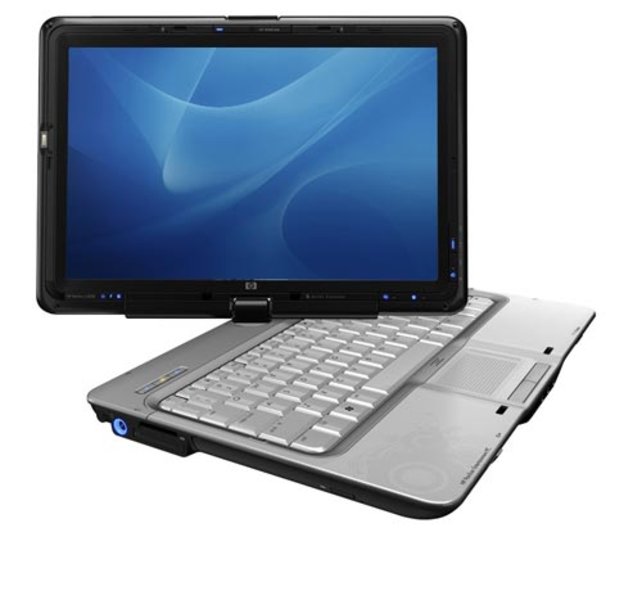
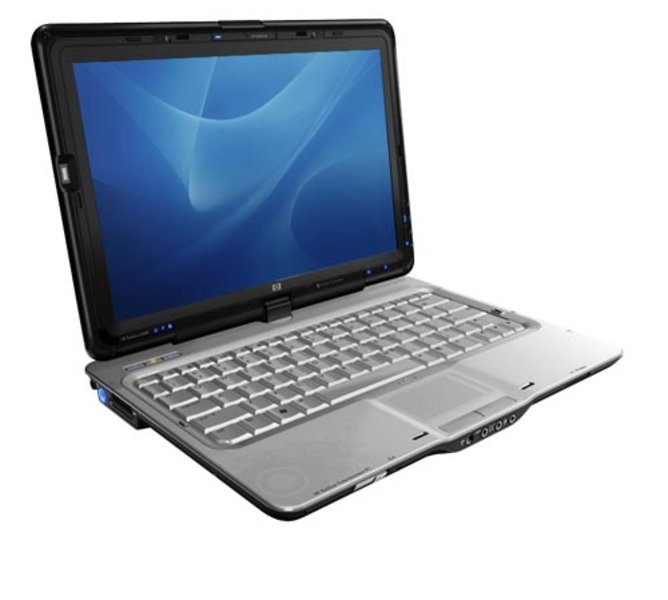
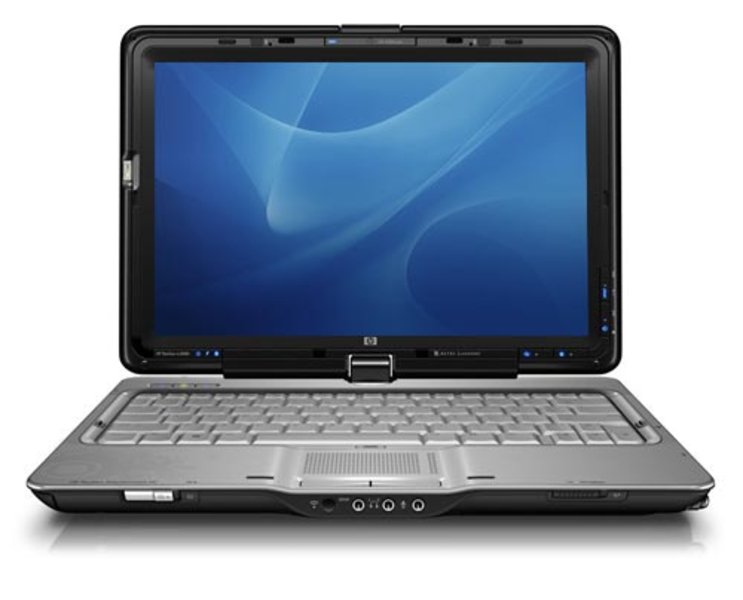
HP Pavilion tx2520
Specifications

Price comparison
Reviews for the HP Pavilion tx2520
Source: Hexus
 Archive.org version
The question we've posed ourselves is where does AMD's Puma platform make the most sense?
Puma provides a trade-off between substandard CPU performance, when compared to Intel's, that's compensated for by integrated graphics oomph that's better than ever before. Looking towards the future, the lack of CPU speed, with respect to multimedia applications, could be mitigated by more GPU-run applications, but we'll need to see an extensive library of such programs before the Turion's shortcomings are hidden away.
Leistung mäßig
Single Review, online available, Long, Date: 09/22/2008
performance: 60%
Comment
ATI Radeon HD 3200: Onboard (shared Memory) graphics chip (on RS780M chipset) based on the HD 2400 graphics core. It also features the UVD video engine to decode HD videos. Beware: Under Windows XP the HD 3200 may have no 2D accelleration because of a driver problem.
Only some 3D games with very low demands are playable with these cards.
» Further information can be found in our Comparison of Mobile Graphics Cards and the corresponding Benchmark List.
AMD Turion X2 Ultra: The AMD Turion X2 Ultra is part of the Puma platform and a mixture of the old K9 core (form the Turion 64 X2) and some parts of the K10 architecture (memorycontroller, hypertransport, crossbar switch from the Phenom). Because of the increased L2 cache ("Ultra" CPUs) and the improved memory controller, the performance increased a bit. Still a similar clocked Core 2 Duo is noticably faster.
ZM-80:
Mixture out of two K8 based cores and K10 uncores (e.g. memory controller). Offers improved power saving functions compared to older Turion CPUs but still not as good and fast as a Core 2 Duo. The ZM-80 is the slowest CPU of the ZM series and a entry level CPU in 2008.
» Further information can be found in our Comparison of Mobile Processsors.
 Add as a preferred source on Google