Notebookcheck

HP Mini 1035NR

Notebook Specifications

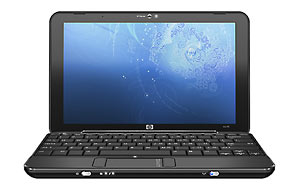
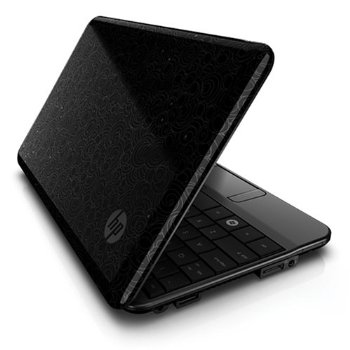
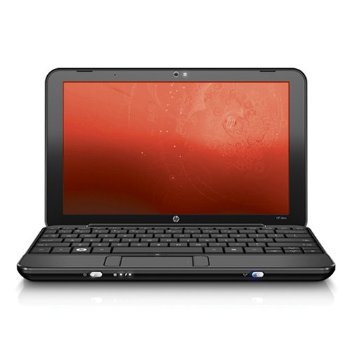
HP Mini 1035NRNotebook: HP Mini 1035NR (Mini 1000 Series)
Processor: Intel Atom N270
Graphics Adapter: Intel Graphics Media Accelerator (GMA) 950
Display: 10.2 inch, 16:9, 1024x600 pixels, glossy: yes
Weight: 1.1kg
Price: 400 euro
Average Score: 60% - poor
Average of 1 scores (from 1 reviews)
price: - %, performance: - %, features: - %, display: 80% mobility: - %, workmanship: - %, ergonomy: - %, emissions: - %

Reviews for the HP Mini 1035NR

60% HP Mini 1035NR Netbook Laptop PC
Source: Comp Reviews English
HP's sophmore entry in the netbook category brings some exciting features into a more consumer oriented model but drops too many features unique to the older 2133 Mini-Note. The best feature of the HP Mini 1035NR has to be its spacious and well laid out keyboard. The larger 10.2-inch display is also one of the brightest on the market. They also made a great decision to include Bluetooth for wireless peripherals. It is too bad then that they made some big mistakes by dropping the number of peripheral ports, using a smaller and slower hard drive than their competitors and leaving the difficult to use trackpad.
3 von 5, Display gut
Single Review, online available, Very Short, Date: 12/02/2008
Rating: Total score: 60% display: 80%

Comment

Intel Graphics Media Accelerator (GMA) 950: Intel Graphics Media Accelerator 950 is an integrated (onboard) graphic chip on Mobile Intel 945GM chipset. It is a faster clocked version of the GMA 900 and supports no hardware T&L (Transform & Lightning) accelleration (which is required for some games).

Only older games can be played fluently with these graphics chips (if they were not too demanding). Shared memory graphic cores in this category got the advantage of less heat production and longer battery runtimes. For office, internet, image processing, and video editing tasks these graphics chips are still useable without any restrictions.


>> Further information can be found in our Comparison of Mobile Graphics Cards and the corresponding Benchmark List.

Intel Atom: The Intel Atom series is a 64-Bit (not every model supports 64bit) microprocessor for cheap and small notebooks (so called netbooks), MIDs, or UMPCs. The speciality of the new architecture is the "in order" execution (instead of the usual and faster "out of order" execution). Therefore, the transistor count of the Atom series is much lower and, thus, cheaper to produce. Furthermore, the power consumption is very low. The performance per Megahertz is therfore worse than the old Pentium 3M (1,2 GHz on par with a 1.6 GHz Atom).

N270:
>> Further information can be found in our Comparison of Mobile Processsors.

10.2": The netbook/subnotebook has a quite small display format. Nonetheless, it is a common format for netbooks. The advantage is, that the subnotebook/netbook can be small dimensioned and can be carried easily. Further the small display has the advantage, that it needs few energy, which improves the battery runtime and in consequence the mobility. The disadvantage is that the reading of texts is a bit exhausting for the eyes. It is difficult to use high resolutions.
>> To find out how fine a display is, see our DPI List.

1.1 kg: This subnotebook is one of the most lightweight of all notebooks and can be carried very easily. There exist hardly any models in this extreme class of weight. 7-9 inch displays are normal for this class of weight.

HP: The Hewlett-Packard Company, founded 1935, commonly referred to as HP, is a technology corporation headquartered in California, United States. HP specializes in developing and manufacturing computing, storage, and networking hardware, software and services. Major product lines include personal computing devices, enterprise servers, related storage devices, as well as a diverse range of printers and other imaging products. Other product lines, including electronic test equipment and systems, medical electronic equipment, solid state components and instrumentation for chemical analysis. HP posted US $91.7 billion in annual revenue in 2006, making it the world's largest technology vendor in terms of sales. In 2007 the revenue was $104 billion, making HP the first IT company in history to report revenues exceeding $100 billion. Market share regarding sales of personal computers in 2007 (market research IDC): HP 18.9 %, Dell 16.4 %, Acer 9.9 %, Lenovo 7.5 %, Apple 5.7 %

HP reviews

60%: Such a bad rating is rare. There exist hardly any notebooks, which are rated worse.

>> Further information can be found in our Notebook Purchase Guide.


Author: Stefan Hinum, 2008-12- 8 (Update: 2009-10-30)