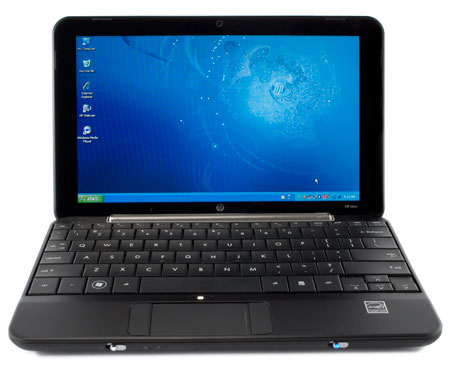
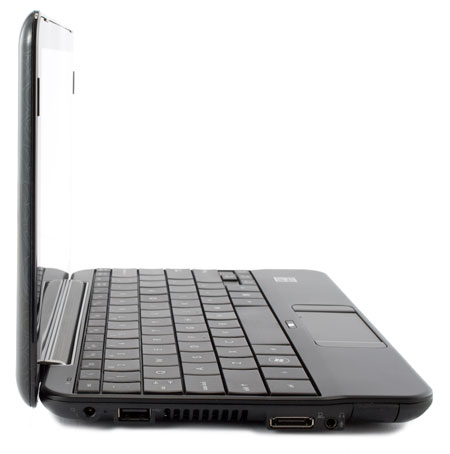
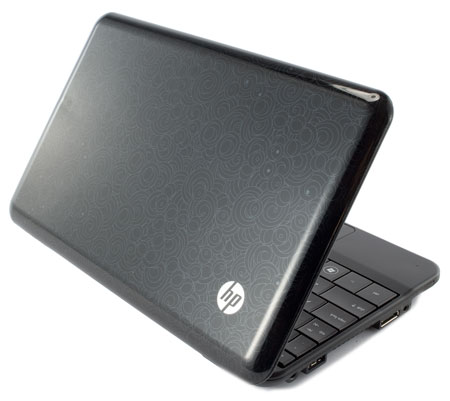
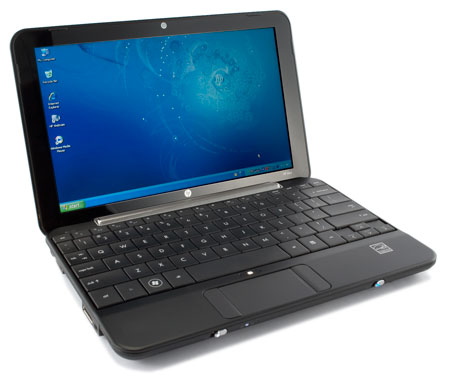
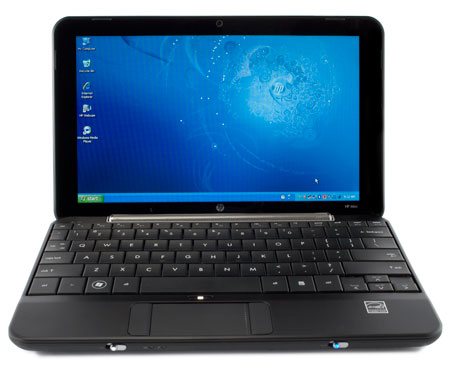
HP Mini 1001TU
Specifications
Price comparison
Reviews for the HP Mini 1001TU
Source: PC Authority
 Archive.org version
Given that the Eee PC 1000H is the one of the more expensive netbooks, the Mini 1001TU’s specifications look a bit lightweight in comparison. That doesn’t take away from its selling point: the usability is fantastic, and the excellent design and performance makes this one netbook you’ll be wanting to show off. We’re only too happy to recommend it.
Ergonomie ausgezeichnet, Leistung gut
Single Review, online available, Medium, Date: 01/13/2009
Rating: performance: 80% ergonomy: 95%
Source: PC Authority
Archive.org versionGiven that the Eee PC 1000H is the one of the more expensive netbooks, the Mini 1001TU looks a bit lightweight in specs in comparison. That doesn’t take away from its selling point: the usability is fantastic, and the design makes this one netbook you’ll be happy to show off. We’re only too happy to recommend it, but it might be a bit much for your wallet.
Preis mäßig, Mobilität gut, Ergonomie ausgezeichnet
Single Review, online available, Medium, Date: 12/04/2008
Rating: price: 60% mobility: 80% ergonomy: 95%
Comment
Intel Graphics Media Accelerator (GMA) 950: Intel Graphics Media Accelerator 950 is an integrated (onboard) graphic chip on Mobile Intel 945GM chipset. It is a faster clocked version of the GMA 900 and supports no hardware T&L (Transform & Lightning) accelleration (which is required for some games).
These graphics cards are not suited for Windows 3D games. Office and Internet surfing however is possible.
» Further information can be found in our Comparison of Mobile Graphics Cards and the corresponding Benchmark List.
Intel Atom: The Intel Atom series is a 64-Bit (not every model supports 64bit) microprocessor for cheap and small notebooks (so called netbooks), MIDs, or UMPCs. The speciality of the new architecture is the "in order" execution (instead of the usual and faster "out of order" execution). Therefore, the transistor count of the Atom series is much lower and, thus, cheaper to produce. Furthermore, the power consumption is very low. The performance per Megahertz is therfore worse than the old Pentium 3M (1,2 GHz on par with a 1.6 GHz Atom).
N270: Power efficient, cheap and slow netbook single-core CPU. Because of the in-order execution, its performance per MHz is worse than Core Solo or Celeron M processors.» Further information can be found in our Comparison of Mobile Processsors.
 Add as a preferred source on Google