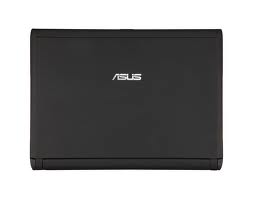
Asus U36J
Specifications

Price comparison
Average of 4 scores (from 5 reviews)
Reviews for the Asus U36J
Source: T3
 Archive.org version
Performance isn’t as strong as we hoped, but the U36J comes at a good price considering how slim and light it is. We were impressed by the strong range of features, including plenty of storage space for your media collection.
Single Review, online available, Very Short, Date: 10/05/2011
Rating: Total score: 60%
Source: Tech2.in.com
Archive.org versionASUS has priced the U36J at Rs. 56,699 which certainly is on the expensive side. If you're not too bothered about weight and wouldn't mind a slightly lower-performing notebook, you can go for the ASUS K42JA. Somehow, if you still seem to be uncovinced to buy this, there's the Acer Aspire 3820TG notebook which is priced at 799 Euros (approx Rs. 50,000) which has very similar specs too. In conclusion, the U36J might be on the expensive side, but if you're looking at good computing speeds with a light weight and a decent battery life, you can pick this one up.
Single Review, online available, Very Short, Date: 03/02/2011
Rating: Total score: 70%
Foreign Reviews
Source: Notebook.cz
 CZ→EN Archive.org version
Positiv: Kühlung und Akkulaufzeit; negativ: Lautsprecher und Touchpad-Tasten
Positive: fan and battery runtime; negative: speakers and touchpad-keys
Single Review, online available, Medium, Date: 03/29/2011
Source: Dinside
 NO→EN Archive.org version
Single Review, online available, Medium, Date: 01/31/2011
Rating: Total score: 83%
Source: Komputer for alle
 DA→EN Archive.org version
Single Review, online available, Very Short, Date: 05/16/2011
Rating: Total score: 80%
Comment
Series: In many reviews, the display is described and valuated negatively It is characterized dark and very glossy. Especially positively mentioned are the mobility features, the combination of thin construction, low weight and long battery runtime. Optimally, use these models in trains, buses or public buildings or when you have to switch between several rooms with the laptop. Not suited are bright gardens.
NVIDIA GeForce 310M: The GeForce 310M is the successor of the GeFore G210M and based on the same chip with very similar clock rates (shader speed +30MHz to 1530MHz).
Only some 3D games with very low demands are playable with these cards.
» Further information can be found in our Comparison of Mobile Graphics Cards and the corresponding Benchmark List.
380M: The Core i3-380M is a fast clocked Core i3. The TurboBoost, AES, VTd, and Trusted Execution functions are deactivated in the i3-series. Therefore, it always clocks with max. 2.53 GHz (of course Speedstep is included). Thanks to Hyperthreading, 4 threads can be processed simultaneously. An integrated graphics card (GMA HD) and a DDR3 memory controller are also included in the package.» Further information can be found in our Comparison of Mobile Processsors.
 Add as a preferred source on Google