




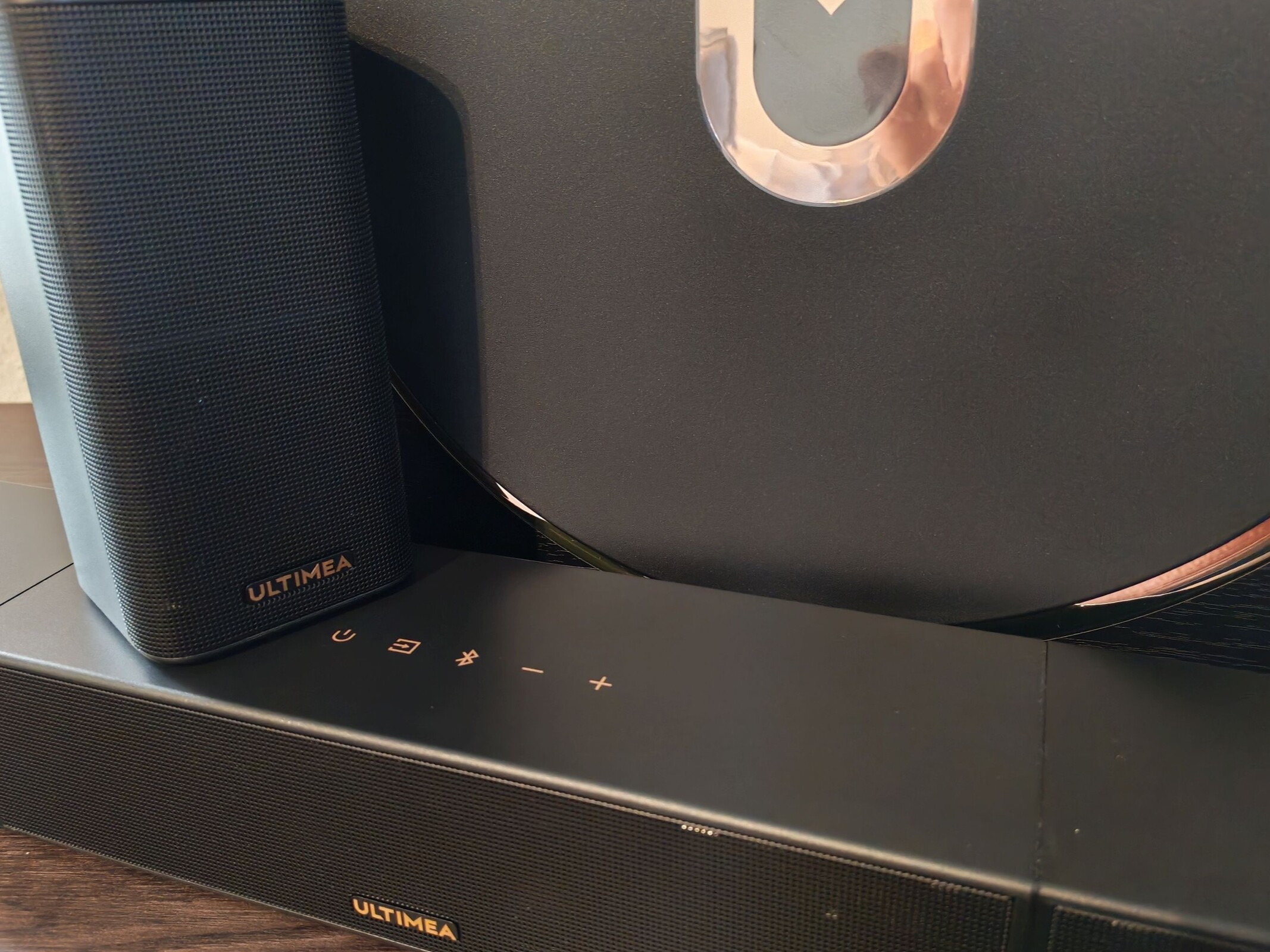
Ultimea Skywave X70 hands-on: a 7.1.4 soundbar for bass enthusiasts
Bass-heavy.
In testing, the Ultimea Skywave X70 emerges as a powerful 7.1.4 sound system with strong bass, straightforward installation, and a wide range of adjustment options via the app and remote control. Our detailed review examines how the soundbar with wireless subwoofer and satellites performs in everyday use - and where it shows weaknesses.Silvio Werner, ✓ Ninh Duy (translated by DeepL / Ninh Duy) Published 🇩🇪 🇫🇷 ...
Bass-heavy soundbar with modern connections
In our test, the Ultimea Skywave X70 scored well thanks to its simple installation and generally solid audio performance. The system does not lose power even at higher volume levels, and the bass reproduction is sometimes even overly dominant, which stands out in particular. With a few basic adjustments, the overall sound is well balanced for both movies and music. However, in our view, the spatial sound reproduction benefits only marginally from the up-firing speakers.
The Xupmix function delivers a subjectively improved sound, but it does not lead to a noticeable enhancement in spatial presentation. Build quality is a positive aspect, and the price-to-performance ratio is reasonable. Overall, the Skywave X70 is worth considering for users who value easy installation, app support, and a strong bass response. Those looking to save money may also want to consider the significantly cheaper Skywave F30 Boom, which does not include satellite speakers and likewise focuses on bass.
Pros
Cons
Price and availability
The Ultimea Skywave X70 is available directly from the manufacturer for just under €800, with shipping from Europe. The soundbar is also offered at the same price on Amazon (Germany).
Translator’s note: At the time of translation, the Ultimea Skywave X70 is available for purchase in North America through Best Buy, Staples, and Macy’s.
The Ultimea Skywave X70 aims to deliver powerful sound with minimal installation effort and is paired with a powerful subwoofer. In our test, we examine whether this sound system turns out to be merely a bass cannon or a genuinely serious audio solution.
Technical data
| Device class | Soundbar |
| Audio channels | 7.1.4 |
| Drivers (soundbar) | 8 × 2.25 inches |
| Drivers (satellites) | 2 × 2.25 inches each |
| Drivers (subwoofer) | 1 × 10 inch |
| Rated peak power | 980 watts |
| Connections | HDMI, HDMI eARC, optical, Bluetooth, USB |
| App | available, for control and configuration |
| Special features | wireless data transmission to satellites and subwoofer |
| Box contents | oundbar, surround speakers, subwoofer, cables, mounting hardware, remote control |
Complete box contents and easy installation
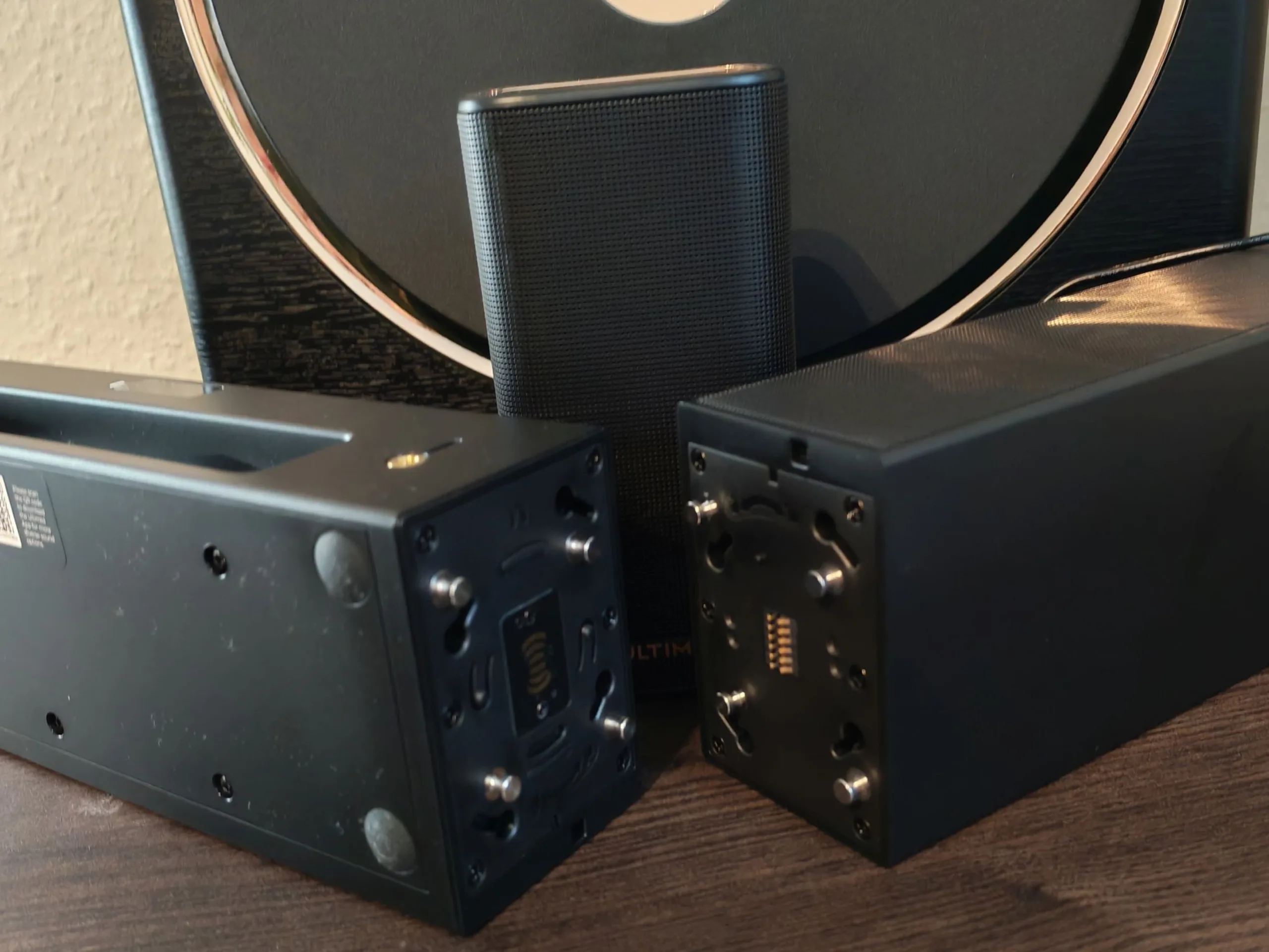
Setting up the Skywave X70 is straightforward. This is partly due to the soundbar product category itself, but also to the wireless connection of the subwoofer and the satellites in particular. The soundbar consists of three individual sections that are joined together very securely using a bayonet-style locking mechanism; these three sections cannot be used separately. The subwoofer and the two satellites connect to the system wirelessly, and the components are already paired at the factory - this worked flawlessly in our test.
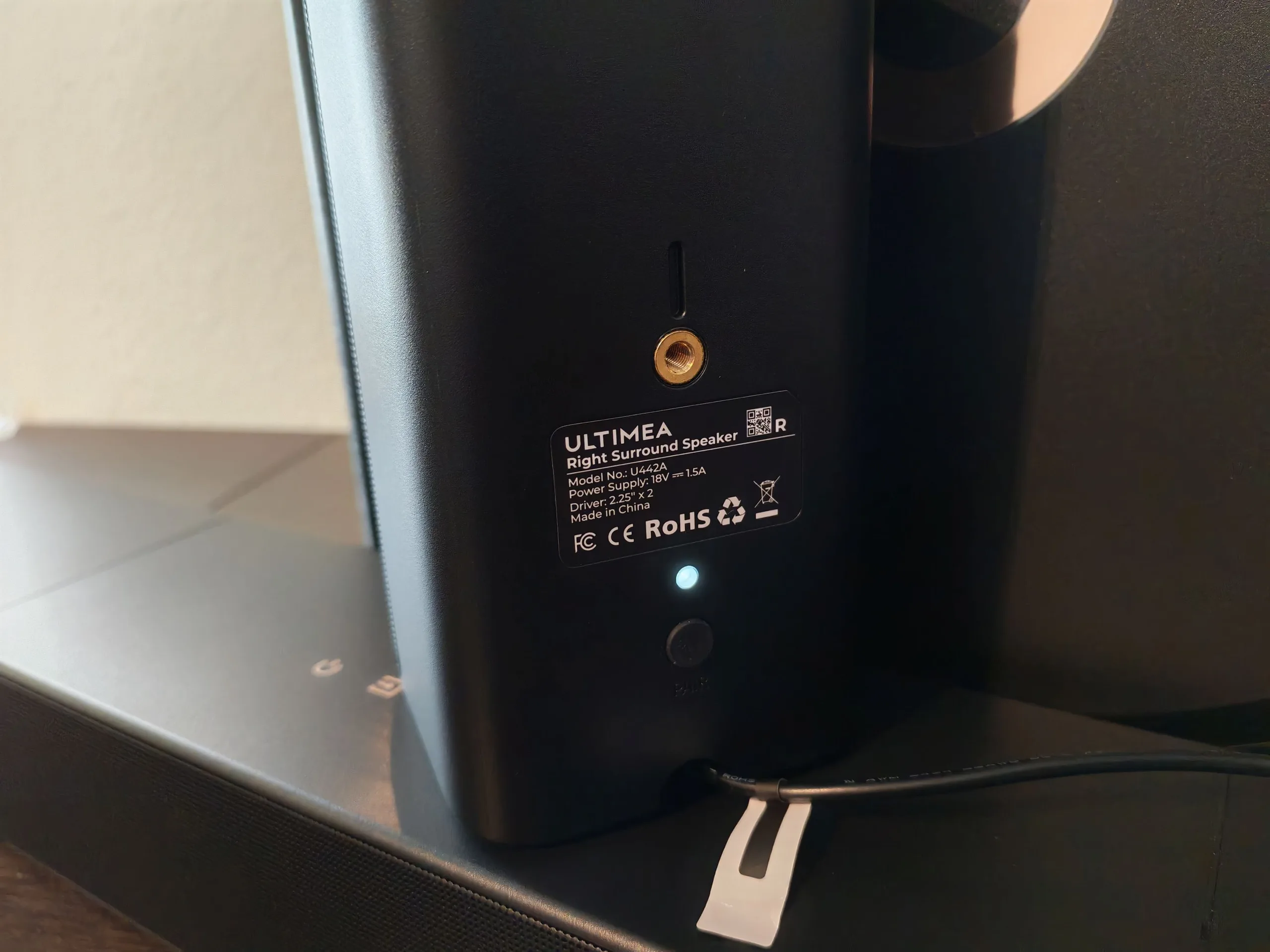
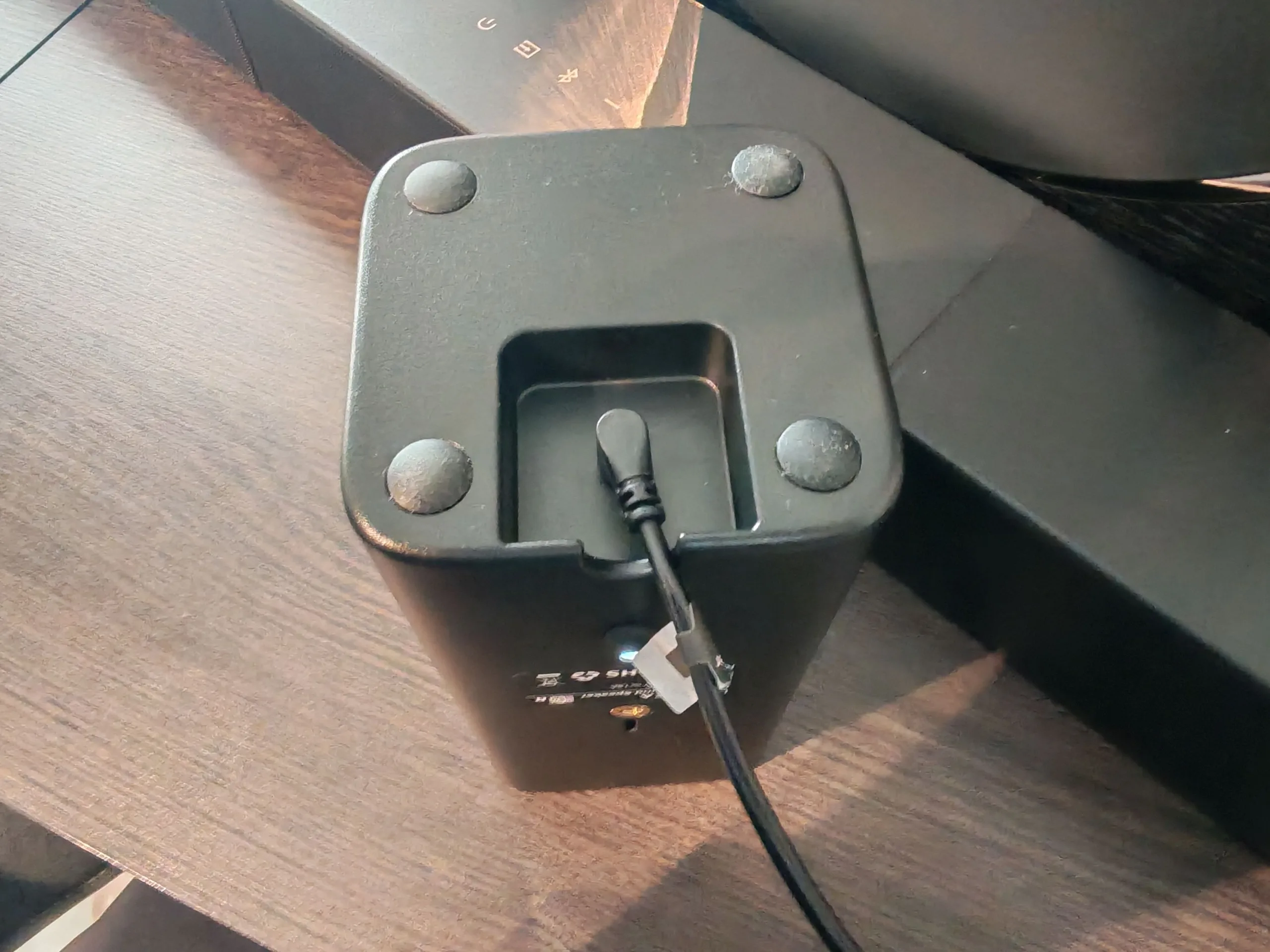
All accessories required for wall mounting are included in the box, including screws and wall plugs. We do, however, have a minor and likely niche criticism - or rather a note - regarding the satellites: their power connection uses cables that are permanently attached to the power adapter on one end and feature an angled plug on the other. As a result, the cable cannot be routed through the cable channels commonly found on hi-fi speaker stands.
The Ultimea Skywave X70 can be connected via HDMI, HDMI with eARC, an optical input, and Bluetooth; a USB port is also available. A standard 3.5 mm jack input is missing. While this is generally acceptable for a soundbar, such an input would make it easier to connect older devices. Depending on the setup, the video signal should not necessarily be routed through the soundbar, as VRR, FreeSync, G-Sync, and a 144 Hz refresh rate are not supported. Wi-Fi is also absent, meaning features such as AirPlay cannot be used.
High-quality build, powerful subwoofer
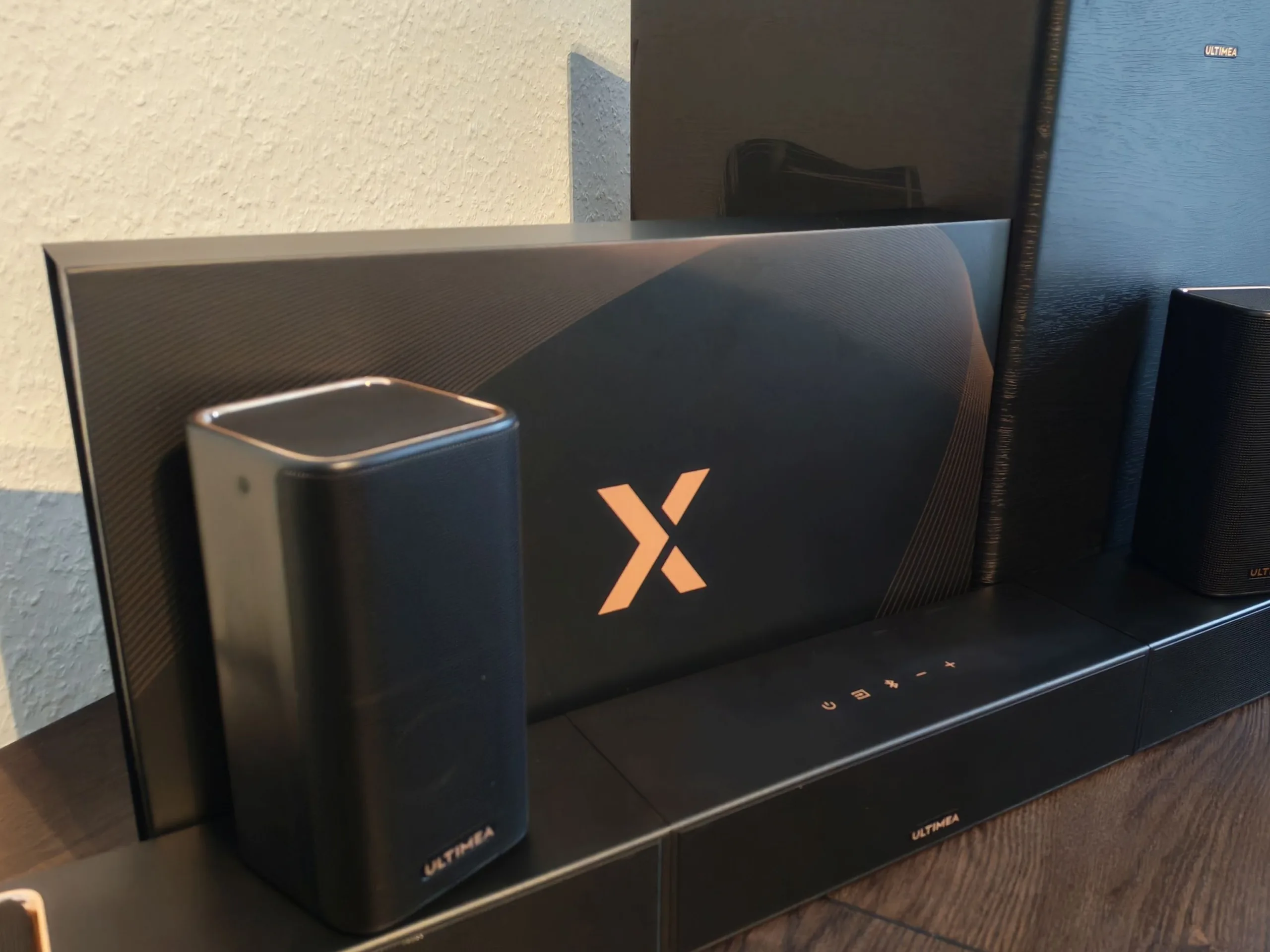
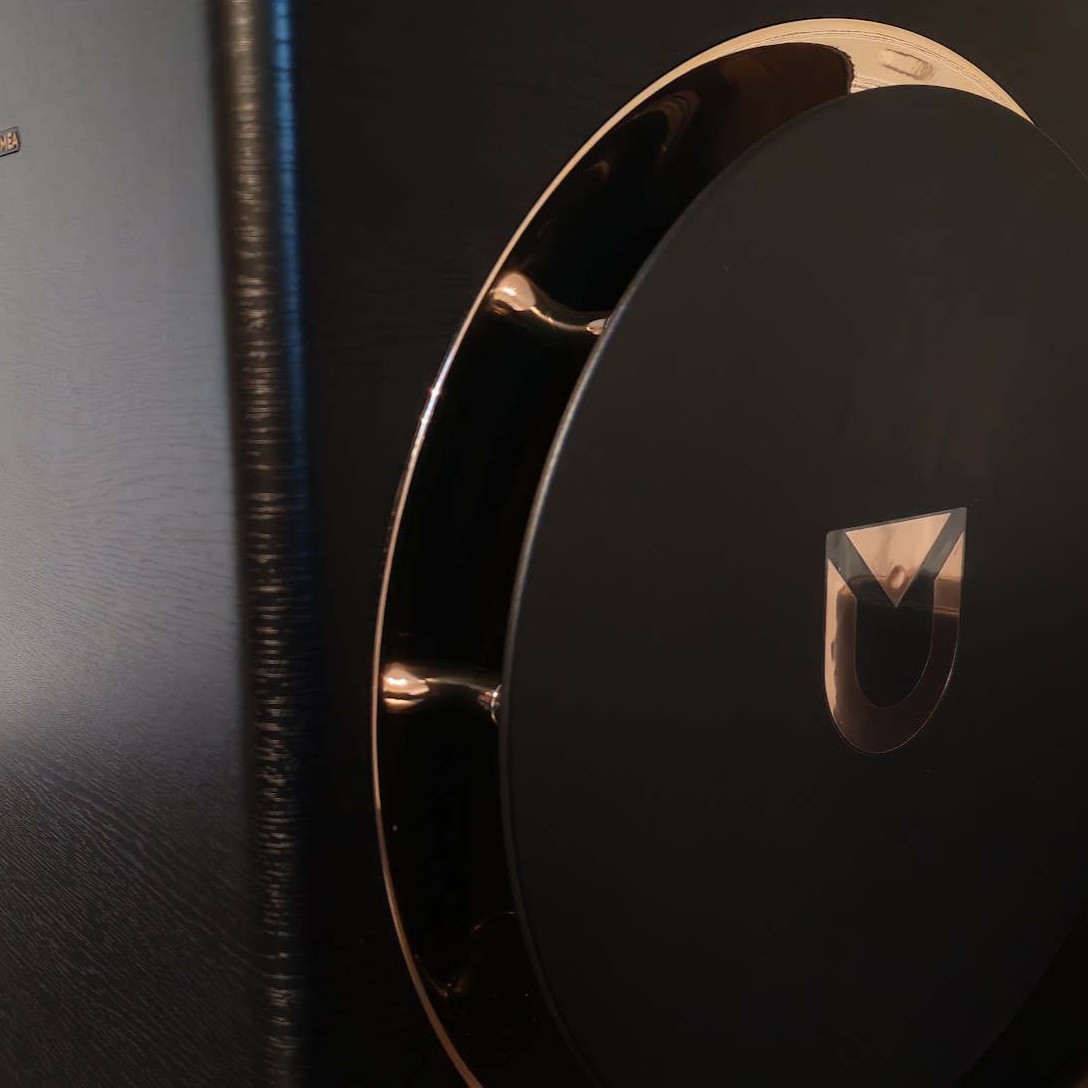
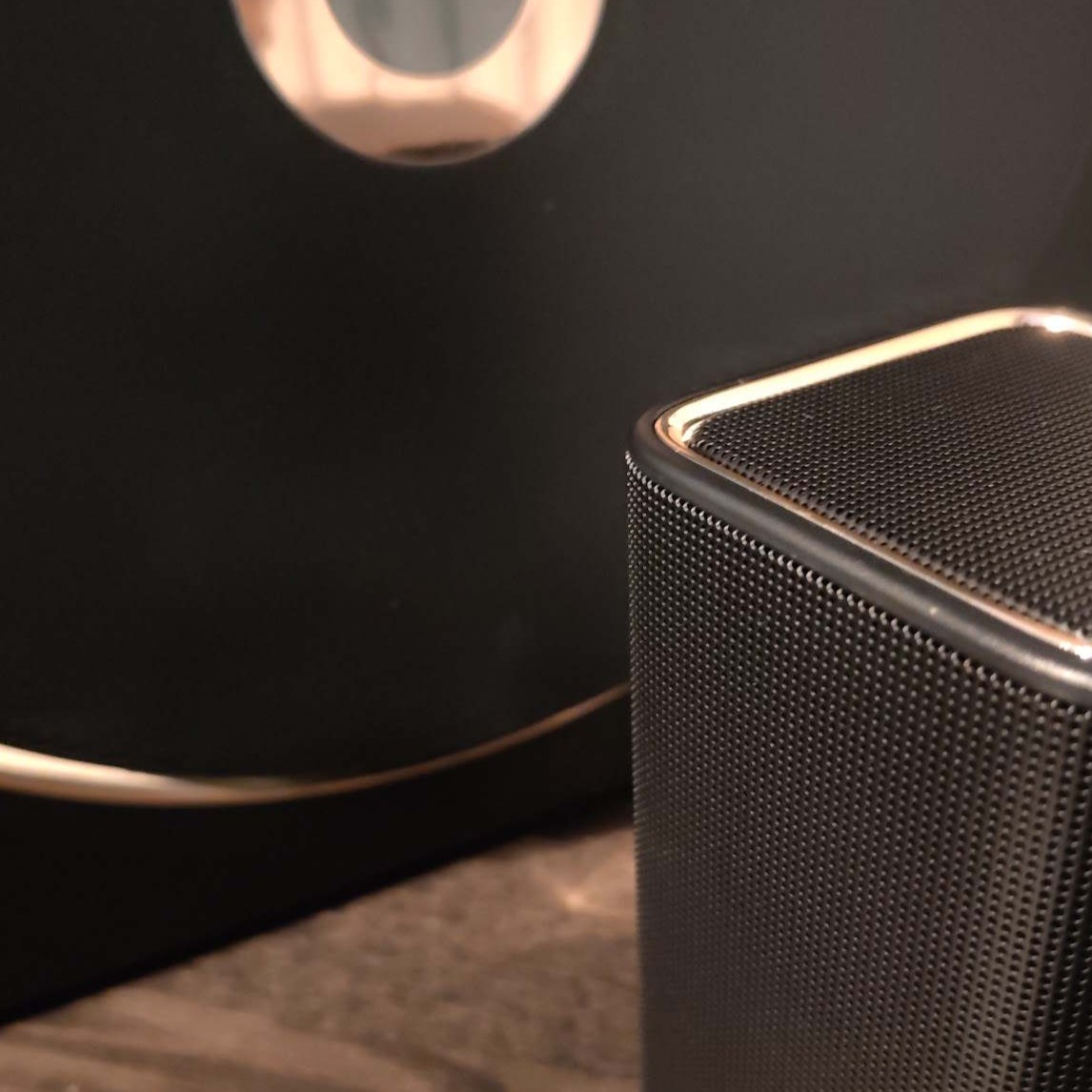
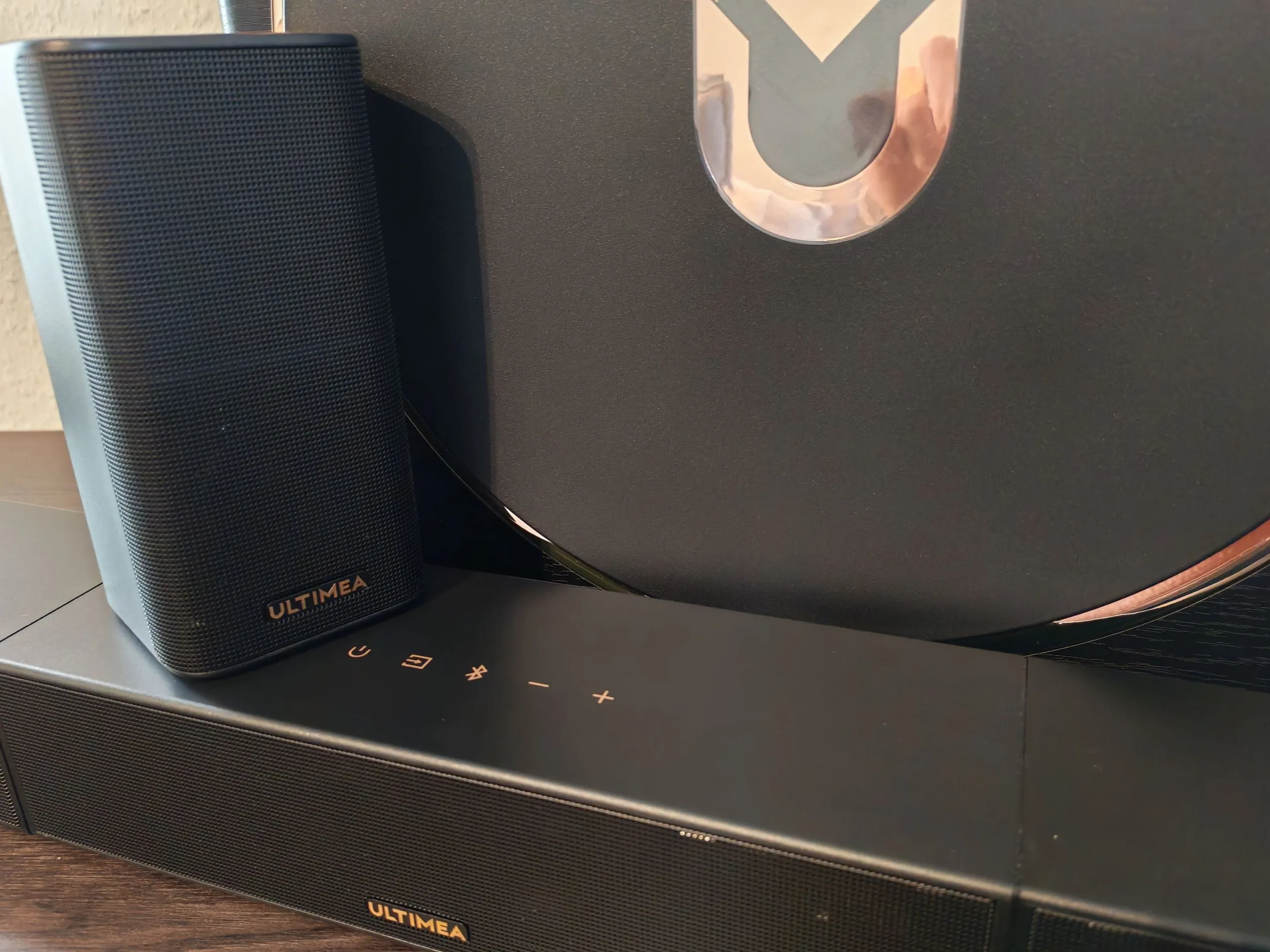
The Skywave X70 offers consistently solid build quality, while the overall design remains fairly understated. The speakers are covered by metal grilles, and the subwoofer itself is made of wood. It features a gold-colored yet still relatively subtle rose-gold front panel.
The two satellite speakers, by contrast, feel somewhat less premium in terms of appearance, not least due to their low weight, although build quality remains at a high level. Both the soundbar and the satellites are equipped with additional upward-firing drivers designed to enhance the immersive sound experience - more on this later.
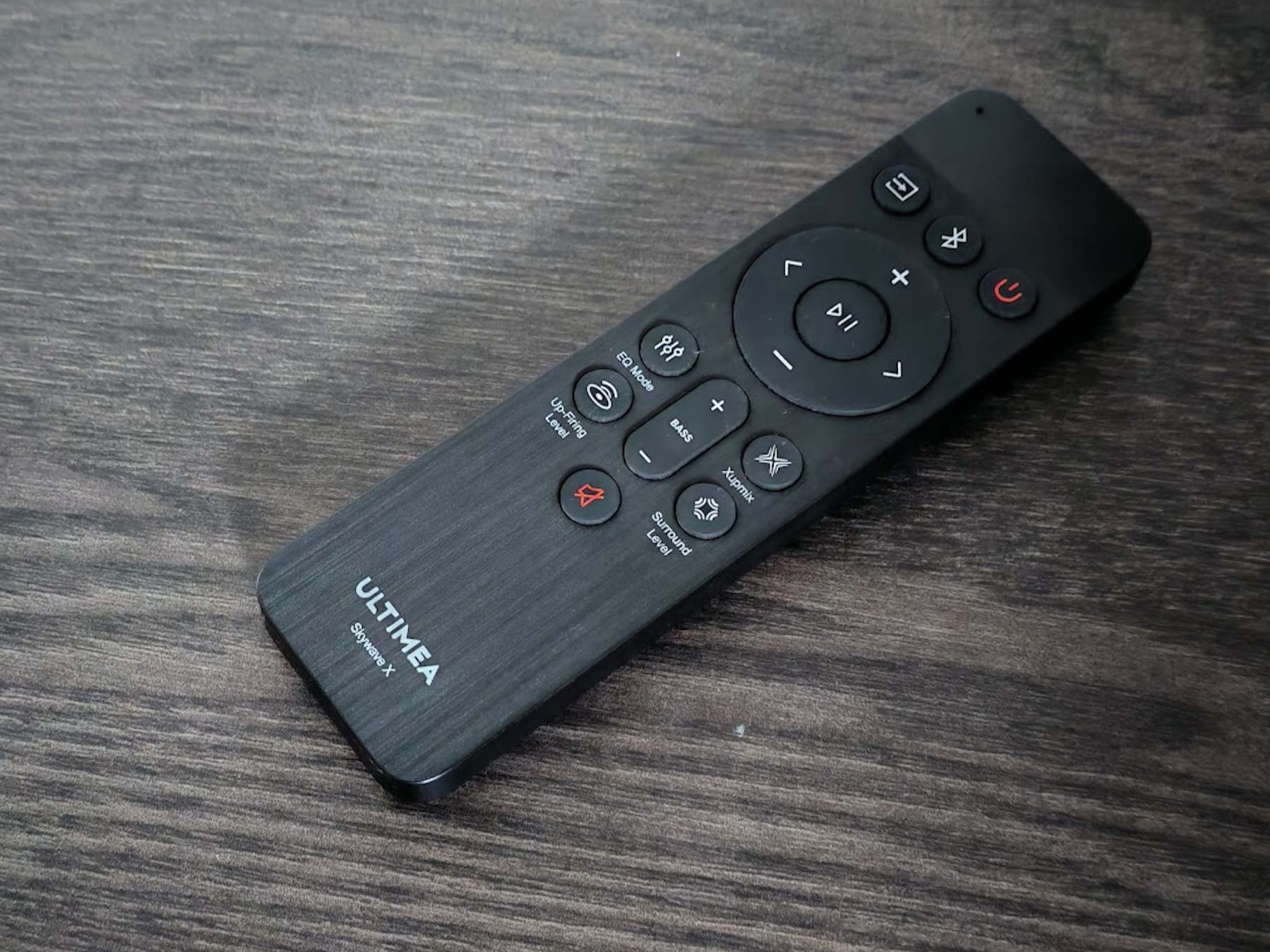
On top of the soundbar are buttons for source selection, power on/off, and volume control. The remote control offers the same functions and also includes buttons for quick equalizer selection, adjusting bass intensity, the strength of the up-firing drivers, the surround effect, and activating Xupmix. The remote feels fairly robust, but it is otherwise unremarkable.
Many adjustment options, not limited to the app
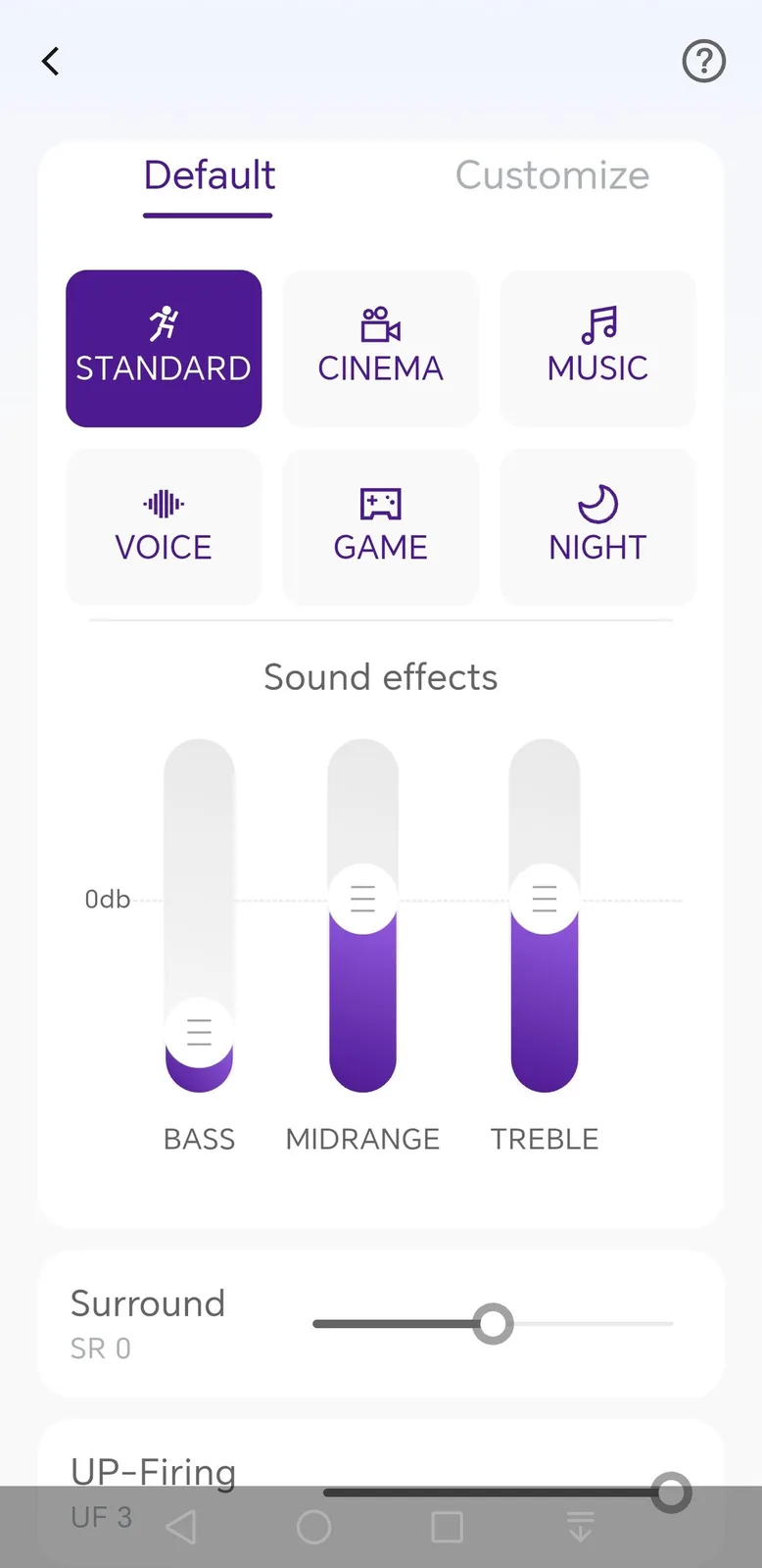
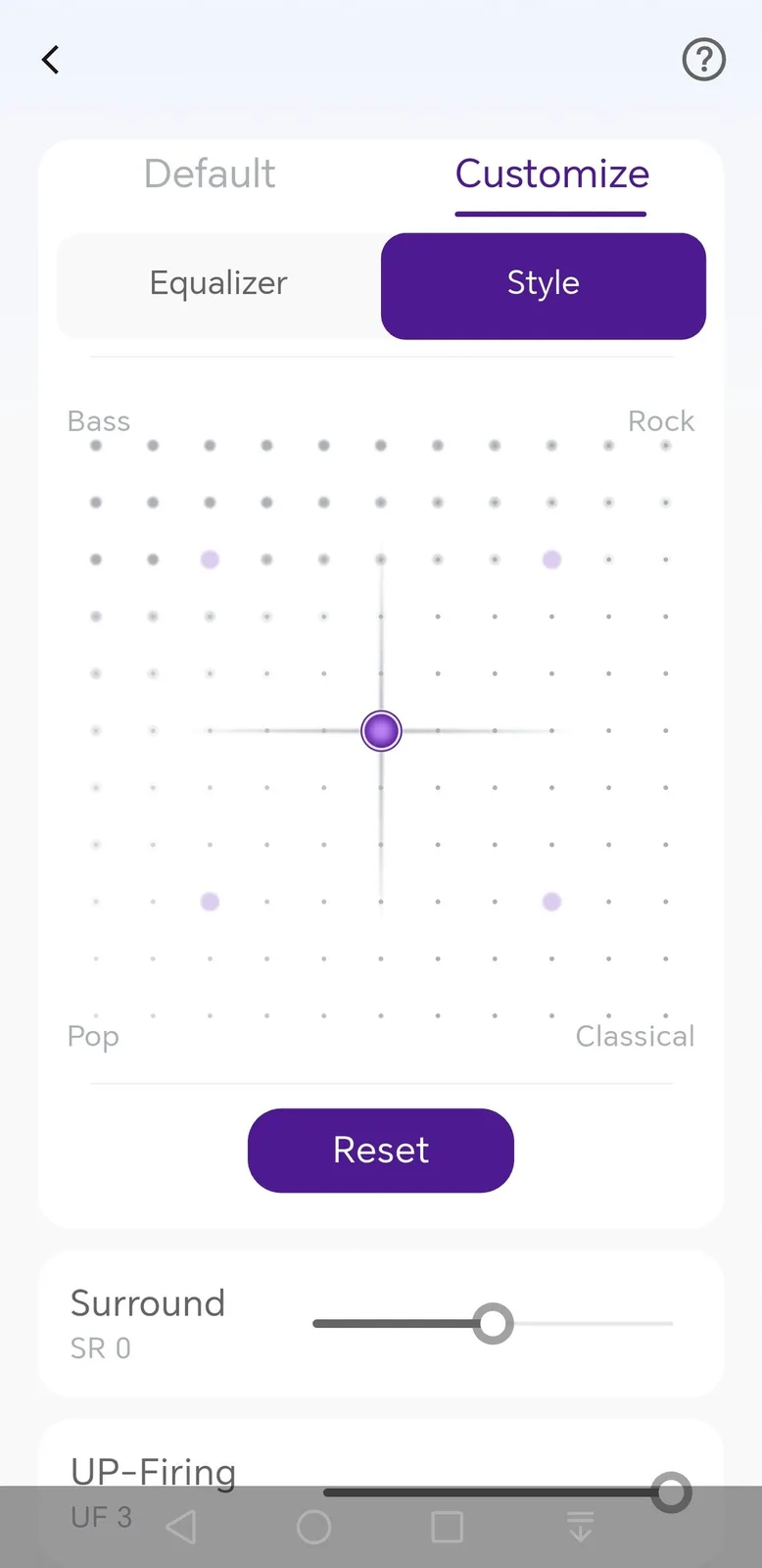
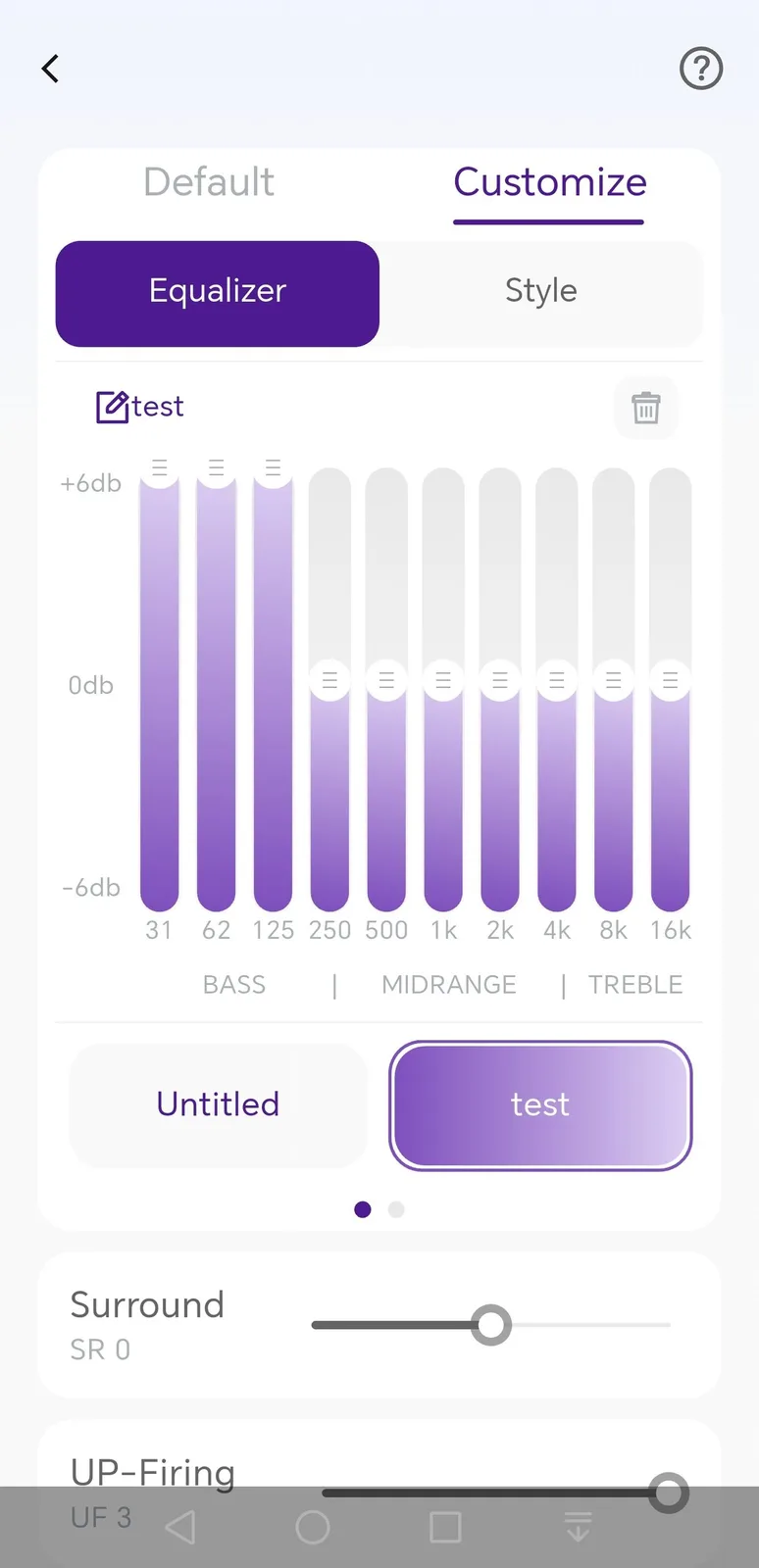
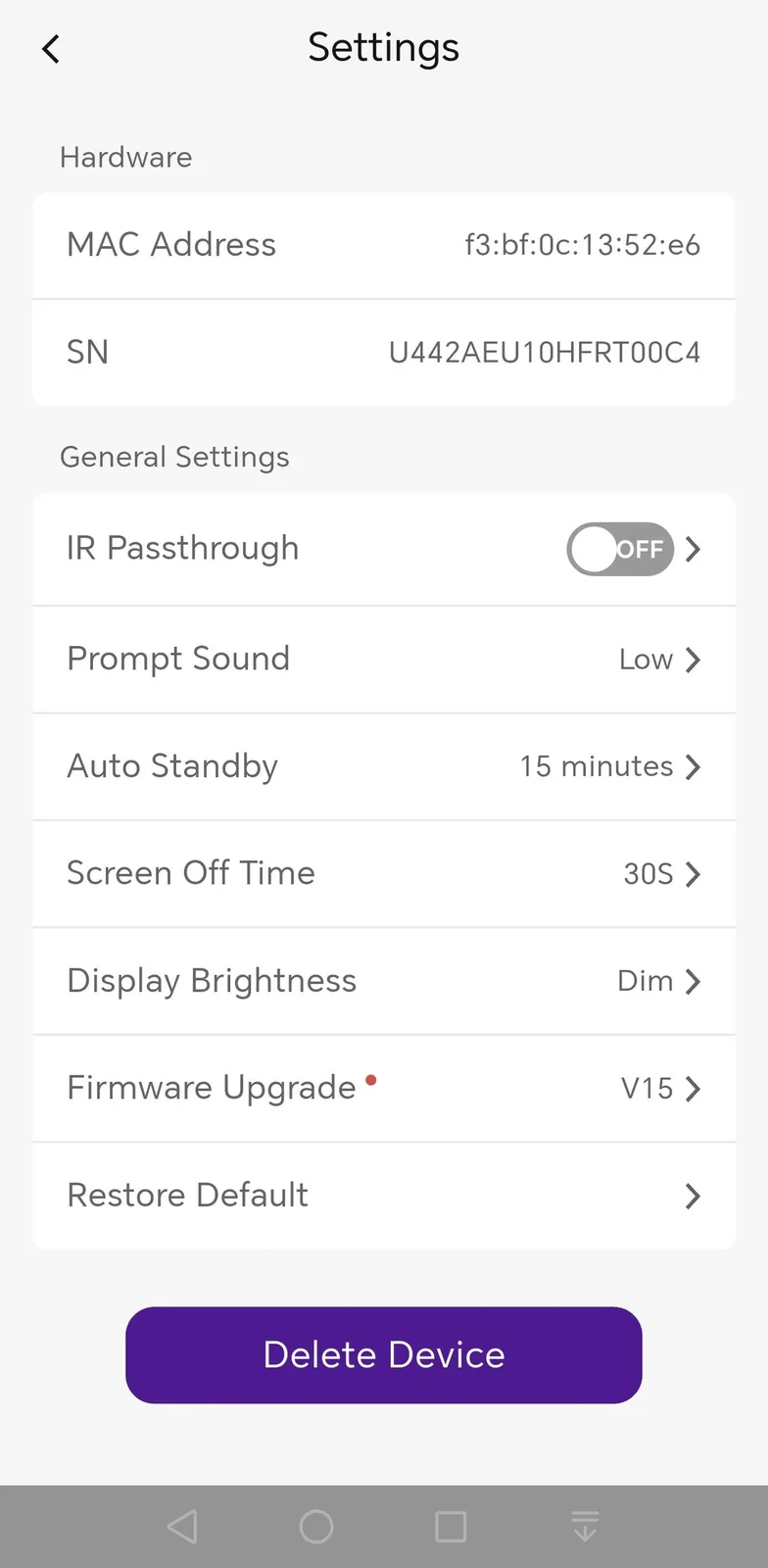
A smartphone app is available and is generally recommended. It not only serves as a full replacement for the included remote control, but also allows users to configure the six preset equalizers and create custom EQ profiles. Control via the app is even possible while music is being played from another Bluetooth device.
We do, however, have two points of criticism regarding the app and its software functionality, with very different implications. Volume control is not step-based, but instead relies on a slider. A slight mis-tap can quickly result in excessively high volume levels - something the Skywave X70 is capable of delivering without significant distortion. More serious is the lack of an option to adapt the audio output to the room, in other words, the absence of room correction. Some competing manufacturers even offer room correction using the smartphone.
Not entirely balanced sound out of the box
Overall, the audio performance of the Ultimea Skywave X70 is solid. Compared with built-in TV speakers, the Skywave X70 offers a clear improvement. Given the price, this is hardly surprising. One thing becomes clear from the very first playback: Ultimea places a strong emphasis on bass reproduction with the Skywave X70, which is also reflected in the size of the subwoofer. While we do not want to criticize the system’s ability to deliver powerful bass as such, the pronounced bass emphasis in the factory default settings does warrant criticism. That said, bass intensity can be adjusted in 13 steps using two buttons on the remote control, which already results in a more balanced sound.
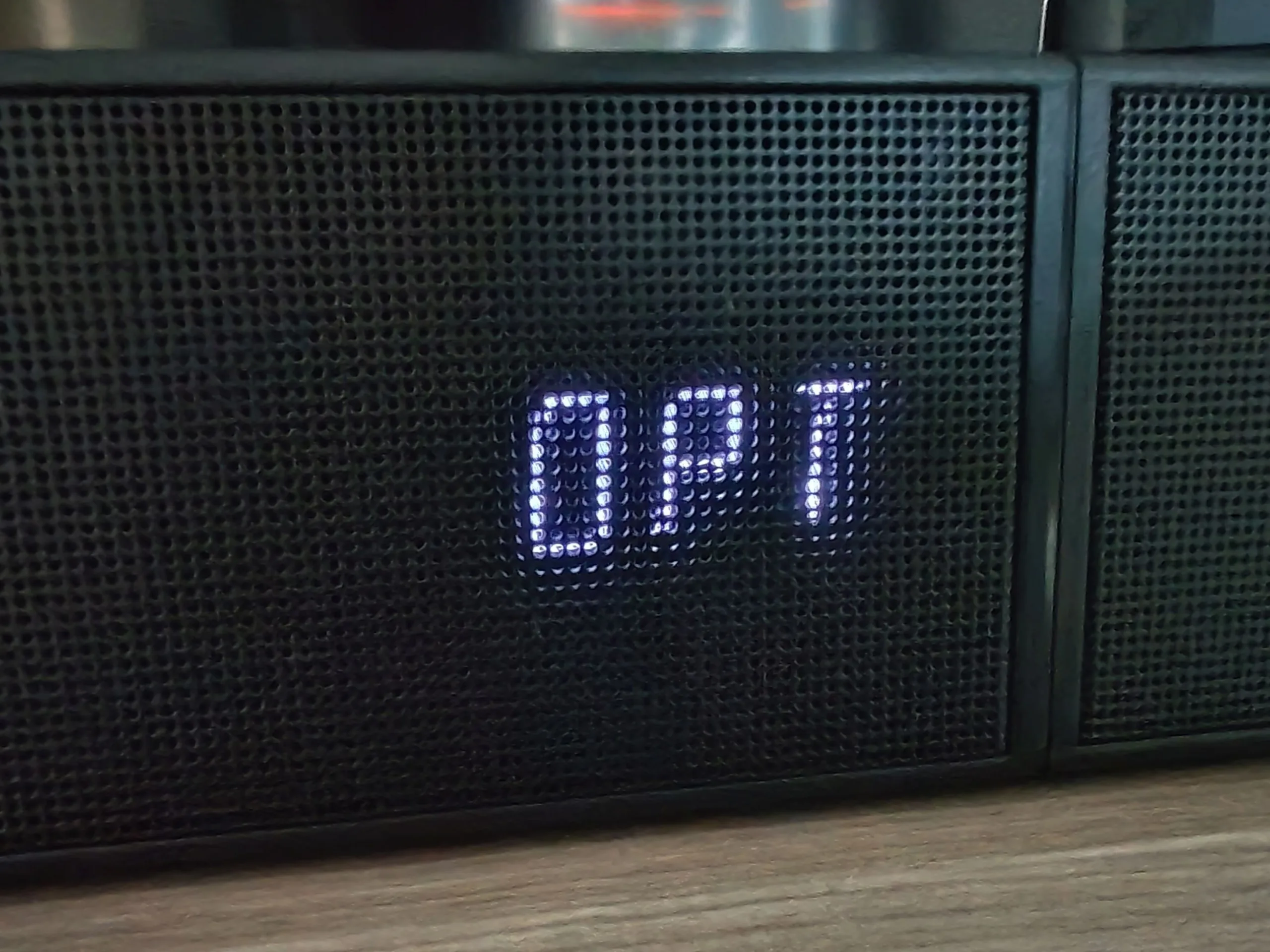
Unsurprisingly, the Ultimea Skywave X70 is also suitable for music and movie playback. Bass performance is not a concern with this type of content, and speech intelligibility can be significantly improved by selecting the appropriate preset. Overall, however, the system lacks some stereo soundstage depth compared with classic speaker setups (in our case, including Teufel T110 speakers and a Magnat Integra Center). While a surround effect is clearly created, the Skywave X70 benefits only marginally from its up-firing drivers in our view. Subjectively, the Xupmix function - and thus the virtual surround mode - does provide increased immersion, but without meaningfully improving the localization of individual sound sources. Unlike Dolby Atmos, DTS is not officially supported, even after direct inquiry, although it is still shown on the display when an optical connection is used.
Transparency
The selection of devices to be reviewed is made by our editorial team. The test sample was provided to the author as a loan by the manufacturer or retailer for the purpose of this review. The lender had no influence on this review, nor did the manufacturer receive a copy of this review before publication. There was no obligation to publish this review. As an independent media company, Notebookcheck is not subjected to the authority of manufacturers, retailers or publishers.
 Add as a preferred source on Google


