




Total War: Warhammer 40000 hands-on: Promising first impressions, galactic ambitions
 Gamescom
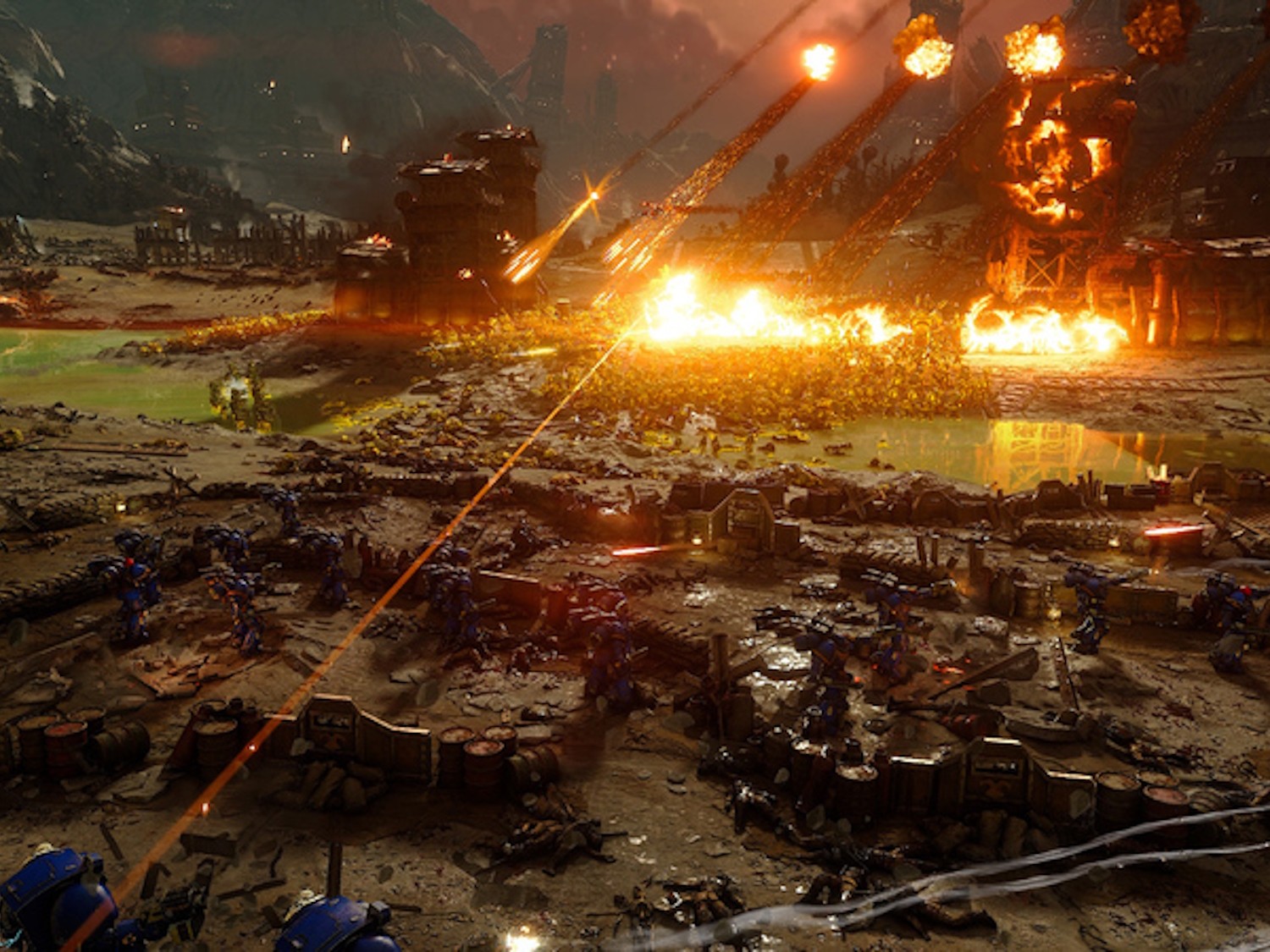
At Gamescom 2026, I got to spend just under an hour with an early build of Total War: Warhammer 40000—a modest slice of game time for a trade show, but barely scratching the surface of such a complex strategy title. To be clear, this was a very early build. Even so, performance was surprisingly smooth: I experienced zero crashes, and the visuals looked solid overall, with several genuinely impressive moments. When cluster bombs land, enemy infantry sends ragdolls flying spectacularly through the air. Powered by the new Warcore engine, the game features destructible terrain and objects, adding a welcome layer of tactical depth.
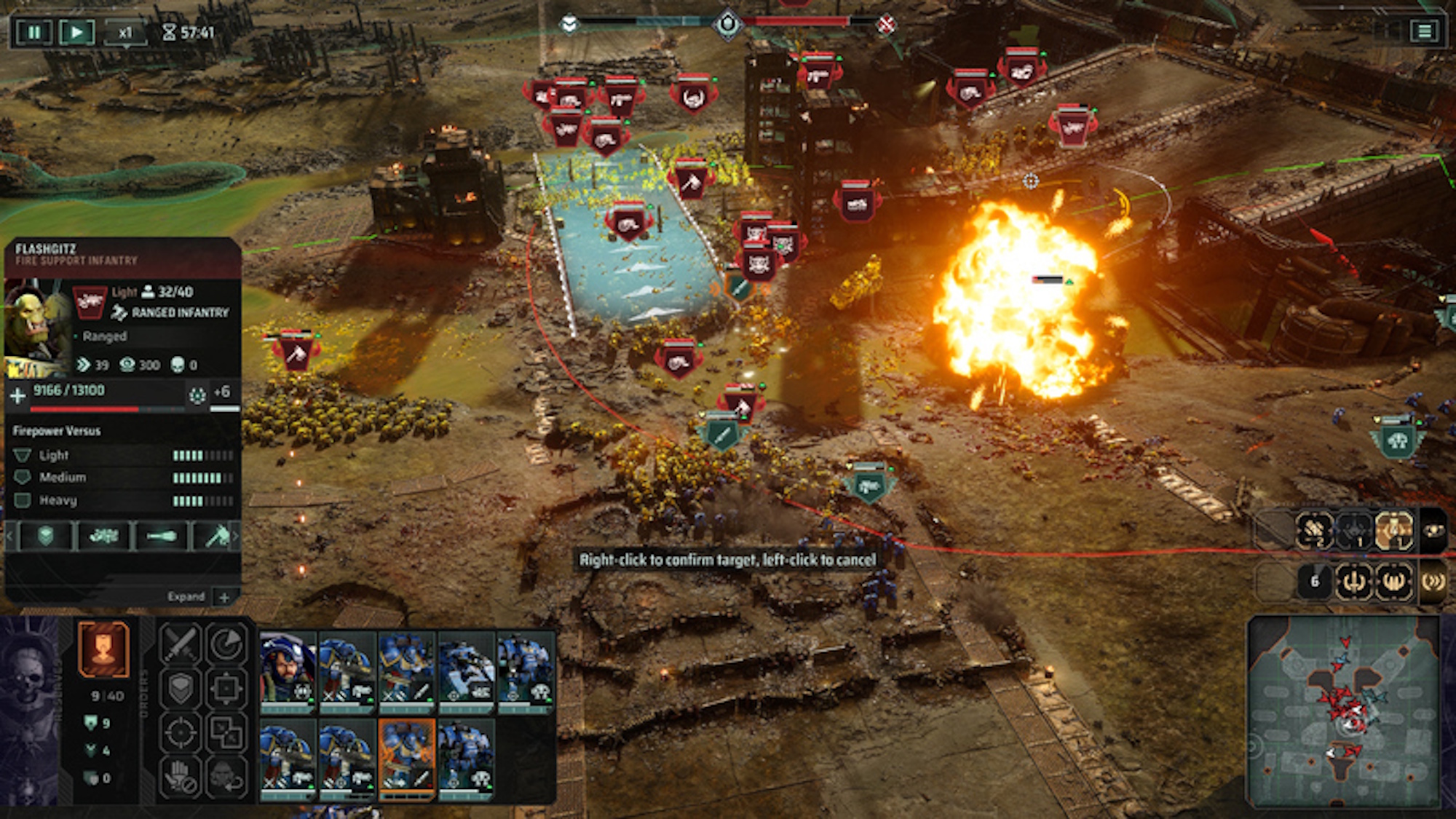
The demo included a brief battle tutorial, a tiny sliver of the campaign map, and a challenging skirmish packed with units. I took command of the Space Marines against Ork forces in every scenario. At launch next year, the Imperial Guard and Eldar will join the Space Marines and Orks to complete the starting lineup. All four factions promise wildly distinct playstyles: Space Marines rely on a small squad of elite super-soldiers, Orks overwhelm through sheer numbers and brutal melee combat, and the Eldar leverage superior agility across the battlefield.
My primary concern right now is faction balancing, which promises to be a nightmare to get right across such fundamentally different armies. Furthermore, Total War: Warhammer 40000 expands beyond a single planet to encompass entire solar systems, complete with space fleets. Crucially, these fleets impact ground engagements directly through capabilities like targeted orbital strikes.
This shift signals a broader evolution for the series: while Total War: Warhammer III focused heavily on legendary lords with potentially game-breaking abilities, these hero units have taken a back seat here. Real-time tactics have seen a ground-up overhaul as well, introducing a dynamic cover system that punishes players for carelessly leaving infantry out in the open.
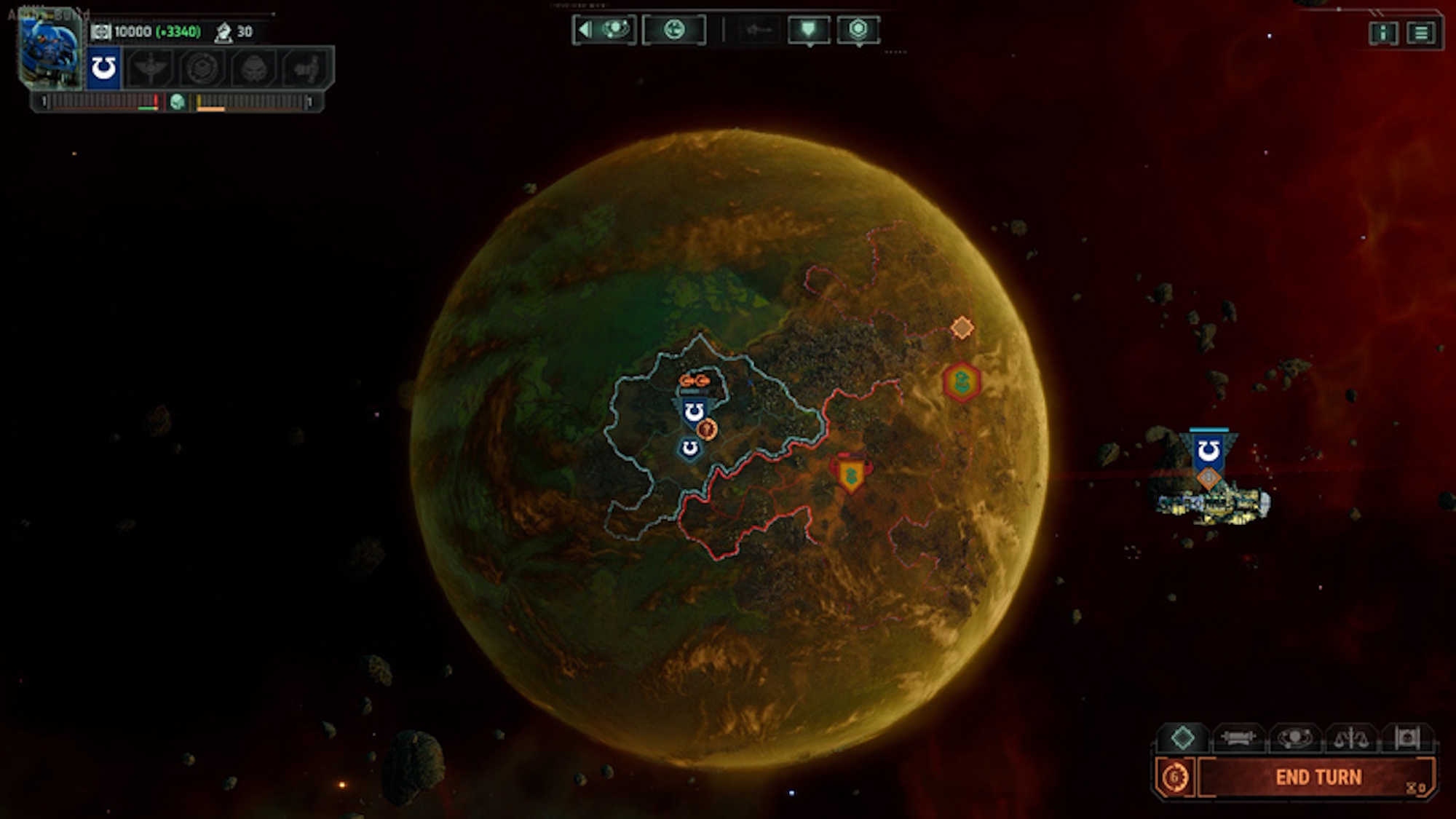
The campaign map mirrors the battles in its familiarity: series veterans will feel right at home. It features provinces divided into individual districts, standard building upgrades, and familiar unit recruitment. However, unlike in Total War: Warhammer III, armies can once again move without an attached general. Creative Assembly has also reworked the movement system—a subtle tweak on paper with noticeable gameplay consequences. Movement is now grid-based at the district level rather than continuous. Units occupying the same district can intercept one another, a deliberate simplification designed to trim down unnecessary micromanagement.
Instead of fixed movement ranges, the game now relies on movement points. Scaling back complexity here makes sense given the grander overall scope, though it remains impossible to judge how well the individual systems and asymmetric factions will ultimately balance against one another. Ultimately, an hour with Total War: Warhammer 40000 leaves a promising first impression alongside a long list of open questions. The brief demo proved technically sound, while features like the cover system and destructible terrain offer genuine tactical depth. Just how seamlessly these complex systems will mesh together in the final release remains to be seen.
Source(s)
First-hand experience, Creative Assembly
 Add as a preferred source on Google


