


Research: How well do AI video models understand the physical world? Tool exposes physics failures in AI-generated videos
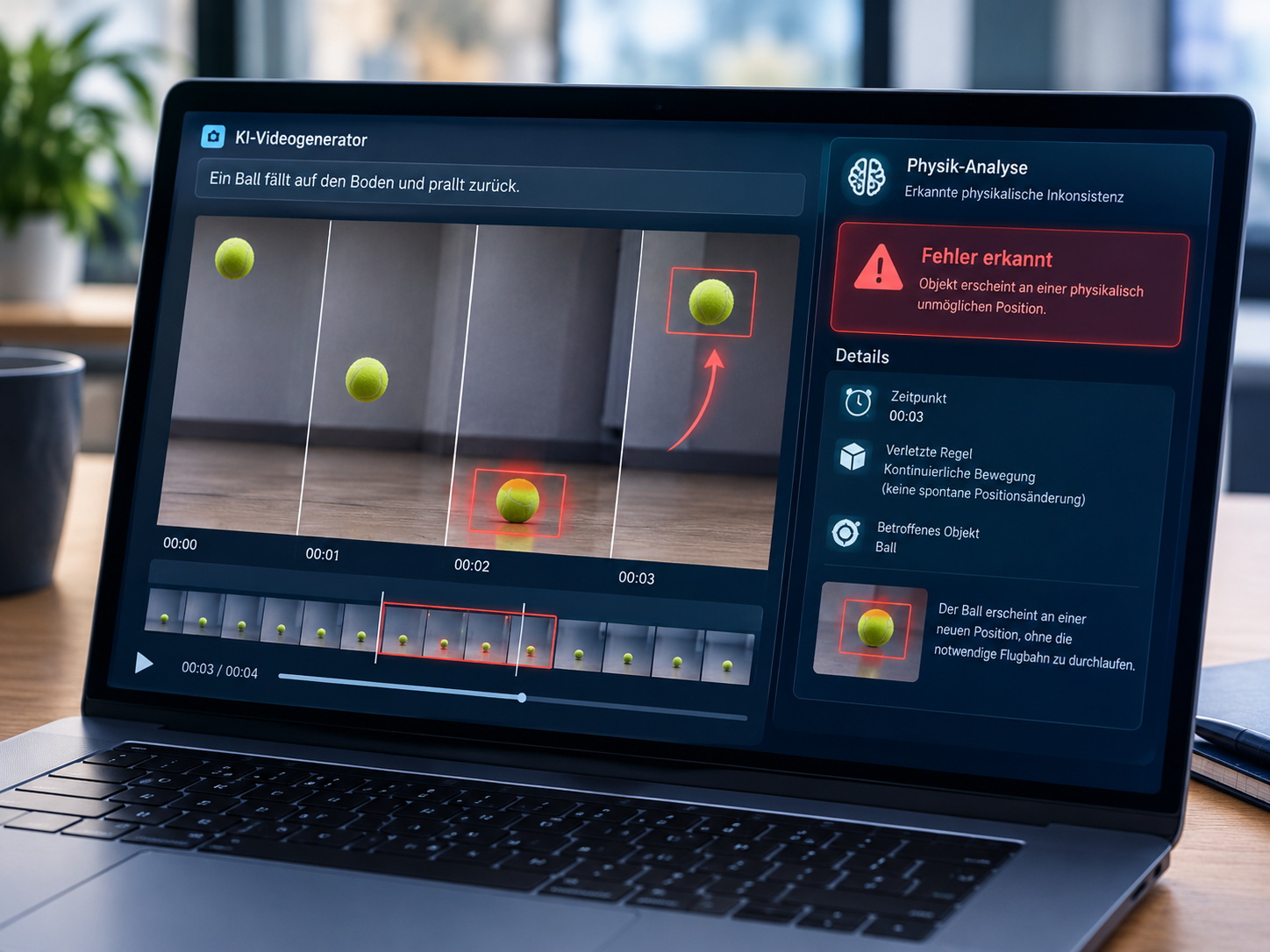
Identifying AI-generated videos is becoming increasingly challenging as the models improve rapidly. One way to identify them is by looking for violations of physical laws that AI models still struggle to get right. However, as viewers, we sometimes no longer notice these smaller physics errors because everything else looks so convincingly real.
PhysTrace detects physics errors in AI-generated videos
A research team has introduced PhysTrace, a method designed not only to detect such errors but also to pinpoint when they occur and describe them in a way that makes them easier to understand. The approach uses a language model to identify all objects at the beginning of a video or scene and analyze how they move over time. Based on previous frames, the LLM predicts the expected state of the objects in the current frame. It then compares that prediction with what actually appears in the video segment. A significant drop in agreement may indicate a violation of physical laws.
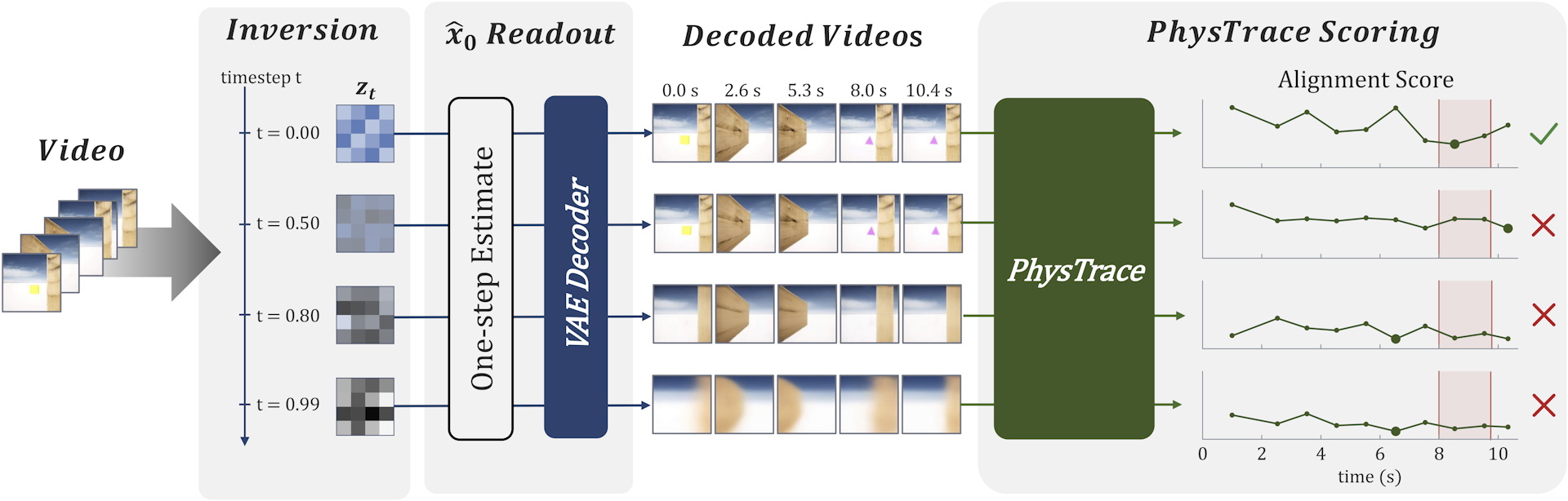
This makes it possible to detect objects that unexpectedly disappear, sudden changes in color or shape, abrupt jumps in position, or objects that appear to pass through solid obstacles. Rather than providing a single overall score, PhysTrace is also designed to break down and describe when an error occurs and which expectation was violated.
According to the research team, the highest detection rate for temporally localizing violations of physical laws was 70.7 percent in the category covering immutable object properties. Overall accuracy in distinguishing physically possible videos from impossible ones was 59.9 percent. That may seem low, but it still represents progress over several benchmark methods. There is nevertheless considerable room for improvement.
Benefits: For video — but also for robotics and world models
The work provides an analytical tool for the next generation of video models and world models. In the future, these models are expected not only to generate images but also to predict motion and help robots plan actions. For that, a video must do more than look realistic: the world it depicts must also behave plausibly.
PhysTrace could help researchers and developers working with video AI and robotics investigate these weaknesses more precisely. In robotics, for example, it is crucial that AI systems not only recognize or generate visually plausible scenes but also understand how objects behave in the real world. Methods such as PhysTrace could help uncover weaknesses in AI models' predictions and guide targeted improvements. The tool is available on GitHub.
Source
 Add as a preferred source on Google


