




GPT-6 Astra and Opus 5 crack two Enigma messages that had resisted researchers for decades
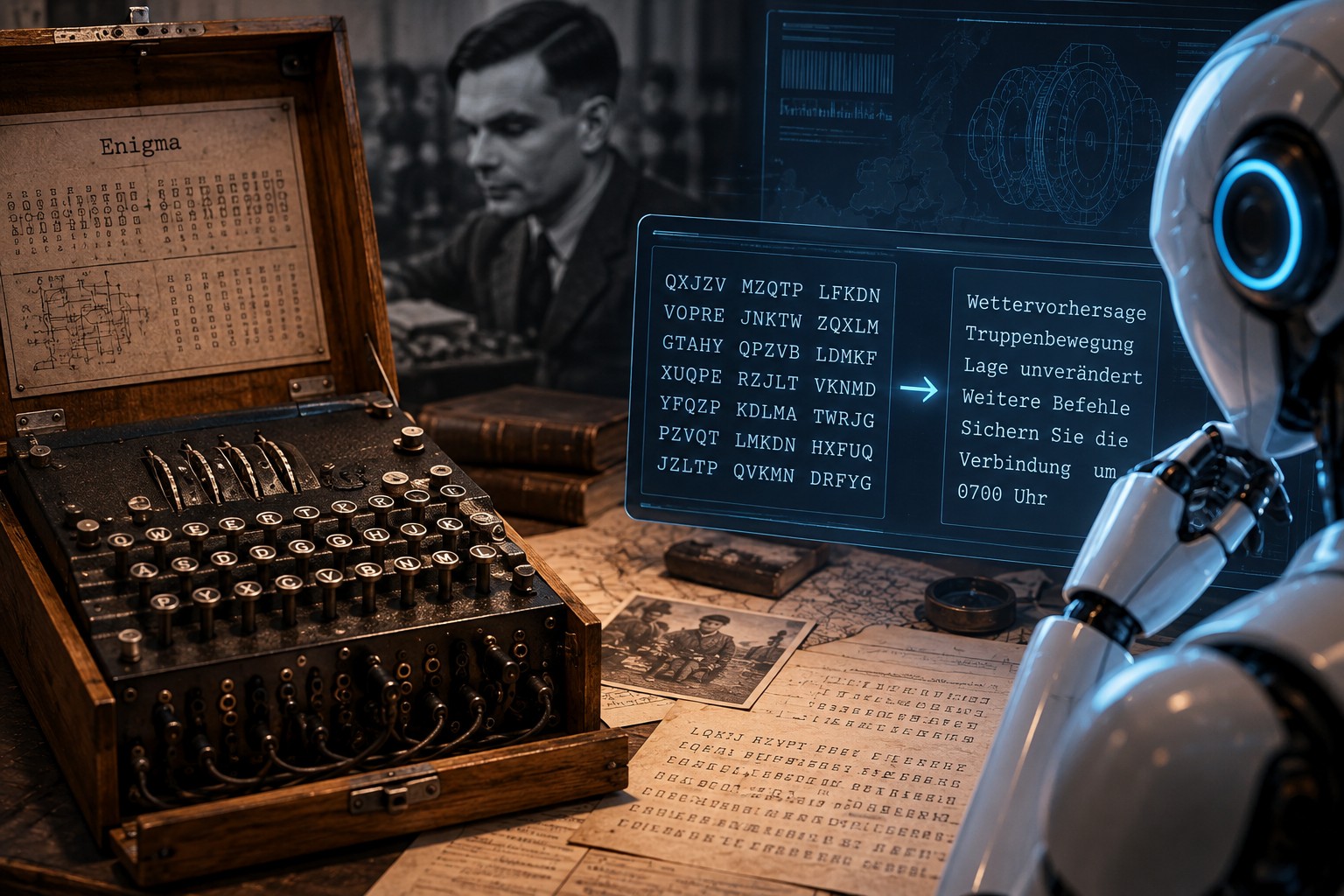
Two Enigma-encoded messages that had remained unsolved for decades have reportedly been decrypted with help from OpenAI’s GPT-6 Astra and Anthropic’s Claude Opus 5. The results, reviewed by veteran Enigma researcher Frode Weirerud, show how AI can speed up archival research and codebreaking — though human expertise remained central to both solutions.
Enigma is closely associated with Alan Turing, who helped British codebreakers decrypt Nazi Germany’s messages during World War II. Turing’s team developed the Bombe, an electromechanical computing machine that helped the United Kingdom decrypt large volumes of German Enigma messages. Yet a small number of archived messages have remained unsolved — often because of transcription mistakes or errors made by the original operators.
The first recent breakthrough came from developer Carter Leffen. He reportedly asked GPT-6 Astra to find an unsolved message in the Enigma archive and try to decode it. The model researched the historical background, found useful clues, built its own Enigma simulator and eventually recovered the plaintext of a message that had stumped researchers since 2005. Leffen also used Astra to create an interactive website documenting the problem and the proposed solution.
Frode Weirerud, a retired electrical engineer and longtime cryptology enthusiast who runs the Crypto Cellar website, later checked Leffen’s solution and confirmed it. He wrote that Astra had behaved “like a very professional cryptanalyst and archive researcher,” estimating that work completed in two days could have required a human researcher weeks or even months. However, Weirerud also noted uncertainty over the model’s references to material in a private collection. He could not determine whether the information had been found through publicly available sources, elsewhere online or in German public archives.
A second Enigma message was cracked a few days later. On September 21, cryptanalyst Jack Willis told Weirerud that he had used Anthropic’s Claude Opus 5 to decipher another unsolved message. Willis gave Claude considerably more guidance, including the known signature of a particular officer, which helped the model find the solution.
Neither case means AI can now crack Enigma unaided. Astra combined archival research, coding and reasoning, while Claude benefited from expert input. But the results show how AI tools could make historical cryptanalysis much faster. Weirerud says seven Enigma messages are still unsolved, plus one whose plaintext is known but whose code remains unbroken.
Source(s)
 Add as a preferred source on Google


