




Engineers convert lobster shells into robot parts that lift, grip, and swim; could usher in more sustainable robots
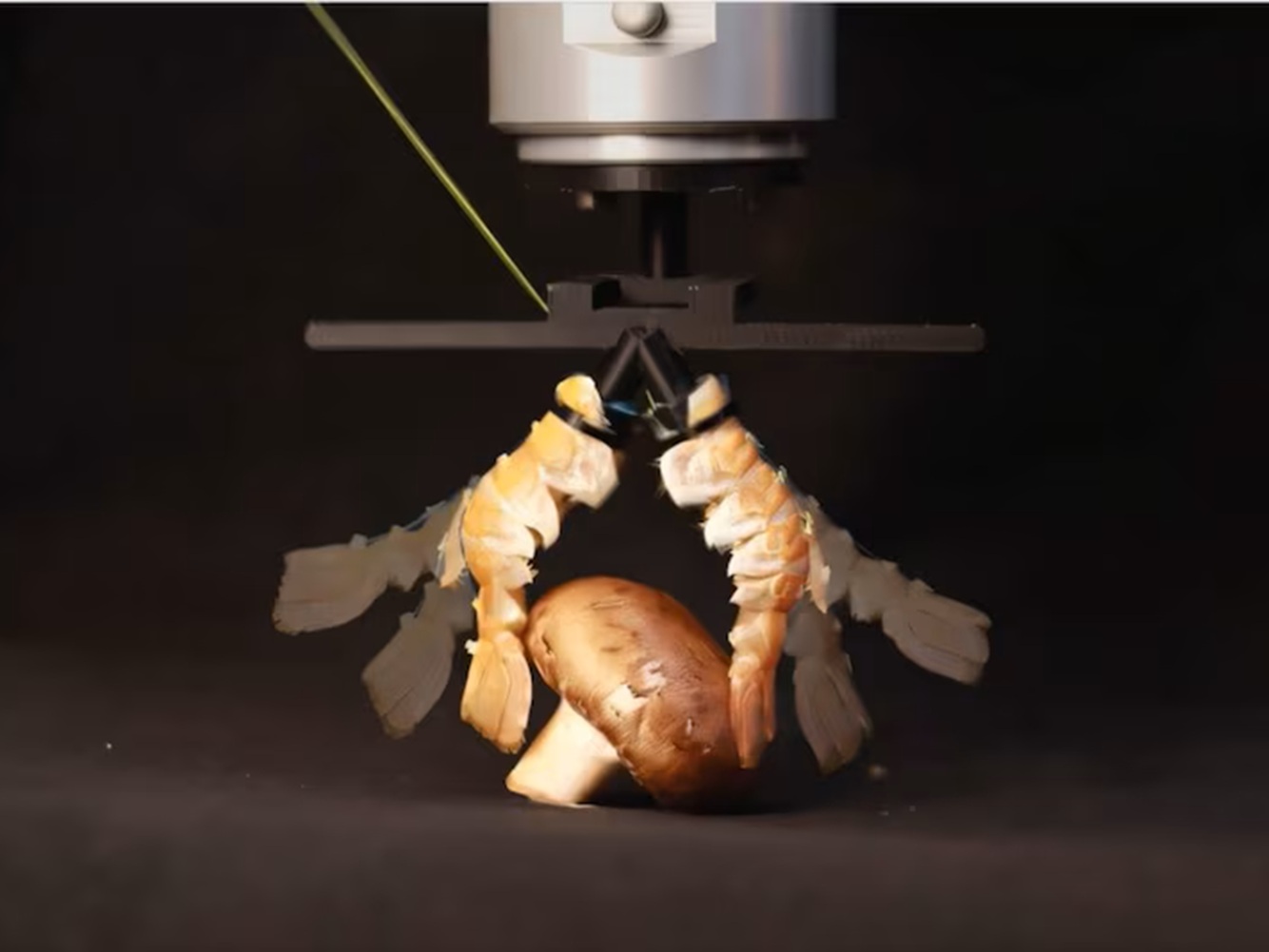
When most diners finish with their lobsters, they quickly forget about the shells. Engineers at École Polytechnique Fédérale de Lausanne (EPFL), however, have been attempting to eke out more value from the crustacean delicacy. They have completed a proof-of-concept for turning the shells into robot parts.
The EPFL engineers concentrated on the tail portion of langoustines or Norway lobsters. They are known to contain both rigid plates and flexible membranes. This promises to meet the crucial requirement of flexibility in the design of robotic joints. They infused a soft elastomer into the shells for greater flexibility, added compact motors, and coated them with silicone for protection.
The resulting biohybrid creation showed promising results during testing. The modified shell lifted about 500 g, and when doubled, became a gripper capable of handling objects such as a pen and tomatoes. The team even used the shells as flapping fins for a small robot that attained a speed of about 11 cm/s (0.396 km/hr) underwater.
A sustainable design with practical challenges
The biohybrid lobster shells could enhance sustainability. According to the engineers, the synthetic materials used in the proof-of-concept can be extracted and recycled for reuse. The waste shells also remain biodegradable.
Robots have become prominent in tech circles, and multiple companies have been showing off the dexterity of their humanoids. However, before lobster shells can jump from the dinner table to robot manufacturing, engineers will have to fix practical issues. For example, no two gripper fingers behave the same way due to the peculiarities of each shell, and this can complicate controlling the gripper.
Source(s)
 Add as a preferred source on Google


