


Discord's Rust rewrite, Phoenix, is already in its Android alpha, and we got it running on retail phones
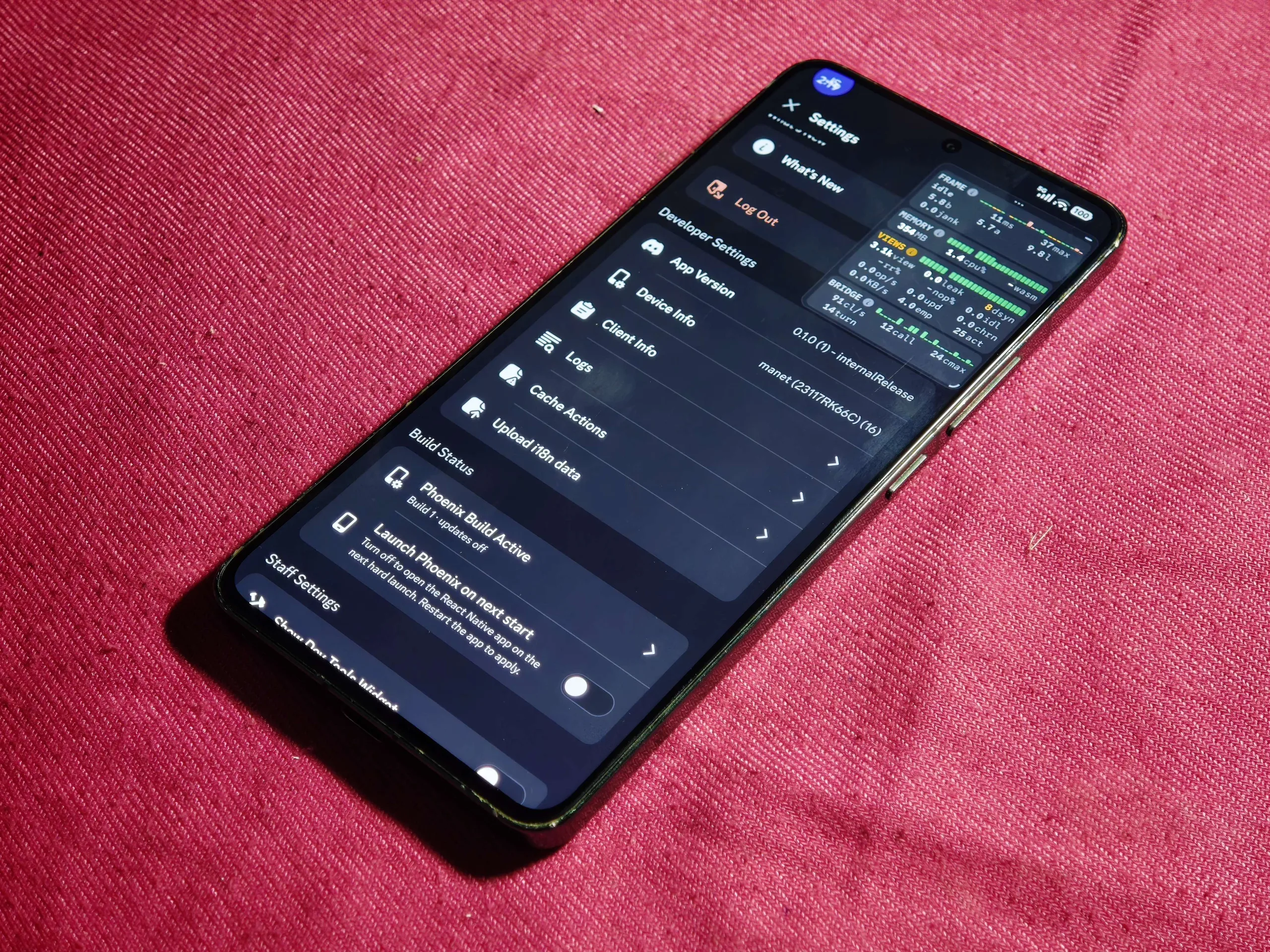
Discord's Android alpha builds now include two clients in one package: the current React Native app and Phoenix, a native client written in Rust. Phoenix is normally restricted to staff accounts. The community patch phoenix-unlock, by developer mantikafasi (@mantikafasi1 on X), removes that restriction so the Rust client can run on a regular account. We ran the patched build (v356.7 "Alpha", versionCode 356207) on four devices to see how it behaved.
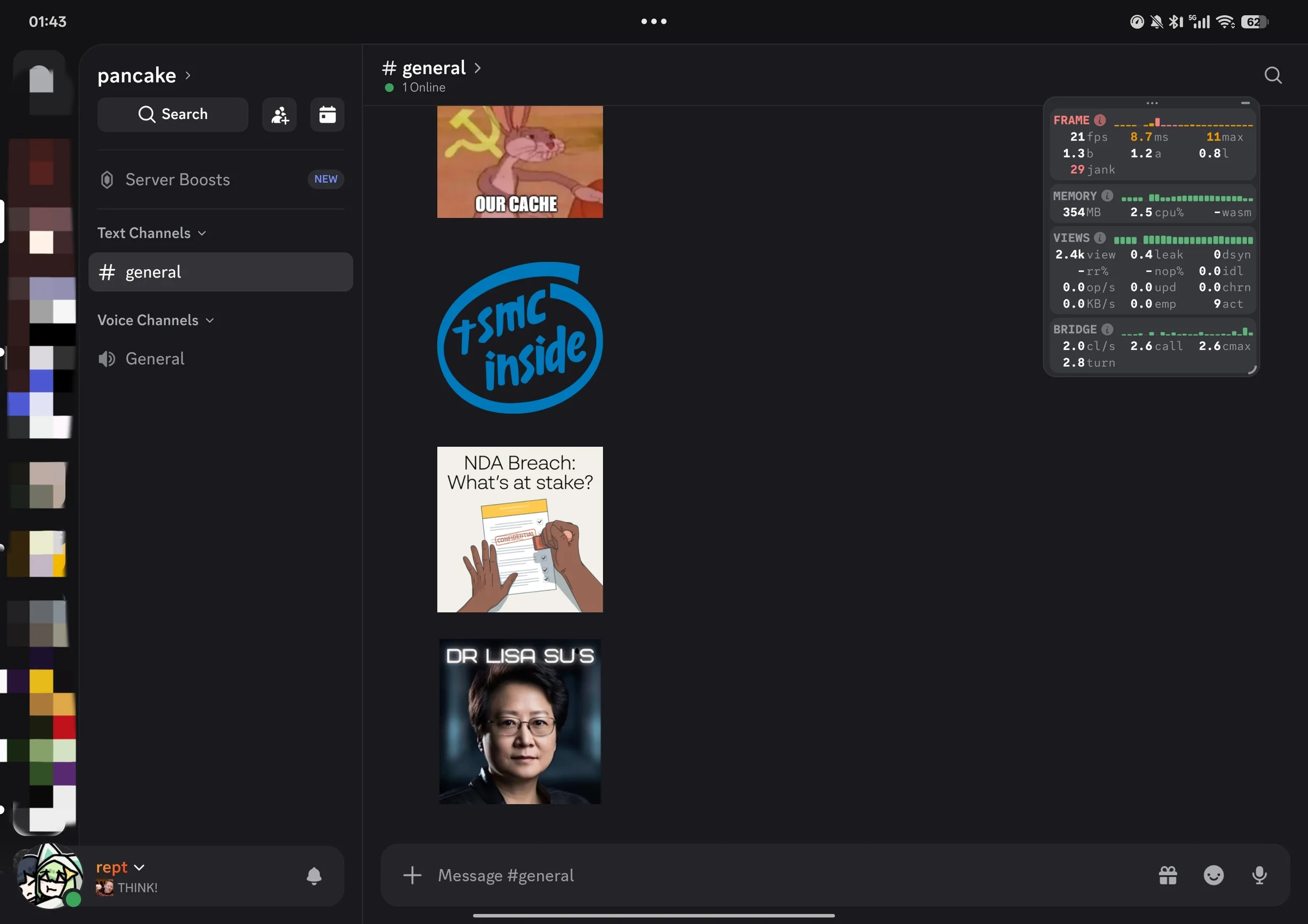
The patched build installs cleanly. It can use a separate package name, so it can run alongside the standard Discord app without replacing it. The unlock is mostly cosmetic. Staff Settings, Developer Tools, and build overrides all appear, but the staff options don't actually work. The patch changes only how the app treats your account; Discord's servers still treat it as a regular account. Local developer tools do work, including the performance overlay we used for the measurements below.
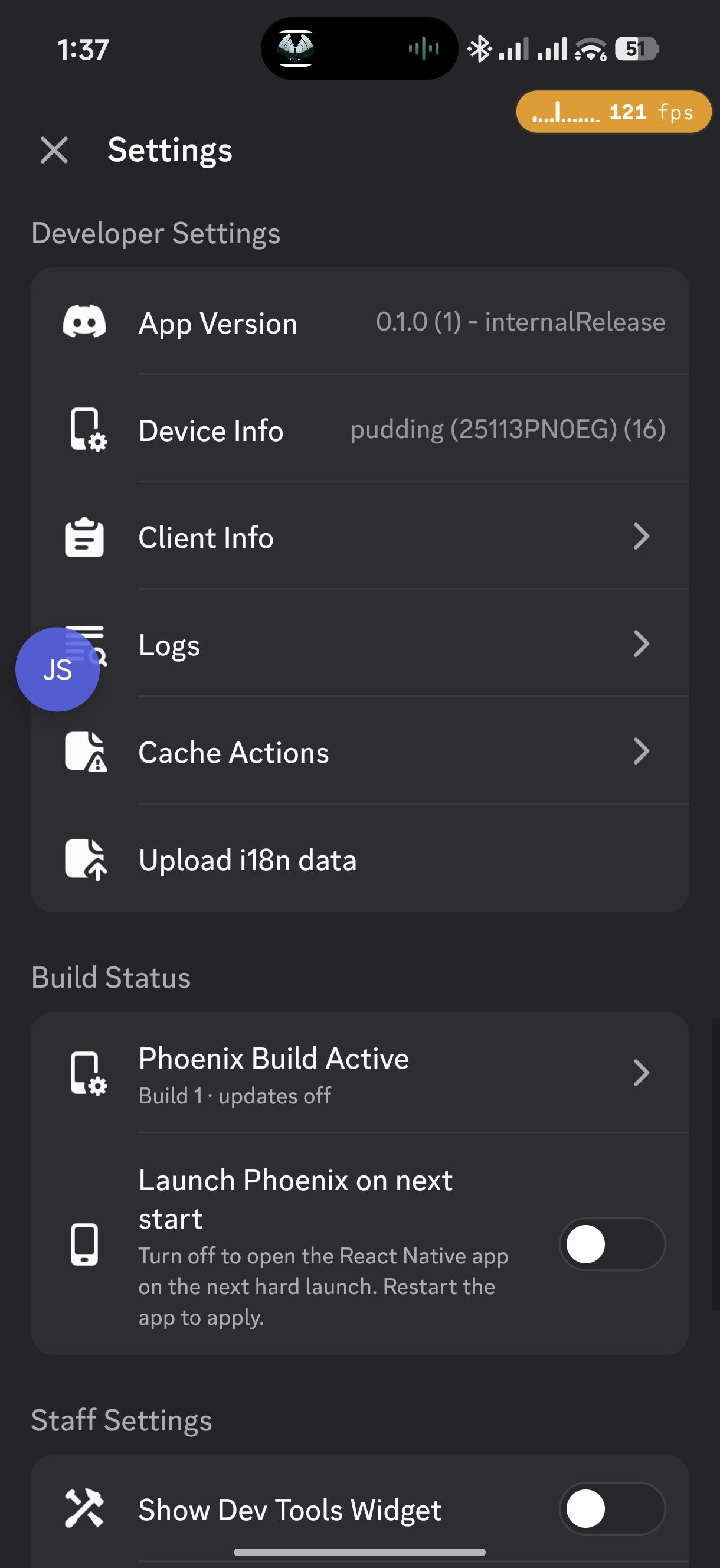
The UI looks identical to the current app's on phones and tablets, right down to the large-screen layout. That suggests Discord is aiming to replace the engine without redesigning the interface. The only reliable way to tell which client is running is to check the version string: Phoenix reports 0.1.0 (1) - internalRelease.
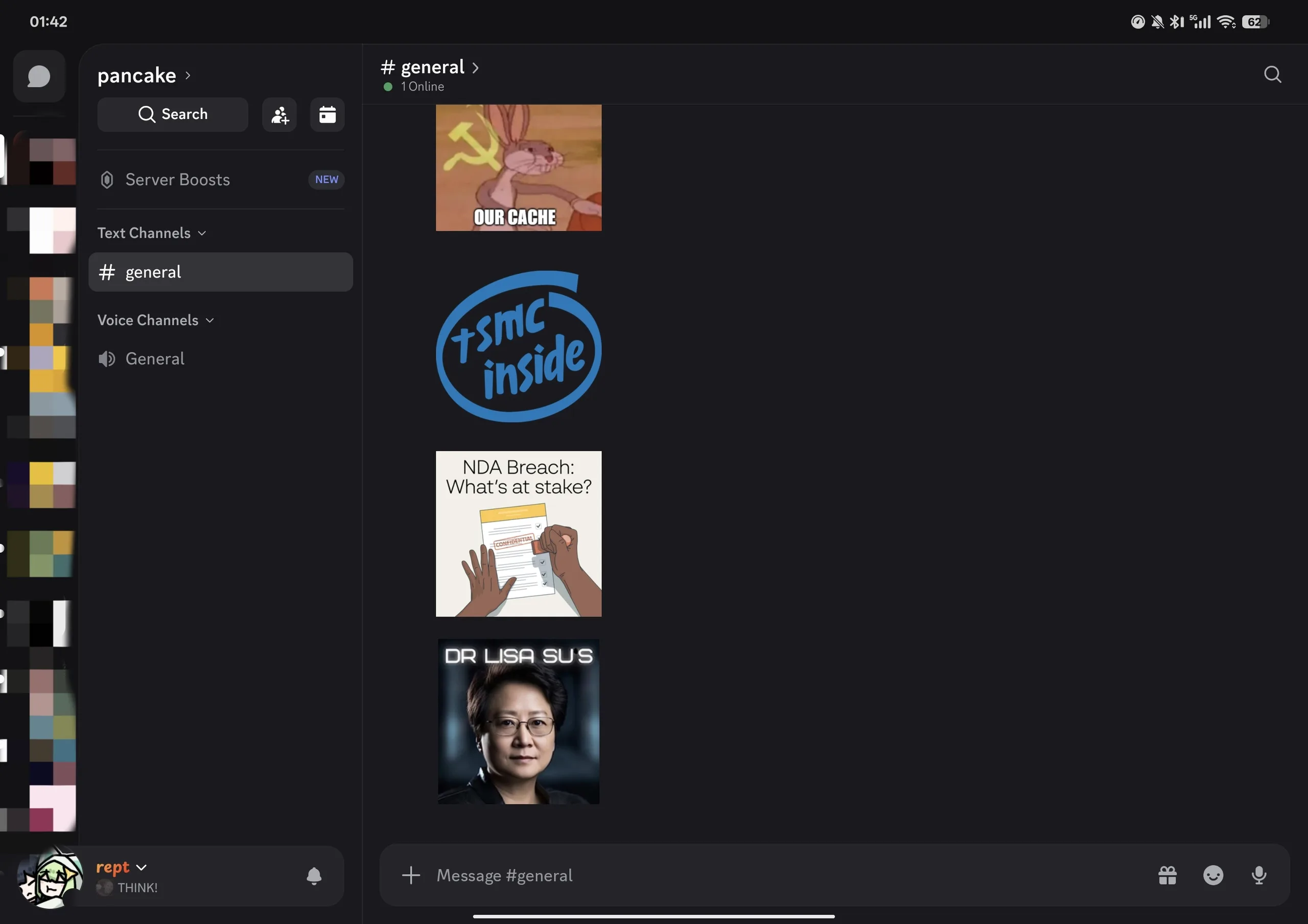
The patched build also includes the mobile account switcher Discord announced for its new Rust client on November 10. Discord demonstrated it on iOS, and it works the same way on Android: you can switch accounts in a redesigned Account sheet without logging out.

Performance was great in everyday use. The new app felt much snappier on our older Xiaomi Mi 10S, which uses a Snapdragon 870. Memory use ranged from 440 to 550 MB depending on the screen, briefly spiking to about 690 MB before dropping back. These figures come from a patched build that also runs Frida, a plugin loader, and the performance overlay, so they may overstate memory use in the unmodified Phoenix client. The client stops drawing frames when nothing on screen changes, as reflected in the overlay's lower frame rate at idle. That should help conserve battery life. Scrolling and navigation were smooth, with no reported jank.
We did see one ANR ("Discord Phoenix isn't responding") in a busy channel under heavy load. Both the plugin loader and Frida were active in that code path, so we can't tell whether Phoenix itself caused the freeze. The build isn't intended for public use, and the issue may be resolved before release.
One finding worth flagging: on our two phones running HyperOS 3 and Android 16, the Xiaomi 17 and the Redmi K70 Pro, Phoenix renders about twice as many frames as the display can show. Its built-in overlay reports a frame rate exactly double the display's refresh rate: 240 fps at 120 Hz and 120 fps when the same phone is set to 60 Hz. Android's own frame statistics back this up on the Xiaomi 17: it logged more than 5,500 frames in roughly 20 seconds of scrolling at 120 Hz, more than twice what the panel could display in that time. Roughly half the rendered frames never reach the screen, wasting GPU time and battery power. On the Mi 10S (HyperOS 1) and the Oppo Pad 5 (ColorOS 17, based on Android 17), the frame rate matched each panel's refresh rate. The two affected phones use different chips and displays but run the same OS versions. That suggests an interaction between Phoenix and HyperOS 3 or Android 16 that Discord may be able to address before release.


This is a modified build signed with a publicly available key. The patcher can include the Frida instrumentation toolkit and a plugin loader that loads JavaScript into the app. Our test build included both. Running a modified client violates Discord's terms of service and could put your account at risk. Treat this as a preview of where Discord is heading, not as a build to run on your main account.
Sources
 Add as a preferred source on Google


