




A house powering itself: New concrete battery from MIT packs 10 times more power
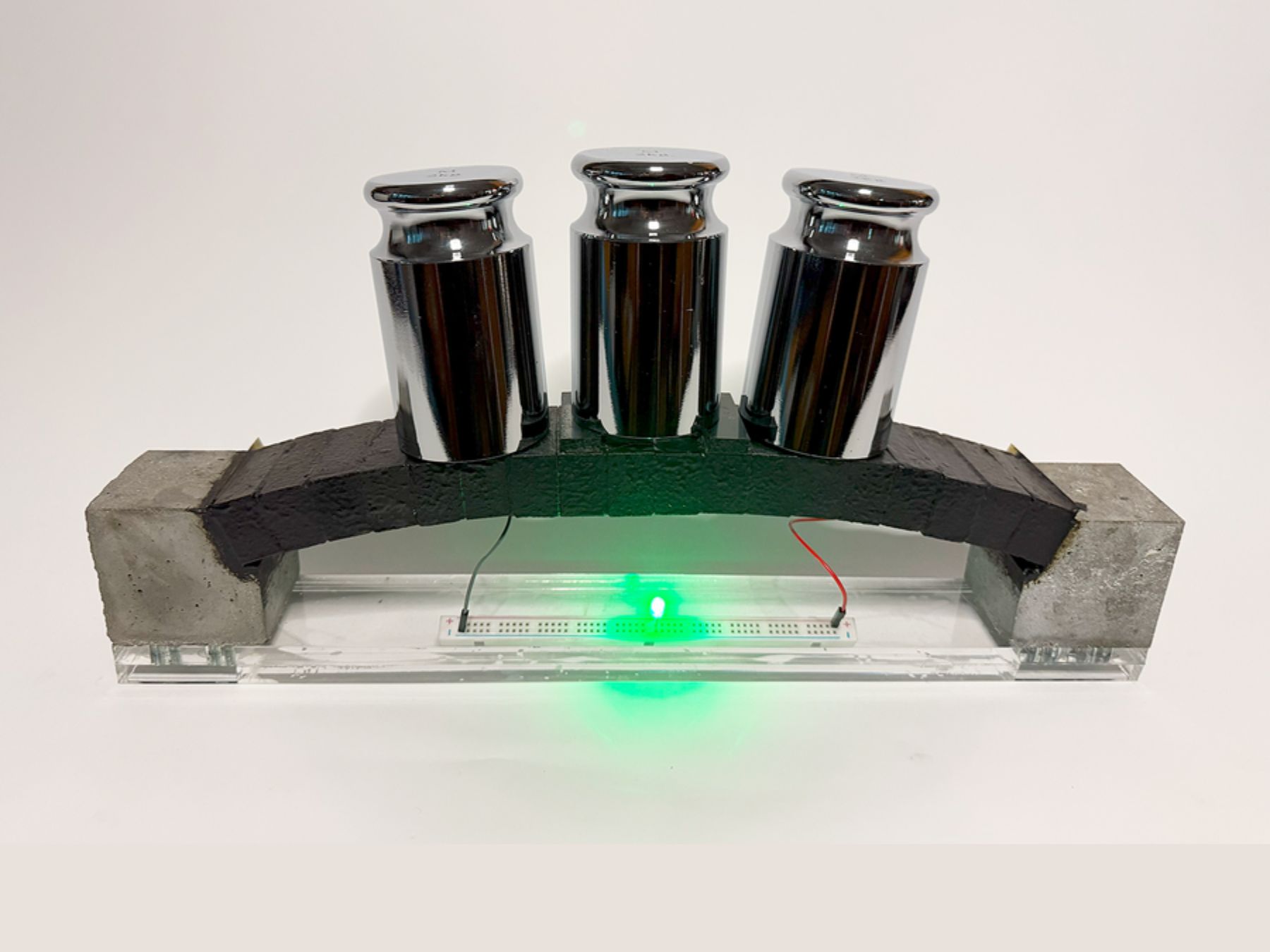
An MIT research team has announced a major leap in performance for their ec3 (electron-conducting carbon concrete), a material that can store and release electrical energy. In a new paper — published in the Proceedings of the National Academy of Sciences (PNAS) — the team reports a tenfold increase in energy capacity. This breakthrough could enable common infrastructure like buildings and bridges to function like batteries.
The improvement is huge. Previously, an average home would have required a 45-cubic-meter block of ec3 to power it for a day, but now would only need a 5-cubic meter block (the volume of the average basement wall).
This breakthrough stems from a deeper understanding of the material's internal structure and chemistry. For the first time, the team visualized the material's inner structure using a high-resolution 3D imaging technique. The new insights from this process allowed them to optimize the system with better-performing organic electrolytes and a “cast-in electrolyte” manufacturing method that simplified production. They also implemented a multicell stacking strategy, creating a 12-volt prototype that overcomes the low-voltage limits of previous designs.
What excites us most is that we’ve taken a material as ancient as concrete and shown that it can do something entirely new. ...we’re opening a door to infrastructure that doesn’t just support our lives, it powers them. — James Weaver, a co-author on the paper.
The scientists discovered that seawater can be used as a viable electrolyte, showing potential application in offshore structures. They also demonstrated it could be used for structural health monitoring by using a 9-volt arch made from the material to power an LED which flickered when the arch was put under physical stress.
 Add as a preferred source on Google


