 Deutsch
 Español
 Français
 Italiano
 Nederlands
 Polski
 Português
 Русский
 Türkçe
 Svenska
 Chinese
 Magyar
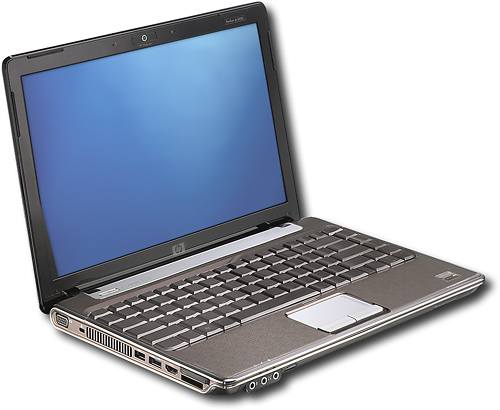
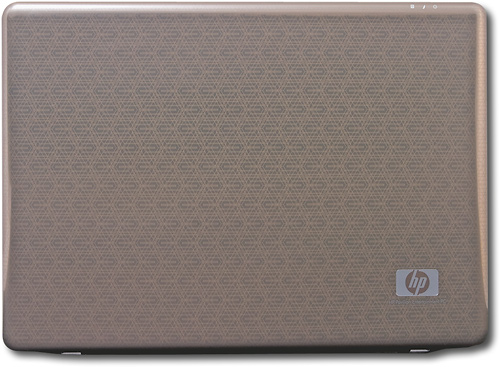
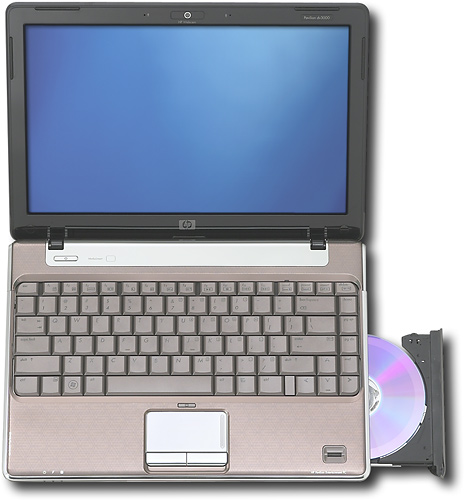
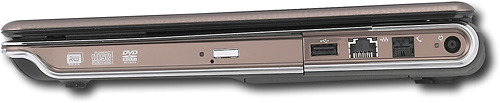
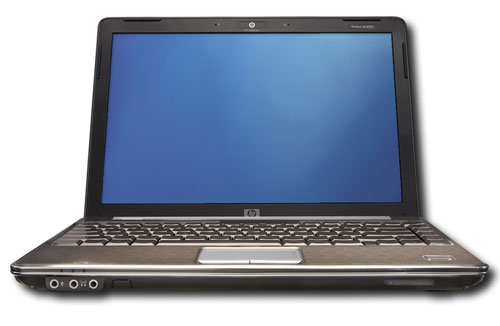
HP Pavilion dv3000
Specifications
Pricecompare
Average of 2 scores (from 2 reviews)
Reviews for the HP Pavilion dv3000
Source: CNet
 Archive.org version
Best Buy listened to its customers and then teamed up with HP to create the Pavilion dv3510nr, one of the big box store's first Blue Label laptops. This sleek-yet-loaded 13-inch laptop deserves a blue ribbon, too, for its all-around excellence and value.
(von 10): 8.4, Ausstattung 10, Leistung 8, Mobilität 8, Preis gut
Single Review, online available, Medium, Date: 11/11/2008
Rating: Total score: 84% price: 80% performance: 80% features: 100% mobility: 80%
Source: Laptop Mag
Archive.org versionOverall, the $1,099 HP Pavilion dv3510nr is a sleek and powerful 13-inch notebook. The identically priced 14-inch Toshiba E105—the other laptop that launched the Blue Label program that includes a backlit keyboard—offers longer battery life (4:36 vs. 3:41) and a bigger 14-inch screen in a package that weighs about the same as the dv3510nr. However, the HP’s design is more attractive, and it offers discrete graphics and a better keyboard. If you can live with its below-average endurance, the dv3510nr is a very good thin-and-light multimedia machine.
4 von 5, Leistung exzellent, Mobilität schlecht
Single Review, online available, Medium, Date: 10/30/2008
Rating: Total score: 80% performance: 95% mobility: 40%
Comment
NVIDIA GeForce 9300M G: Enhanced 8400M GS chip, which is manufactured in 65nm and shows slightly better performance due to a few minor optimizations.
Only some 3D games with very low demands are playable with these cards.
» Further information can be found in our Comparison of Mobile Graphics Cards and the corresponding Benchmark List.
Intel Core 2 Duo: This is the Core Duo and Core Solo successor with a longer pipeline and 5-20% more speed without more power consumption. As an addition to the Core Duo design there exists a fourth decoder, an amplified SSE-unit and an additional arithmetical logical unit (ALU).
The Core 2 Duo for laptops is identical to the desktop Core 2 Duo processors but the notebook-processors work with lower voltages (0.95 to 1188 Volt) and a lower Frontside bus clock (1066 vs 667 MHz). The performance of equally clocked notebooks is 20-25% lower than Desktop PCs because of the lower Frontside bus clock and the slower hard disks.
P7350:
Entry level Core 2 Duo processor with 3 MB Level 2 Cache and due to the 25 Watt TDP also suited for 13" laptops.
» Further information can be found in our Comparison of Mobile Processsors.
13.30":
There are hardly any tablets in this display size range anymore. For subnotebooks, on the other hand, it is the standard format.
The advantage of subnotebooks is that the entire laptop can be small and therefore easily portable. The smaller display also has the advantage of requiring less power, which further improves battery life and thus mobility. The disadvantage is that reading texts is more strenuous on the eyes. High resolutions are more likely to be found in standard laptops.
» To find out how fine a display is, see our DPI List.HP: Founded in 1939, the US company is a major server and printer manufacturer and one of the leading IT companies in the world. Until 2015, the company was called Hewlett-Packard Company. After a split, the computer division was renamed HP Inc.
In 2023, HP had an approximate market share of 22% of global PC sales, making it number 2 after Lenovo.
82%: This rating is slightly above average, there are somewhat more devices with worse ratings. However, clear purchase recommendations look different.
» Further information can be found in our Notebook Purchase Guide.