 Deutsch
 Español
 Français
 Italiano
 Nederlands
 Polski
 Português
 Русский
 Türkçe
 Svenska
 Chinese
 Magyar
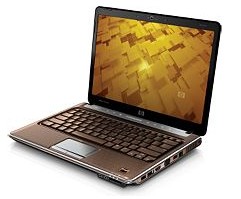
HP Pavilion dv3
Specifications
Pricecompare
Average of 1 scores (from 3 reviews)
Reviews for the HP Pavilion dv3
Source: Hardware Zone
 Archive.org version
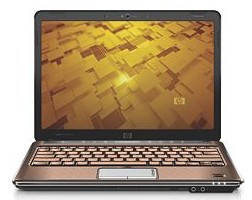
When we last saw the HP Pavilion series, they had gone from shiny, metallic plastic, to still shiny metallic plastic, but with nice HP Imprint patterns on the notebook. Featuring the latest in graphics technology and Quad Core support, the HP Pavilion dv3 is a power packed notebook PC that allows you to enjoy the latest entertainment features in a lightweight, mobile form factor.
Single Review, online available, Long, Date: 07/19/2010
Rating: performance: 80% mobility: 80%
Foreign Reviews
Source: Mobility.bg
 BU→EN Archive.org version
Single Review, online available, Very Short, Date: 11/16/2009
Rating: Total score: 70%
Source: Mobility.bg
BU→EN Archive.org versionSingle Review, online available, Very Short, Date: 11/15/2009
Rating: display: 90% mobility: 80%
Comment
ATI Radeon HD 3200: Onboard (shared Memory) graphics chip (on RS780M chipset) based on the HD 2400 graphics core. It also features the UVD video engine to decode HD videos. Beware: Under Windows XP the HD 3200 may have no 2D accelleration because of a driver problem.
Only some 3D games with very low demands are playable with these cards.
» Further information can be found in our Comparison of Mobile Graphics Cards and the corresponding Benchmark List.
AMD Turion X2 Ultra: The AMD Turion X2 Ultra is part of the Puma platform and a mixture of the old K9 core (form the Turion 64 X2) and some parts of the K10 architecture (memorycontroller, hypertransport, crossbar switch from the Phenom). Because of the increased L2 cache ("Ultra" CPUs) and the improved memory controller, the performance increased a bit. Still a similar clocked Core 2 Duo is noticably faster.
ZM-84:
Mixture out of two K8 based cores and K10 uncores (e.g. memory controller). Offers improved power saving functions compared to older Turion CPUs but still not as good and fast as a Core 2 Duo. The ZM-84 is similar to the ZM-85 but features a slower clocked HT link.
» Further information can be found in our Comparison of Mobile Processsors.
13.30":
There are hardly any tablets in this display size range anymore. For subnotebooks, on the other hand, it is the standard format.
The advantage of subnotebooks is that the entire laptop can be small and therefore easily portable. The smaller display also has the advantage of requiring less power, which further improves battery life and thus mobility. The disadvantage is that reading texts is more strenuous on the eyes. High resolutions are more likely to be found in standard laptops.
» To find out how fine a display is, see our DPI List.HP: Founded in 1939, the US company is a major server and printer manufacturer and one of the leading IT companies in the world. Until 2015, the company was called Hewlett-Packard Company. After a split, the computer division was renamed HP Inc.
In 2023, HP had an approximate market share of 22% of global PC sales, making it number 2 after Lenovo.
70%: This rating is poor. More than three quarters of the models are rated better. That is rather not a purchase recommendation. Even if verbal ratings in this area do not sound that bad ("sufficient" or "satisfactory"), they are usually euphemisms that disguise a classification as a below-average laptop.
» Further information can be found in our Notebook Purchase Guide.