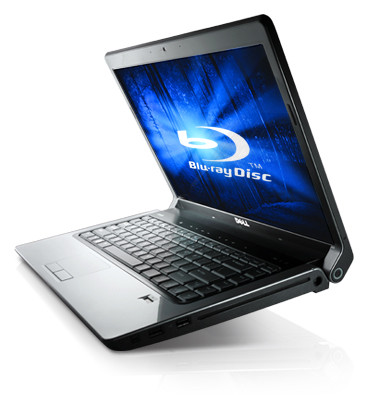
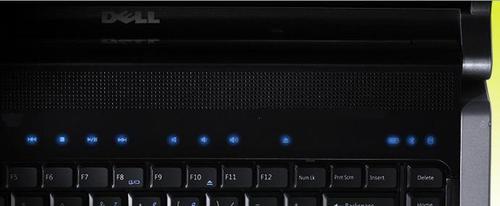
Dell Studio 1525
Specifications
Price comparison
Average of 1 scores (from 1 reviews)
Reviews for the Dell Studio 1525
Source: Pocket Lint
 Archive.org version
While it may lack the cachet of a Sony VAIO or Apple MacBook, at this price there are very few laptops that can compete with Dell’s Studio 1525. Excellent quality, usability and great performance combine to make it one of the best mainstream laptops you can currently buy. We recommend staying away from the optional extras, however, as it’s easy to turn this machine from a reasonable value machine into one costing considerably more.
90, Preis 80, Leistung 90, Verarbeitung 90, Ergonomie 90
Single Review, online available, Medium, Date: 03/23/2009
Rating: Total score: 90% price: 80% performance: 90% workmanship: 90% ergonomy: 90%
Comment
Intel Graphics Media Accelerator (GMA) X3100: Intel Graphics Media Accelerator (GMA) X3100 is an integrated (onboard) graphic chip on a Mobile Intel 965GM chipset. It is the successor of GMA 950 and features a fully programmable pipeline (supports Aero Glass fully and DirectX 10 with newest drivers). The peformance of the X3100 is clearly better than the GMA 950, still demanding modern games won't run fluently.
These graphics cards are not suited for Windows 3D games. Office and Internet surfing however is possible.
» Further information can be found in our Comparison of Mobile Graphics Cards and the corresponding Benchmark List.
Intel Core 2 Duo: This is the Core Duo and Core Solo successor with a longer pipeline and 5-20% more speed without more power consumption. As an addition to the Core Duo design there exists a fourth decoder, an amplified SSE-unit and an additional arithmetical logical unit (ALU).
The Core 2 Duo for laptops is identical to the desktop Core 2 Duo processors but the notebook-processors work with lower voltages (0.95 to 1188 Volt) and a lower Frontside bus clock (1066 vs 667 MHz). The performance of equally clocked notebooks is 20-25% lower than Desktop PCs because of the lower Frontside bus clock and the slower hard disks.
T5850: Merom based Core 2 Duo entry level dual core processor on the performance level of a Core 2 Duo T6500.» Further information can be found in our Comparison of Mobile Processsors.


 Add as a preferred