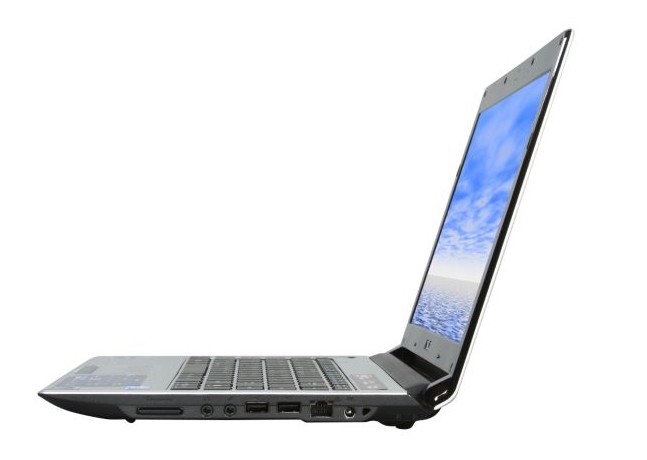
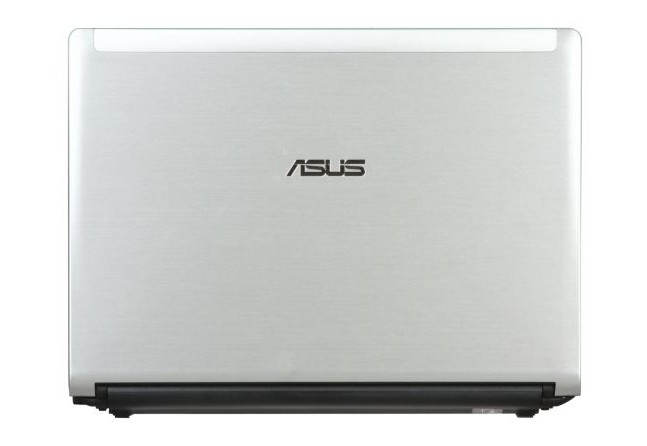
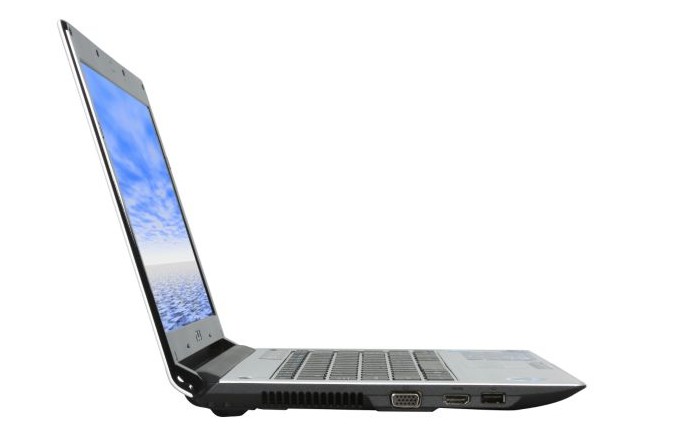
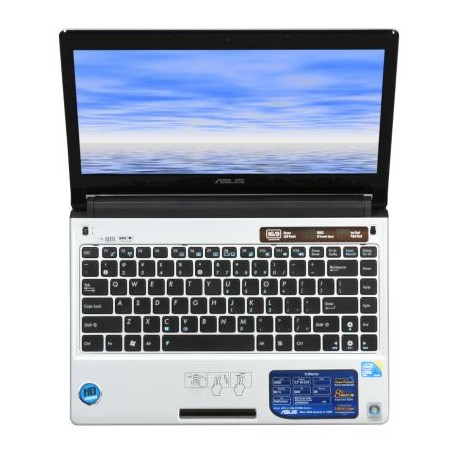
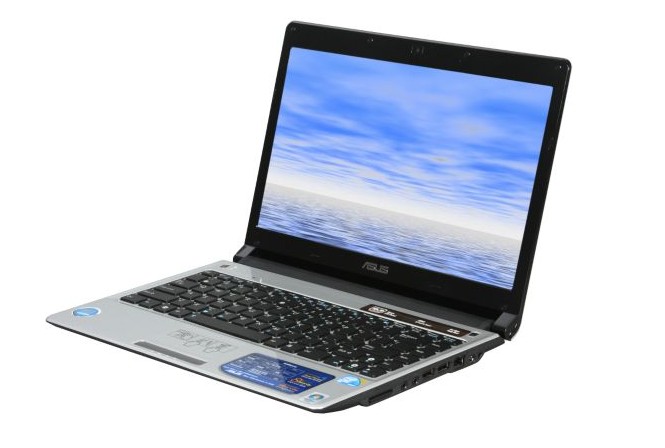
Asus UL30A-X1
Specifications
Price comparison
Average of 4 scores (from 9 reviews)
Reviews for the Asus UL30A-X1
Source: Digital Trends
 Archive.org version
Analysts often report that netbooks have wreaked havoc on traditional notebook sales, and it's no wonder why: They've totally reset consumer expectations of price and portability to a level most overweight traditional notebooks just can't compete with. The UL30A can. It excels where netbooks fail, without losing sight of the lean-and-mean design strategy that has made netbooks so popular to begin with. A competent processor, gorgeous 13.3-inch screen and spacious keyboard all give consumers reason to open their wallets a little wider before biting on a netbook, while a price well under $1,000 and weight under four pounds make the MacBook Air and its brethren look, well, expensive.
Single Review, online available, Medium, Date: 10/13/2009
Rating: Total score: 75%
Source: Tech Advisor
Archive.org versionTake everything we liked about the Asus Eee PC 1005HA (a well-designed, seashell-shaped netbook) and marry that with the CULV-laden Acer Aspire Timeline 3810T. The result: Asus's stab at a good, low-cost ultraportable computer - the Asus UL30A. All said and done, the Asus UL30A is a reasonably good package, but it is around £525. You might find yourself asking if you want to get something that might not run as long, but have more muscle (like, say, Dell's Studio 14z) or forgo a little bit of that power and save a few bucks with a plain ol' netbook. But final judgments are pending.
Single Review, online available, Medium, Date: 09/21/2009
Rating: Total score: 70% performance: 50%
Source: Laptop Mag
Archive.org versionASUS’ first entry into the ULV market provides a great balance between portability, power, and price. Though this notebook isn’t a multimedia powerhouse, it doesn’t need to be. Consumers who want a light, portable machine that won’t choke when taxed or die after a few hours without the power cord will appreciate this system. Though it isn’t as thin or as light as the MSI X340 (currently priced at $699), the UL30A easily outperforms it. The Acer Aspire Timeline 3810 is also a strong choice, and offers slightly better performance, but it costs $50 more and lasts about 2 hours less on a charge. The bottom line: At $799, the UL30A is a compelling value.
Single Review, online available, Long, Date: 09/18/2009
Rating: Total score: 80%
Source: Hot Hardware
Archive.org versionFrankly, we were impressed with how well the 1.3GHz CPU handled Vista, which generally requires a higher-end CPU to run smoothly. At just over $700 depending on configuration (our build had an MSRP of $799), it's really hard to not give this machine a serious look if you need a new ultraportable. This rig is far more capable and far more enjoyable to use than any netbook we've tested to date, even the ones that soared above the $500 mark. If you can save up a few more bucks, you'll thank yourself for snagging a CULV-based system over an Atom-based system. There's really no comparison when it comes down to it. We think a new bar has been set, and for just over $700, we think you'd be hard pressed to find a sleeker, more enjoyable rig to buy than the UL30.
Single Review, online available, Long, Date: 09/18/2009
Rating: price: 80% performance: 40% display: 50% mobility: 90%
Source: Netbooklive
Archive.org versionThe 13.3 inch Asus UL30A is the best affordable portable notebook i got my hands on ever, period. Comes with very good looks and overall almost impeccable construction quality, decent autonomy and a good price for what it has to offer. It is actually quite hard to find a fault for the Asus UL30A . There are some minors ones i found though, but I’m quite picky and most won’t even notice them. All in all, i have to say again I’m really impressed by this device. From the chiclet style keyboard to the quality of the screen and the performance levels, everything is just as it should be. That’s why this UL30A is now on top of my ultra-portable notebooks list.
Single Review, online available, Short, Date: 09/11/2009
Rating: features: 80% display: 50% mobility: 80% workmanship: 90%
Source: Comp Reviews
Archive.org versionThe ASUS UL30A-X1 is an alternative for those looking to get a highly portable laptop computer but don't want to sacrifice performance in a netbook. At $700, the system is still quite affordable yet provides a better experience with just as much battery life as some of the better netbooks. Some features were sacrificed for a lower price including a lower resolution webcam and a battery that gives the hinge side a fairly large profile. Overall though, it is a good system for the road warrior on a budget that doesn't want to spend on something like a MacBook Air.
Single Review, online available, Short, Date: 09/09/2009
Rating: Total score: 80%
Foreign Reviews
Source: Hispazone
 ES→EN Archive.org version
Comparison, online available, Long, Date: 09/12/2009
Rating: performance: 80% mobility: 80%
Source: Zoom
 RU→EN Archive.org version
Single Review, online available, Medium, Date: 12/21/2009
Rating: display: 40% mobility: 90% ergonomy: 80% emissions: 80%
Source: Datormagazin
 SV→EN Archive.org version
Single Review, online available, Short, Date: 12/14/2009
Rating: workmanship: 50%
Comment
Intel Graphics Media Accelerator (GMA) 4500MHD: Onboard (shared Memory) GPU built in the GM45, GE45 and GS45 chipset (Montevina). Because of two more shaders and a higher core clock, much faster than the old GMA X3100. Still not advisable for gamers (DirectX 10 games not playable or only with very low settings). The integrated video processor is able to help decode HD videos (AVC/VC-2/MPEG2) , e.g., for a fluent Blu-Ray playback with slow CPUs.
Only some 3D games with very low demands are playable with these cards.
» Further information can be found in our Comparison of Mobile Graphics Cards and the corresponding Benchmark List.
SU3500: Power efficient single core processor for small subnotebooks that is based on the Penryn core and includes all features (like Virtualization, C6 state, ...). The performance should be comparable with a 1.7 GHz Athlon II Neo K125.» Further information can be found in our Comparison of Mobile Processsors.
13.30":
There are hardly any tablets in this display size range anymore. For subnotebooks, on the other hand, it is the standard format.
The advantage of subnotebooks is that the entire laptop can be small and therefore easily portable. The smaller display also has the advantage of requiring less power, which further improves battery life and thus mobility. The disadvantage is that reading texts is more strenuous on the eyes. High resolutions are more likely to be found in standard laptops.
» To find out how fine a display is, see our DPI List.Asus: ASUSTeK Computer Inc. is a major Taiwanese computer hardware manufacturer based in Taipei, founded in 1989. Under the Asus brand name, the company manufactures a wide range of products, including laptops, desktops, motherboards, graphics cards, monitors, smartphones and networking equipment, complete systems and PC components for end users.
Under the ROG (Republic of Gamers) brand name, ASUS manufactures gaming laptops known by gamers for their powerful specifications, dedicated graphics cards, high refresh rate displays and advanced cooling systems.
Beyond gaming, a wide range of notebooks are offered for different needs and budgets, from ultra-slim and lightweight ultrabooks to versatile 2-in-1 convertibles and budget-friendly options. In 2023, Asus had a 7% global market share of the PC market.
Customer satisfaction with ASUS notebooks concerns performance, the features, and the good price-performance ratio of ASUS notebooks. However, as with any brand, there are occasional reports of problems such as overheating, driver compatibility, or build quality issues.
76.25%: This rating is not earth-shattering. This rating must actually be seen as average, since there are about as many devices with worse ratings as better ones. A purchase recommendation can only be seen with a lot of goodwill, unless it is about websites that generally rate strictly.
» Further information can be found in our Notebook Purchase Guide.