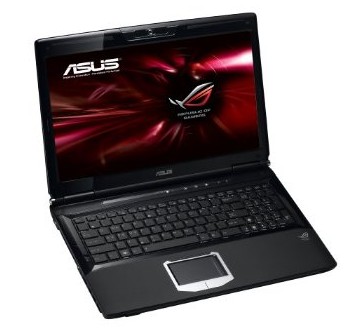
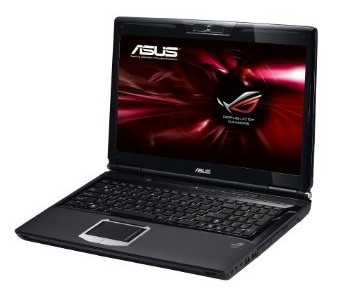
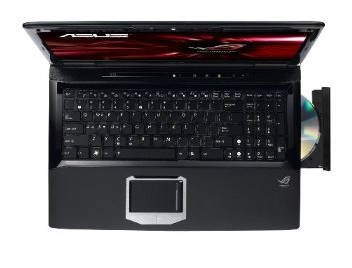
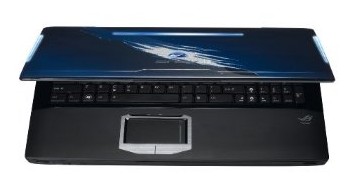
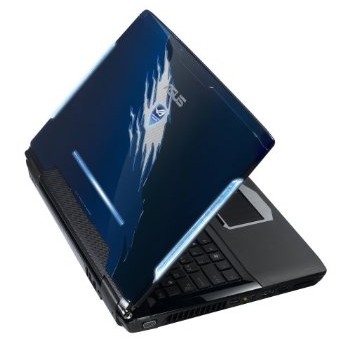
Asus G51Jx-X1
Specifications
Price comparison
Average of 3 scores (from 4 reviews)
Reviews for the Asus G51Jx-X1
Source: Techradar
 Archive.org version
Ultimately this is a great laptop, and kudos to Asus for being the first out the gates with a nVidia 3D Vision laptop. That the technology works well given the correct content demonstrates that 3D is now ready to come out of the wilderness and start enjoying some success as a mainstream technology. There are a few niggles, including the screen resolution and keyboard, but neither are a massive cause for drama.
Single Review, online available, Medium, Date: 09/27/2010
Rating: Total score: 80%
Source: Comp Reviews
Archive.org versionThe ASUS G51Jx-X1 offers a surprising level of performance for its $1200 price tag. Those hoping to use it for gaming will be pleased with its high performance Core i7 quad core processor, GeForce GTS 360M graphics and high resolution LCD panel. Those using it for processor intensive computing would also be well served by its performance. On the downside, the system has a small battery providing very short running times and is among one of the larger and heavier 15-inch laptops on the market.
Single Review, online available, Short, Date: 05/05/2010
Rating: Total score: 80%
Foreign Reviews
Source: Gamestar
 DE→EN Archive.org version
Single Review, online available, Medium, Date: 08/06/2010
Rating: Total score: 87% price: 60% performance: 93% features: 90% display: 90%
Source: Pc Tuner
 IT→EN Archive.org version
Single Review, online available, Long, Date: 07/26/2010
performance: 90%
Comment
NVIDIA GeForce GTS 360M:
Essentially a renamed GTS 260M but with higher clock rates (412 versus 396 Gigaflops, according to Nvidia). The GTS 360M delivers high-end performance with GDDR5 graphics memory.
Modern games should be playable with these graphics cards at low settings and resolutions. Casual gamers may be happy with these cards.
» Further information can be found in our Comparison of Mobile Graphics Cards and the corresponding Benchmark List.
Intel Core i7: The Intel Core i7 for laptops is based on the LG1156 Core i5/i7 CPU for desktops. The base clock speed of the CPUs is relatively low, but because of a huge Turbo mode, the cores can dynamically overclock to up to 3.2 GHz (920XM). Therefore, the CPU can be as fast as high clocked dual-core CPUs (using single threaded applications) but still offer the advantage of 4 cores. Because of the large TDP of 45 W / 55 W, the CPU is only intended for large laptops.
720QM: The Core i7-720QM is the slowes Core i7 Quad Core in 2009 and clocks between 1.6 and 2.8 GHz (due to the Turbo Mode). Therefore, it combines the advantages of a slow quad core CPU with a fast single core one. Compared to the faster Core i7 mobile CPUs, the 720QM only features 6MB L3 Cache.» Further information can be found in our Comparison of Mobile Processsors.
 Add as a preferred source on Google