 Deutsch
 Español
 Français
 Italiano
 Nederlands
 Polski
 Português
 Русский
 Türkçe
 Svenska
 Chinese
 Magyar
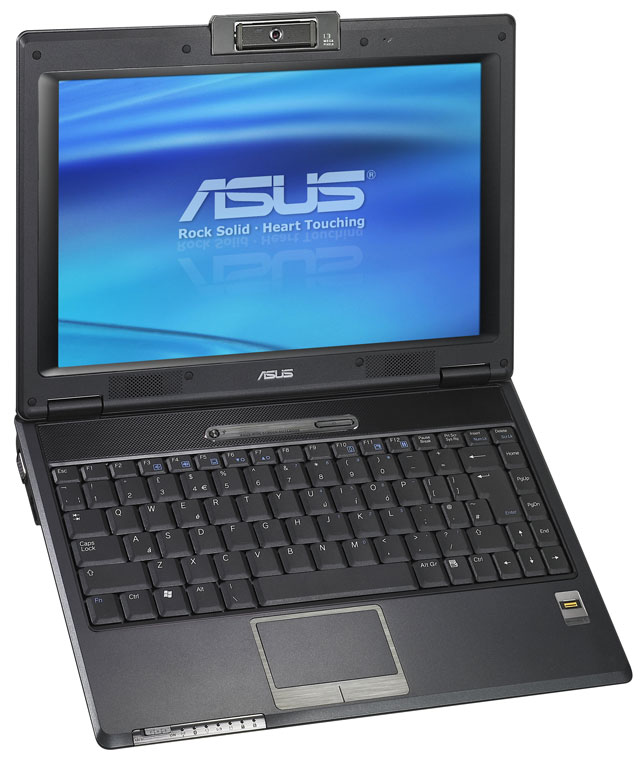
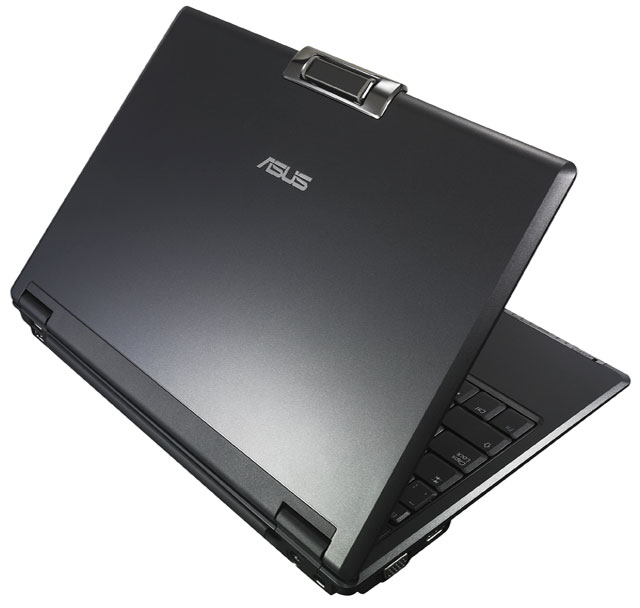
Asus F9Dc
Specifications

Pricecompare
Average of 1 scores (from 2 reviews)
Reviews for the Asus F9Dc
Source: Notebookreview.com
 Archive.org version
When I picked up my HP Pavilion dv6258se early this year, around February, I bought it because I lived thirty miles from school and wanted to have a sort of portable workstation for editing video and playing the occasional game. It's a fifteen incher, big and beautiful. Mainly big.
If the battery life is something you think you can live with, then honestly, this notebook really is a steal. I know it sounds like I've kvetched a lot about the unit, but it's a very solid machine. If my classes this quarter hadn't almost universally banned laptop use (barbarians!) I might've actually picked up one of those one-size-fits-all batteries to cover that. I may still.
The important thing is that it's powerful and versatile, and is really a hell of a lot of bang for the buck.
Leistung gut, Mobilität mangelhaft
User Review, online available, Long, Date: 12/06/2007
Rating: performance: 80% mobility: 50%
Foreign Reviews
Source: PCM
 NL→EN Archive.org version
Single Review, online available, Very Short, Date: 02/15/2008
Rating: Total score: 80% price: 80% performance: 80% display: 80% mobility: 50%
Comment
NVIDIA GeForce 8400M G: The 8400M G is a pared-down 8400M GS with only half as much Stream Processors and a smaller memory bus. Therefore, the performance is much lower and only as fast as the old 7400 card. Only MPEG-2 acceleration.
Only some 3D games with very low demands are playable with these cards.
» Further information can be found in our Comparison of Mobile Graphics Cards and the corresponding Benchmark List.
AMD Turion 64 X2: AMD Turion 64 X2 is intended to be positioned against the Intel Core Duo was presented in 17. May 2006. The current consumption is not higher than with Centrino-Duo-notebooks (TL-45 with ATI Xpress and Mobility Radeon X300). This means, that approximative the same battery runtime and fan functions can be expected (with this chipset). However, the performance was 20% below the T2300 (1.66 GHz) due to the lower L2 Cache (Core Duo has 2048 Kbyte shared L2 Cache). Nevertheless, the performance is sufficient.
TL-56:
In 90nm (33W TDP) and 65nm (31W TDP) produced dual core processor with a clock rate of 1.8 GHz. The TL-56 is still based on the K8 core and compareable to a slower clocked Core Duo.
» Further information can be found in our Comparison of Mobile Processsors.
12.10":
This range of display format is largely the upper limit for tablets and the lower limit for subnotebooks.
The advantage of subnotebooks is that the entire laptop can be small in size and therefore easily portable. The tiny display has the added advantage of requiring little power, which further improves battery life and thus mobility. The disadvantage is that reading texts is exhausting for the eyes. High resolutions, which one is used to from a standard laptop, are almost not usable.
The same applies to tablets in this size range.
» To find out how fine a display is, see our DPI List.Asus: ASUSTeK Computer Inc. is a major Taiwanese computer hardware manufacturer based in Taipei, founded in 1989. Under the Asus brand name, the company manufactures a wide range of products, including laptops, desktops, motherboards, graphics cards, monitors, smartphones and networking equipment, complete systems and PC components for end users.
Under the ROG (Republic of Gamers) brand name, ASUS manufactures gaming laptops known by gamers for their powerful specifications, dedicated graphics cards, high refresh rate displays and advanced cooling systems.
Beyond gaming, a wide range of notebooks are offered for different needs and budgets, from ultra-slim and lightweight ultrabooks to versatile 2-in-1 convertibles and budget-friendly options. In 2023, Asus had a 7% global market share of the PC market.
Customer satisfaction with ASUS notebooks concerns performance, the features, and the good price-performance ratio of ASUS notebooks. However, as with any brand, there are occasional reports of problems such as overheating, driver compatibility, or build quality issues.
80%: This rating is not earth-shattering. This rating must actually be seen as average, since there are about as many devices with worse ratings as better ones. A purchase recommendation can only be seen with a lot of goodwill, unless it is about websites that generally rate strictly.
» Further information can be found in our Notebook Purchase Guide.