




Nvidia Tegra X1 vs Qualcomm Snapdragon 888 4G
Nvidia Tegra X1
► remove from comparison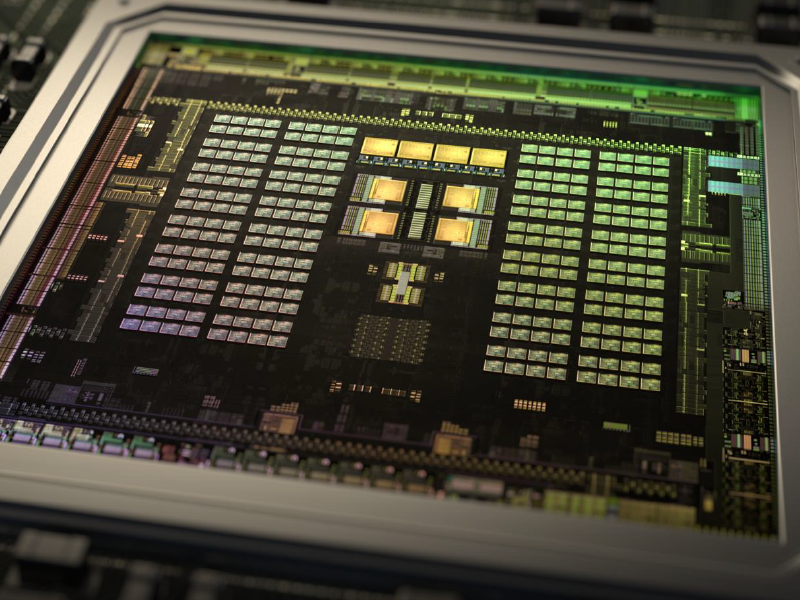
The NVIDIA Tegra X1 (Tegra 6, Codename Erista) is a 64-Bit high performance ARM based SoC (System on a Chip) for (mainly Android based) tablets and embedded systems (like cars). It contains four ARM Cortex A57 and four ARM Cortex A53 cores in the processor part. As a graphics card, Nvidia integrated a Maxwell based GPU with 256 CUDA cores (see for more details and benchmarks). The integrated memory controller supports LPDDR3 and LPDDR4 with a maximum bandwidth of 25.6 GB/s (2x 32 Bit LPDDR4-3200). The Tegra X1 is the successor to the exactly one year earlier announced Tegra K1 SoC.
Similar to the Symsung Exynos 5433, the Tegra X1 uses a big.LITTLE combination of four power saving and small Cortex-A53 cores and four powerful Cortex-A57 cores. Nvidia however uses an own cluster migration solution instead of the ARM Global Task Scheduling (GTS) and therefore only one of the two quad-core clusters is active at a time.
The performance of the processor cores should be in the high-end segment of ARM based SoCs. Nvidia states that the X1 offers a twice as high energy efficiency compared to the Exynos 5433 (same ARM cores at 1.9 GHz manufactured in 20nm).
Due to the big Maxwell graphics card the SoC is mainly aimed at tablets with good cooling solutions and wont be commonly seen in smartphones. The Tegra X1 is produced at TSMC in 20nm.
Qualcomm Snapdragon 888 4G
► remove from comparison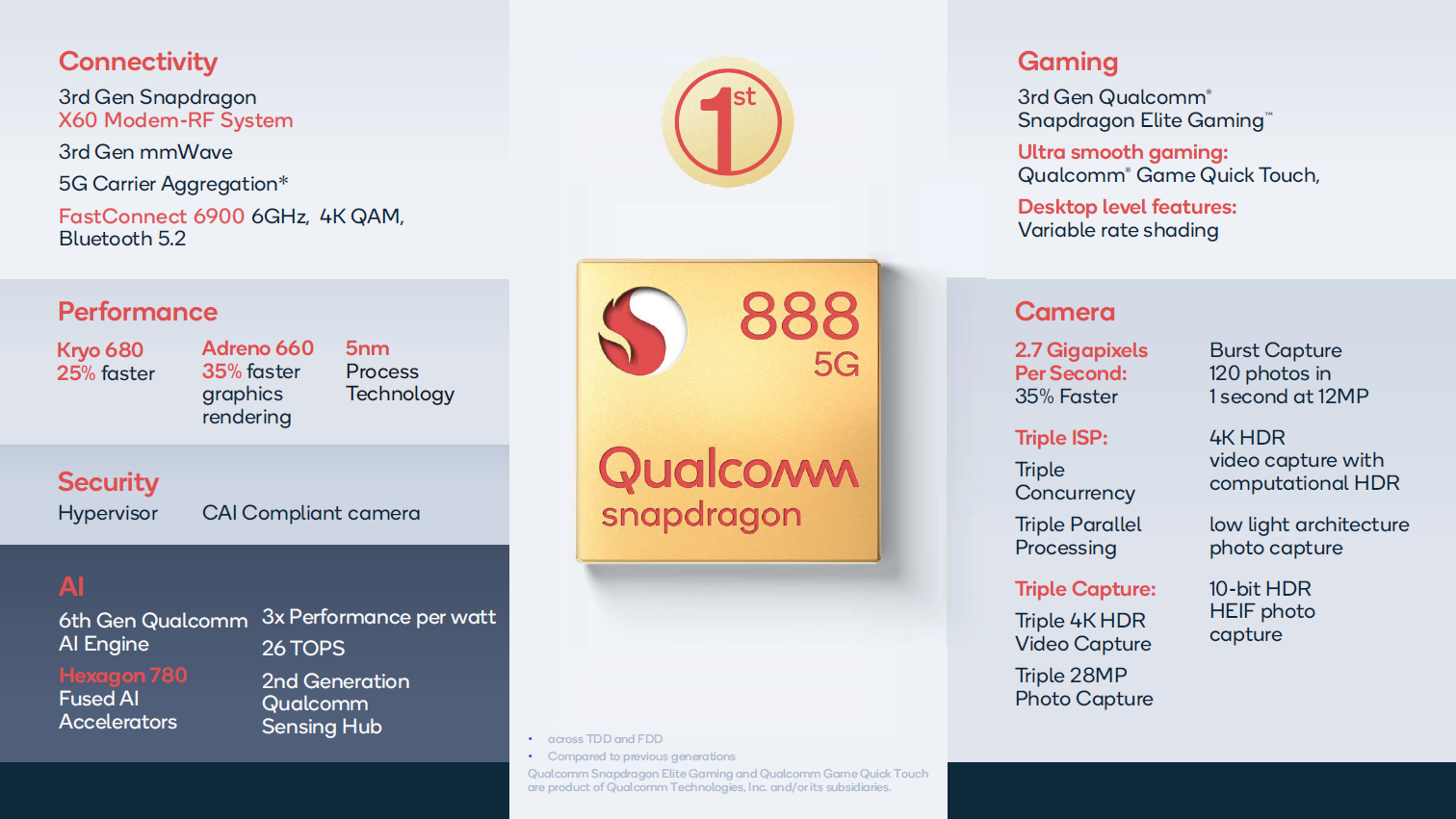
The Qualcomm Snapdragon 888 4G Mobile Platform is a high-end SoC for smartphones that was introduced in mid 2021 and manufactured in 5 nm at Samsung. Compared to the earlier released Snapdragon 888 5G, the 4G variant only features a 4G LTE modem.
The chip integrates one “Prime Core” based on a ARM Cortex-X1 architecture clocked at up to 2.84 GHz. Three more performance cores are based on the A78 but clock up to 2.42 GHz. Furthermore, four energy saving cores are integrated that are based on the ARM Cortex-A55 architecture and clock at up to 1.8 GHz. In addition to the processor cores, the SoC integrates a WiFi 6e modem, a Hexagon 780 DSP (up to 26 TOPS of AI performance) and a Spectra 580 ISP. The integrated memory controller now supports faster LPDDR5 memory with up to 3,200 MHz.
The performance of the processor cores should be around 15% better than the old Snapdragon 865+. The integrated Adreon 660 GPU should make a bigger jump by 35% (most likely compared to the SD 865).
| Model | Nvidia Tegra X1 | Qualcomm Snapdragon 888 4G | ||||||||||||||||
| Codename | Erista (Cortex-A57 + A53) | Cortex-X1 / A78 / A55 (Kryo 680) | ||||||||||||||||
| Series | NVIDIA Tegra | Qualcomm Snapdragon | ||||||||||||||||
| Clock | 2000 MHz | 1800 - 2840 MHz | ||||||||||||||||
| L1 Cache | 576 KB | |||||||||||||||||
| L2 Cache | 2.5 MB | |||||||||||||||||
| Cores / Threads | 8 / 8 | 8 / 8 1 x 2.8 GHz ARM Cortex-X1 3 x 2.4 GHz ARM Cortex-A78 4 x 1.8 GHz ARM Cortex-A55 | ||||||||||||||||
| Technology | 20 nm | 5 nm | ||||||||||||||||
| Features | 4x Cortex-A57 + 4x Cortex-A53, 2x 32 Bit LPDDR4-1600 (25.6 GB/s, max. 4 GB), Maxwell-GPU (256 Shader, OpenGL ES 3.1, OpenGL 4.5, DirectX 11.2, CUDA 6.0), Dual ISP (1.3 GP/s), H.264/H.265 4K60 Encoding/Decoding, HDMI 2.0, eMMC 5.1 | Adreno 660 GPU, Spectra 580 ISP, Hexagon 780, X60 5G Modem, FastConnect 6900 WiFi,LPDDR5-6400 / LPDDR4X-4266 MHz Memory Controller (64 Bit) | ||||||||||||||||
| iGPU | NVIDIA Tegra X1 Maxwell GPU ( - 1000 MHz) | Qualcomm Adreno 660 | ||||||||||||||||
| Architecture | ARM | ARM | ||||||||||||||||
| Announced | ||||||||||||||||||
| Series: Snapdragon Cortex-X1 / A78 / A55 (Kryo 680) |
| |||||||||||||||||
| L3 Cache | 3 MB | |||||||||||||||||
| TDP | 5 Watt | |||||||||||||||||
| Chip AI | 26 TOPS INT8 | |||||||||||||||||
| Manufacturer | www.qualcomm.com |
Benchmarks

Average Benchmarks Nvidia Tegra X1 → 100% n=4
Average Benchmarks Qualcomm Snapdragon 888 4G → 297% n=4
 - Average benchmark values for this graphics card
* Smaller numbers mean a higher performance
1 This benchmark is not used for the average calculation


 Add as a preferred