




Stars 100× heavier than the Sun: ESA releases gorgeous image of star cluster N11
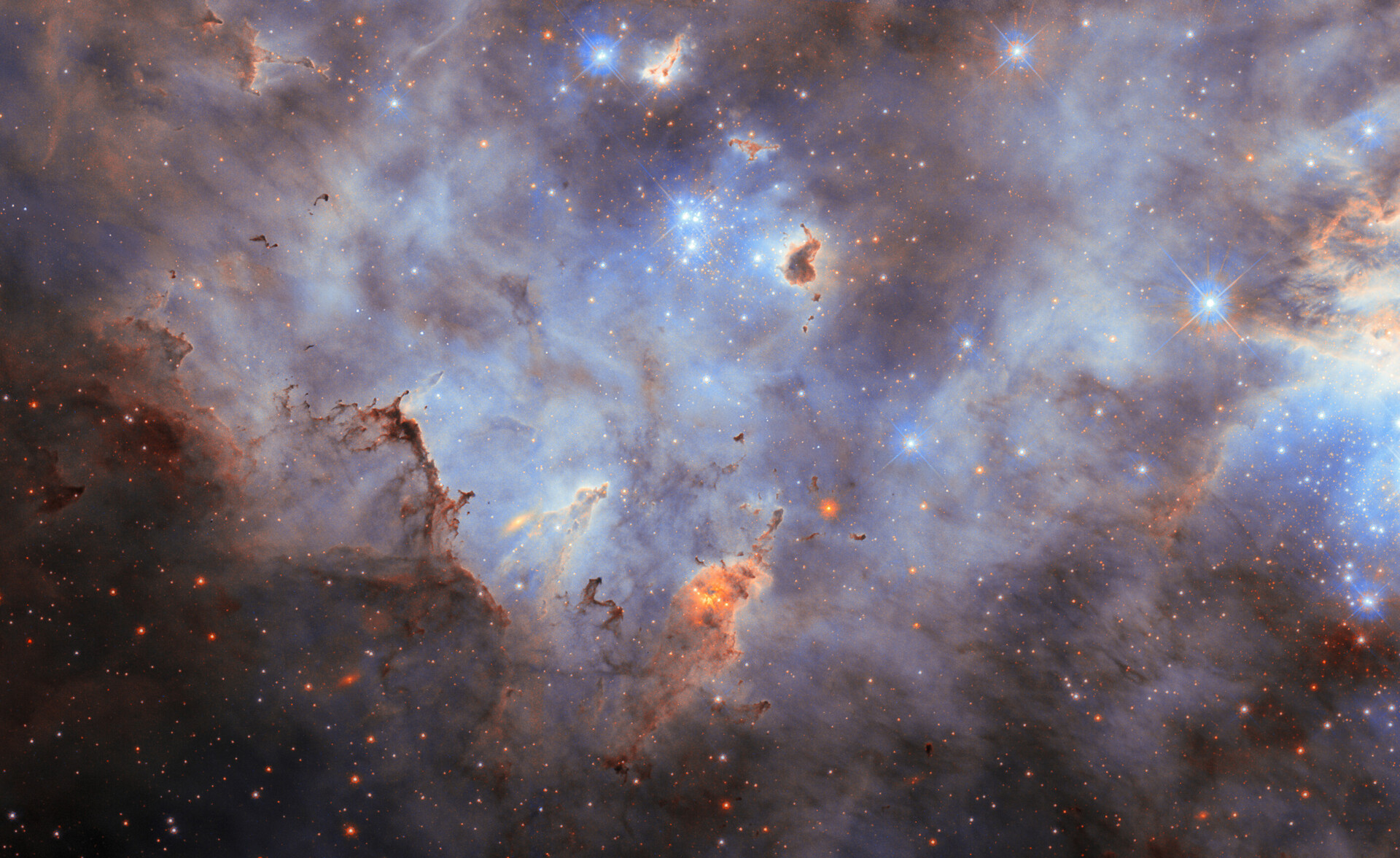
The NASA/ESA Hubble Space Telescope picture of the week is N11’s cloudy starscape. Hubble captures glowing gas, dark dust clouds, and young hot stars — some of which are in clusters.
These young bright stars light up the region. They also release powerful stellar winds and radiation. These emissions disperse and push against the surrounding gas, forming cavities that give the region its bubble-like appearance. The pressure from the emissions squeezes against the gas, confining it into dense pockets instead of an even spread.
This sweeping and squeezing action results in the dark, dense gas clumps seen in the image. When the gas clouds collapse, they form new stellar nurseries. While most of the gas clumps are dark, their edges are brighter. This is due to the light from the stars around them.
Around the center of the image is a small star cluster. The stars in this cluster shine blue and have four-pointed spikes radiating from them. To the left of this cluster is a larger cluster. However, the larger cluster is out of Hubble’s view for this observation.
This is not the first time astronomers have taken a look at the impressive structures within N11. It was first observed between 2002 and 2003 for the purpose of cataloging all the stars in a young cluster with masses between 0.1 to 100 times heavier than the Sun.
The region continues to provide more insights into the complex process of star formation. N11’s location makes it a nice target for studies of this nature. Its host galaxy is one of the closest galaxies to the Milky Way in which star formation is happening.
 Add as a preferred source on Google


