




Robotic skin design lets robots feel pain and trigger reflex actions, enabling more empathetic interaction with humans
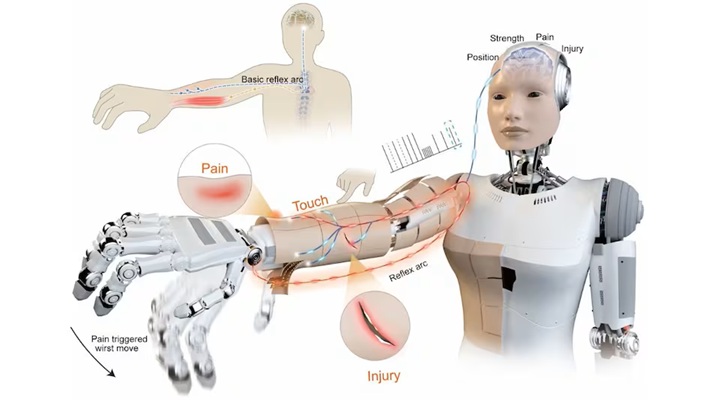
The researchers are affiliated with the City University of Hong Kong. Their neuromorphic robotic electronic (NRE) skin brings humanoids closer to humans by allowing them to feel touch, respond to stimulation, and trigger protective reflexes.
How the pain detection works
The e-skin is composed of four layers and uses a hierarchical, neural-inspired architecture modelled after the human skin. When touched gently, instead of a simple pressure reading, the NRE-skin generates spike pulses that are sent to the central processing units for response determination.
However, when the pressure exceeds a preset threshold, the skin produces a high voltage that goes directly to the actuating motors without passing through the processor. The robot will then automatically recoil.
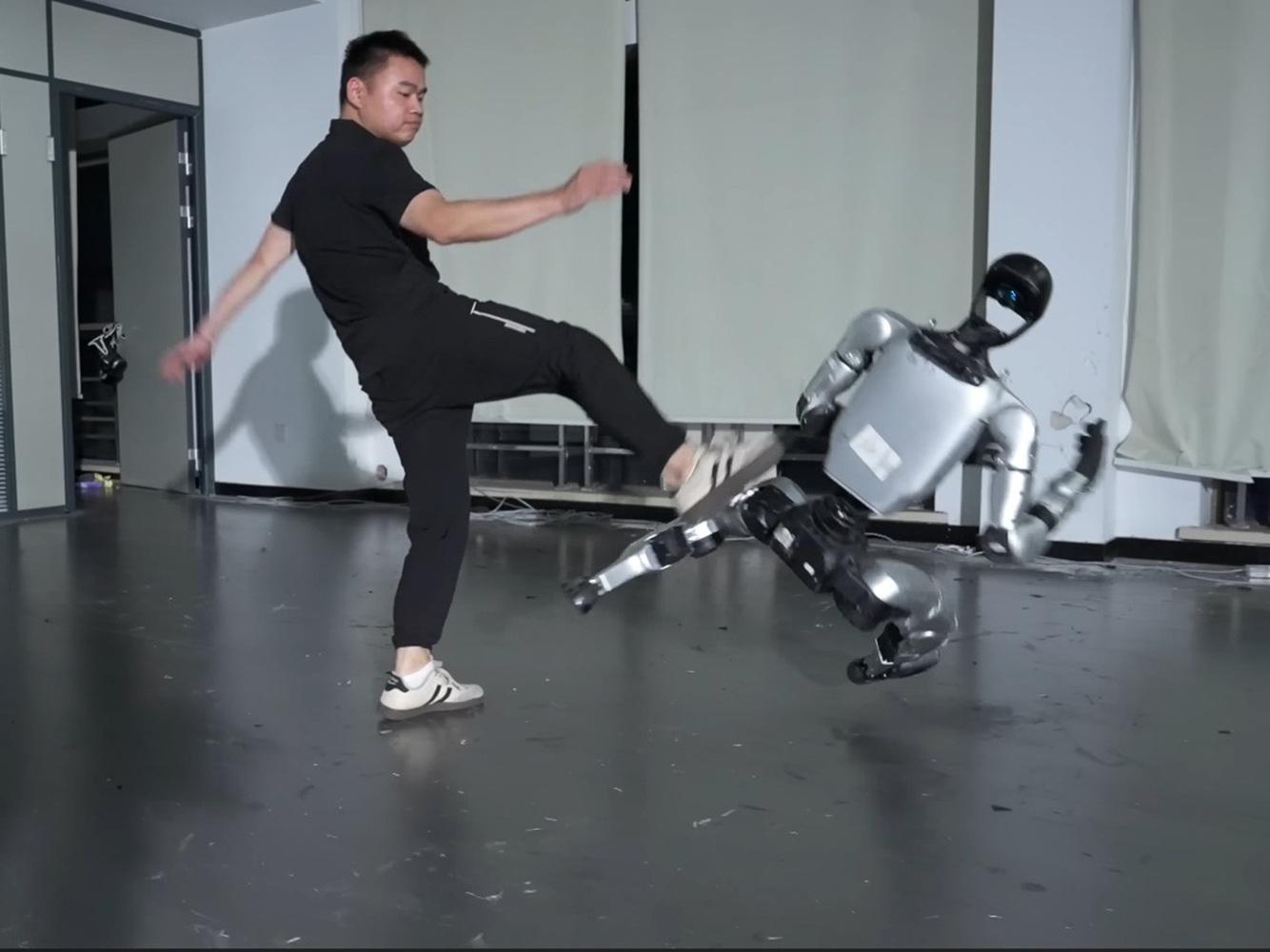
With the assistance of the near-instant snap-back mechanism, the researchers hope to protect the robot from damage. It will also proactively adjust the humanoid’s behaviour, preventing the contact force from escalating and posing a risk to humans.
Robotic skin self-repair
Apart from triggering protective reflexes, the NRE-skin can self-monitor for damage. The process utilises each sensor's ability to periodically fire a ‘proof-of-life’ signal. When the system no longer detects a pulse, it flags damage at the affected sensor's site. The sensor module can then be replaced by a technician or the humanoid itself when enabled by future upgrades.
Source(s)
 Add as a preferred source on Google


