




HiSilicon Kirin 955 vs Qualcomm Snapdragon 675
HiSilicon Kirin 955
► remove from comparison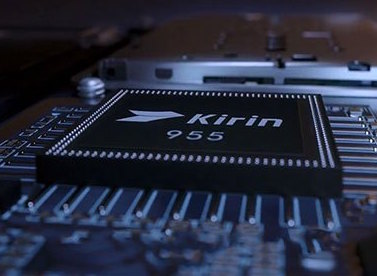
The HiSilicon Kirin 955 is a ARM-based high-end Octa-Core-SoC for Android based smartphones and tablets. It was announced in the beginning of 2016 together with the Huawei P9. It contains 8 processor cores (4x Cortex-A72, 4x Cortex-A53), a ARM Mali T880 MP4 GPU (see for information and benchmarks), a dual-channel LPDDR4 memory controller and a LTE Cat. 5 radio. In the beginning of 2016 it is one of the fastest ARM bases SoCs on the market. Compared to the slightly older Kirin 950, the 955 is a higher clocked version (A72 cores clock at 2.5 versus 2.3 GHz).
The Kirin 955 is one of the first SoCs that use the new Cortex-A72 architecture. Compared to the A57 cores, the A72 ones offer a 15 percent higher per MHz performance and should be more energy efficient. In the Kirin 955, the four Cortex-A72 cores are able to clock up to 2.5 GHz. Furthermore, the processor includes four power saving cores based on the Cortex-A53 architecture that are clocked with 1.8 GHz (max.).
The Kirin 955 is manufactured in 16nm at TSMC (16FF+ process).
Qualcomm Snapdragon 675
► remove from comparison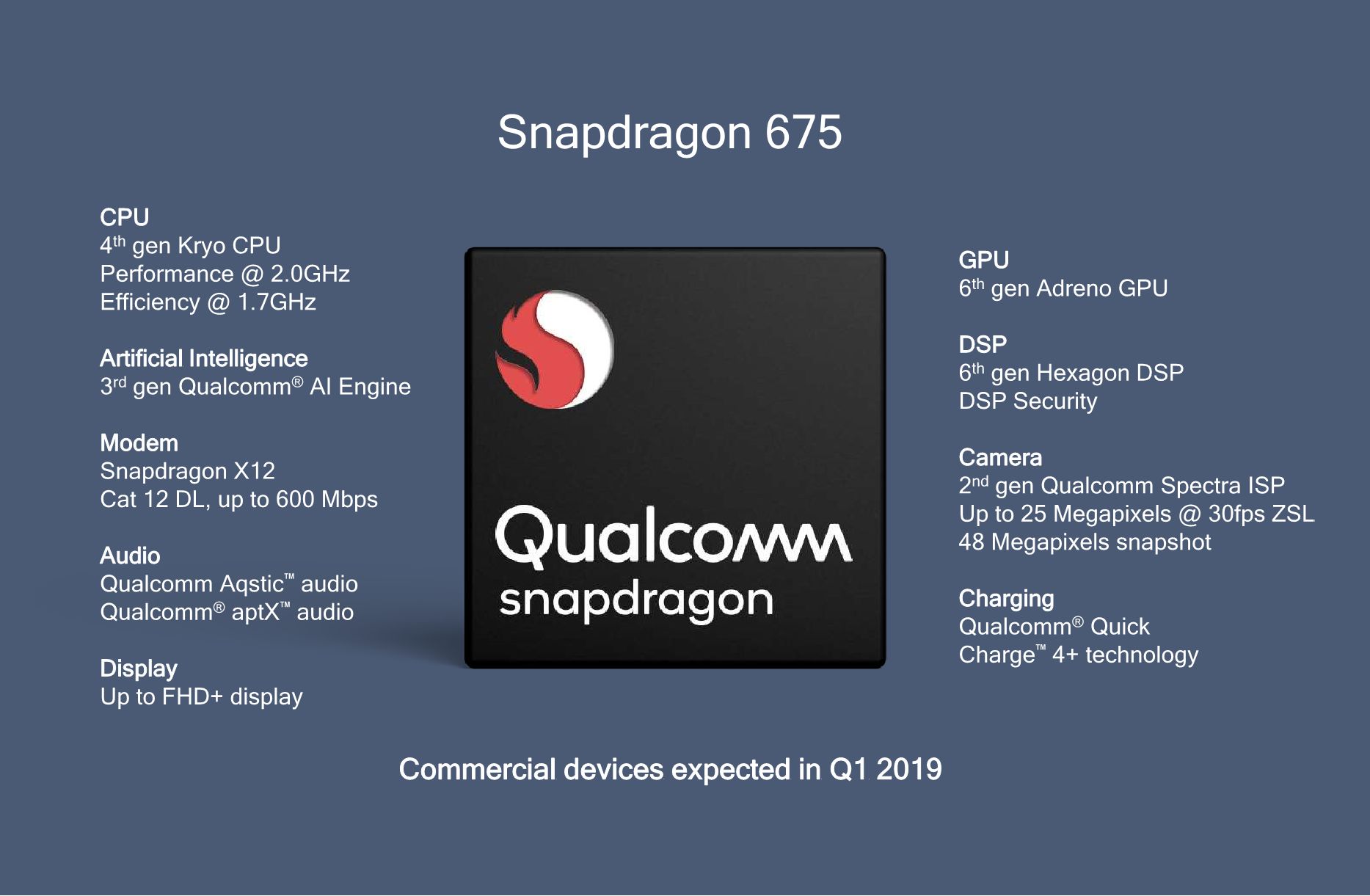
The Qualcomm Snapdragon 675 (SD675) is a fast mid-range ARM-based SoC largely found on Android tablets and smartphones. It features 8 Kryo 460 called cores (64-Bit capable) that are divided in two clusters. A fast cluster of two cores with up to 2 GHz and based on the ARM Cortex-A76 design. And a power saving efficiency cluster with up to 1.6 GHz and based on much smaller ARM Cortex-A55 cores. Both clusters can also used together.
In addition to the 8 CPU cores, the SoC integrates a lower mid range Adreno 612 GPU, a X12 LTE Modem with up to 600 Mbps download (Cat 12) and 150 Mbps upload (Cat 13), a 802.11ac (Wifi 5) Wave 2 WLAN modem (up to 867 Mbps), a Bluetooth 5.0 radio, satellite positioning (GPS, QZSS, GLONASS, SBAS, Beidou and Galileo) and a video engine (up to 4k30 encoding and support for H.265, H.264, VP8 and VP9).
Performance
Thanks to the two fast Cortex-A76 based cores, the SD675 is able to even best the old high end Snapdragon 835 SoC in some benchmarks. The less powerful Snapdragon 670 e.g. only achieves 70 to 77% of the performance in Geekbench 4.3 (single - multi core test). Current high-end SoCs like the Snapdragon 855 however can still add 50-70% on top of the performance of the 675.
The Snapdragon 675 is produced in the new 11nm LPP (Low Power Plus) process at Samsung which is a combination of 14nm and 10nm. Compared to 14nm LPP, the 11nm LPP process should be able to increase performance by 15% and decrease the chip size by 10% according to Samsung.
| Model | HiSilicon Kirin 955 | Qualcomm Snapdragon 675 | ||||||||
| Codename | Cortex-A72/-A53 | Kryo 460 Gold (Cortex-A76) / Silver (Cortex-A55) | ||||||||
| Clock | 2500 MHz | 1600 - 2000 MHz | ||||||||
| Cores / Threads | 8 / 8 | 8 / 8 | ||||||||
| Technology | 16 nm | 11 nm | ||||||||
| Features | ARM Mali-T880 MP4 GPU, 4x Cortex-A72 (2.5 GHz) + 4x Cortex-A53 (1.8 GHz, big.LITTLE), LTE Cat. 6, 2x 32 Bit LPDDR4-3200 Memory Controller (25.6 GB/s) | Adreno 612 GPU, X12 LTE Modem, Hexagon 685 DSP, Spectra 250L ISP | ||||||||
| iGPU | ARM Mali-T880 MP4 ( - 900 MHz) | Qualcomm Adreno 612 | ||||||||
| Architecture | ARM | ARM | ||||||||
| Announced | ||||||||||
| Series | Qualcomm Snapdragon | |||||||||
| Series: Snapdragon Kryo 460 Gold (Cortex-A76) / Silver (Cortex-A55) |
| |||||||||
| Manufacturer | www.qualcomm.com |

Benchmarks
Average Benchmarks HiSilicon Kirin 955 → 100% n=25
Average Benchmarks Qualcomm Snapdragon 675 → 111% n=25
 - Average benchmark values for this graphics card
* Smaller numbers mean a higher performance
1 This benchmark is not used for the average calculation


 Add as a preferred