 Deutsch
 Español
 Français
 Italiano
 Nederlands
 Polski
 Português
 Русский
 Türkçe
 Svenska
 Chinese
 Magyar
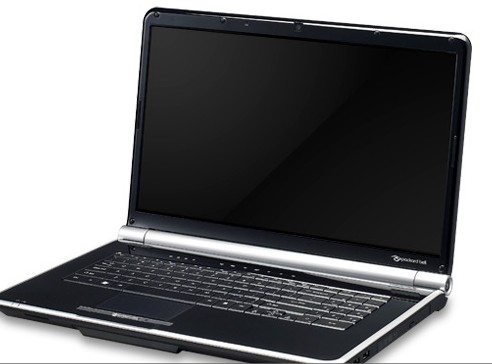
Packard Bell EasyNote LJ61-RB-010
Specifications
Pricecompare
Average of 3 scores (from 3 reviews)
Reviews for the Packard Bell EasyNote LJ61-RB-010
Source: Digital Versus
 Archive.org version
As an entry-level laptop, the Packard Bell LJ61 is comfortable to use and is a perfectly acceptable machine for office use and web browsing that won't break the bank. Its widescreen display is an attractive feature, even if the quality isn't quite up to scratch. There are, however, much more solidly built laptops that offer better performance for only a little bit more more cash.
Single Review, online available, Long, Date: 02/26/2010
Rating: Total score: 60%
Source: Digital Versus
Archive.org versionDesigned as a laptop for your front room rather than your desktop, the Packard Bell EasyNote LJ61 has got film buffs firmly in its sights. As an entry-level laptop, the Packard Bell LJ61 is comfortable to use and is a perfectly acceptable machine for office use and web browsing that won't break the bank. Its widescreen display is an attractive feature, even if the quality isn't quite up to scratch. There are, however, much more solidly built laptops that offer better performance for only a little bit more more cash.
Single Review, online available, Medium, Date: 02/12/2010
Rating: Total score: 60%
Foreign Reviews
Source: Notebookjournal
 DE→EN Archive.org version
Single Review, online available, Long, Date: 12/18/2009
Rating: Total score: 70% price: 80% performance: 30% features: 50% display: 50% mobility: 50% workmanship: 70% ergonomy: 70%
Comment
ATI Radeon HD 3200: Onboard (shared Memory) graphics chip (on RS780M chipset) based on the HD 2400 graphics core. It also features the UVD video engine to decode HD videos. Beware: Under Windows XP the HD 3200 may have no 2D accelleration because of a driver problem.
Only some 3D games with very low demands are playable with these cards.
» Further information can be found in our Comparison of Mobile Graphics Cards and the corresponding Benchmark List.
AMD Turion X2: The Turion X2 (without 64) is based on the Turion X2 Ultra, but has only 1024 MB L2 Cache and is therefore slower (performance compareable to the old Turion 64 X2). Because of new parts from the K10 architecture, the CPU should be more energy efficient.
RM-72:
Griffin based entry-level dual core processor. The cores are still based on the old K8 architecture (memory controller is newer).
» Further information can be found in our Comparison of Mobile Processsors.
17.30": This display size is a standard format for desktop replacements (DTR). The DTR laptops are heavier to carry, need more power, but texts are easy to read and high resolutions are no problem. DTR are mainly intended for stationary desk use, where weight and energy hunger don't matter. In return, you enjoy the advantages of high resolutions (more details, better legibility).» To find out how fine a display is, see our DPI List.
3.4 kg:
A laptop with this weight is comparatively heavy and less designed for mobility than for use at the desk. Therefore, the devices tend to shine less with battery life than with a large screen and higher performance.
Packard Bell: Packard Bell is a subsidiary of Taiwan-based Acer. It is a name used by two different consumer electronics companies. The first was an American radio manufacturer founded in 1926, that later became a defense contractor and manufacturer of other consumer electronics, such as television sets. Teledyne acquired the business in 1978. In 1986, investors bought the name for a newly formed personal computer manufacturer. Originally the company produced discount computers in the US, later computers were produced for the European market. NEC took it over in the late 1990s. Acer acquired it in 2008. In spite of the similarity of their names, there has never been any corporate connection between the original or later Packard Bell and Hewlett Packard, or Bell System. Packard Bell is an international notebook manufacturer. Many years, the company focussed ruggedized laptops.
PB is not present in the smartphone/tablet market and a rather small manufacturer of laptops. There are hardly any reviews since 2015.
63.33%: Such a poor rating is rare. There are only a few notebooks that were rated even worse. The rating websites do not give a purchase recommendation here.
» Further information can be found in our Notebook Purchase Guide.