 Deutsch
 Español
 Français
 Italiano
 Nederlands
 Polski
 Português
 Русский
 Türkçe
 Svenska
 Chinese
 Magyar
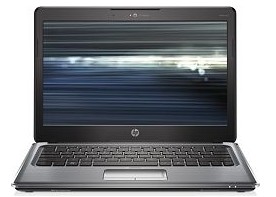
HP Pavilion dm3t, i3-380UM
Specifications
Pricecompare
Average of 1 scores (from 2 reviews)
Reviews for the HP Pavilion dm3t, i3-380UM
Source: Notebookreview.com
 Archive.org version
Overall the HP Pavilion dm3t offers an impressive value for those looking for a 13-inch travel laptop. Our tests show the optional Intel Core i3 processor delivers plenty of performance, and the Pavilion dm3t's battery life is essentially the same as a much more expensive MacBook Air. The only potential issues that stood out during our review period were the weak and poorly placed speakers, the less-than-impressive touchpad, and graphics that simply aren't as good as what you can find on several cheaper notebooks. If you can live with those annoyances then the HP Pavilion dm3t is an affordable solution with enough performance to get your work done.
Single Review, online available, Medium, Date: 03/07/2011
Rating: Total score: 80% price: 70% performance: 60% features: 70% mobility: 80% ergonomy: 80%
Source: PC Mag
Archive.org versionThe HP Pavilion dm3t is an exemplary CULV-equipped laptop, as it is lightweight and lasted over 8 hours in battery tests.
Single Review, online available, Very Short, Date: 02/08/2011
Comment
Intel Graphics Media Accelerator (GMA) HD Graphics: Onboard graphics card that is built in the new Arrandale CPUs (Core i3 / i5 / i7 Dual Cores). Depending on the model and Turbo Boost, the GMA HD is clocked between 166 and 766 MHz.
Only some 3D games with very low demands are playable with these cards.
» Further information can be found in our Comparison of Mobile Graphics Cards and the corresponding Benchmark List.
380UM: The Core i3-380UM is a power efficient ultra low voltage processor for laptops without Turbo Boost and AES functions (compared to the i5 and i7 UM CPUs). Thanks to Hyperthreading, 4 threads can be processed simultaneously. An integrated graphics card (Intel HD Graphics with 166-500 MHz) and a DDR3-800 memory controller are also included in the package.» Further information can be found in our Comparison of Mobile Processsors.
13.30":
There are hardly any tablets in this display size range anymore. For subnotebooks, on the other hand, it is the standard format.
The advantage of subnotebooks is that the entire laptop can be small and therefore easily portable. The smaller display also has the advantage of requiring less power, which further improves battery life and thus mobility. The disadvantage is that reading texts is more strenuous on the eyes. High resolutions are more likely to be found in standard laptops.
» To find out how fine a display is, see our DPI List.HP: Founded in 1939, the US company is a major server and printer manufacturer and one of the leading IT companies in the world. Until 2015, the company was called Hewlett-Packard Company. After a split, the computer division was renamed HP Inc.
In 2023, HP had an approximate market share of 22% of global PC sales, making it number 2 after Lenovo.
80%: This rating is not earth-shattering. This rating must actually be seen as average, since there are about as many devices with worse ratings as better ones. A purchase recommendation can only be seen with a lot of goodwill, unless it is about websites that generally rate strictly.
» Further information can be found in our Notebook Purchase Guide.