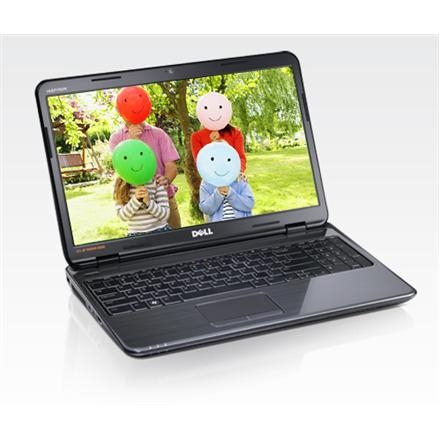
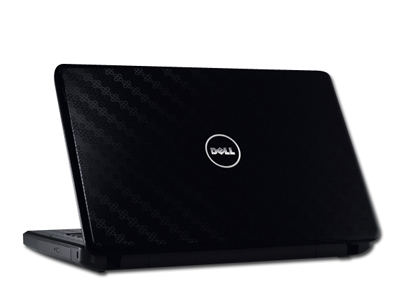
Dell Inspiron N5030 Series
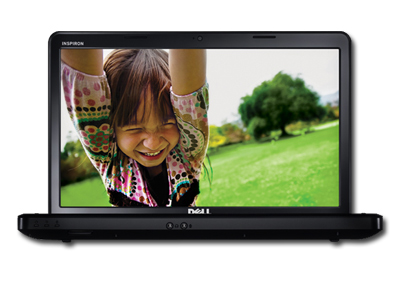 Processor: Intel Core 2 Duo T6600, Intel Pentium Dual Core T4500
Graphics Adapter: Intel Graphics Media Accelerator (GMA) 4500M, Intel Graphics Media Accelerator (GMA) HD Graphics
Display: 15.30 inch, 15.60 inch
Weight: 2.7kg
Price: 500, 600 euro
Average of 1 scores (from 2 reviews)
Dell Inspiron N5030
Specifications
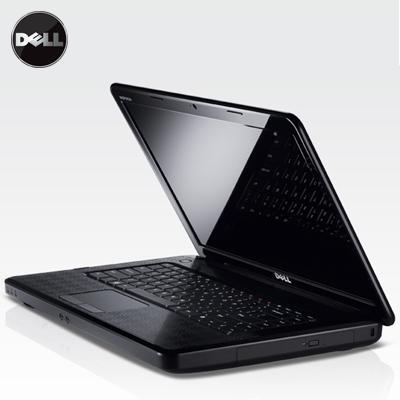 Notebook: Dell Inspiron N5030
Processor: Intel Core 2 Duo T6600
Graphics Adapter: Intel Graphics Media Accelerator (GMA) 4500M
Display: 15.60 inch, 16:9, 1366 x 768 pixels
Weight: 2.7kg
Price: 500 euro
Links: Dell homepage Dell notebook section
Price comparison
Foreign Reviews
Source: PC Store
 BU→EN Archive.org version
Single Review, online available, Medium, Date: 10/29/2010
performance: 80%
Dell Inspiron N5030, T4500
Specifications
Notebook: Dell Inspiron N5030, T4500Processor: Intel Pentium Dual Core T4500
Graphics Adapter: Intel Graphics Media Accelerator (GMA) HD Graphics
Display: 15.30 inch, 16:9, 1366 x 768 pixels
Weight: 2.7kg
Price: 600 euro
Links: Dell homepage Dell notebook section
Price comparison
Average Score:
Foreign Reviews
Source: Benchmark.pl
 PL→EN Archive.org version
Single Review, online available, Short, Date: 01/14/2011
Rating: Total score: 60%
Comment
Dell: Dell is a U.S. manufacturer (based in Texas) of computer hardware founded in 1984 and is one of the largest international manufacturers in terms of both market share and notebook models. Its product line includes desktops, notebooks, storage systems, monitors, servers, printers, consumer electronics and peripherals. Dell offers laptops that are suitable for various applications, such as business laptops, gaming laptops, ultra portables and workstations. Dell's business laptops from the Latitude and Precision series are an option for professional users and businesses.
In 2023, Dell had an approximate 17% market share of global PC sales, ranking #3 after Lenovo and HP.
For gaming enthusiasts, Dell's Alienware brand is for gaming notebooks.
Only some 3D games with very low demands are playable with these cards.
Intel Graphics Media Accelerator (GMA) 4500M: The graphics core of the Intel GL40 and GS40 chipset features a slower clocked GMA 4500MHD (400 versus 533 MHz). Because of the slower core speed, full Blu-Ray Logo support is not given and the gaming performance is a bit worse.
Intel Graphics Media Accelerator (GMA) HD Graphics: Onboard graphics card that is built in the new Arrandale CPUs (Core i3 / i5 / i7 Dual Cores). Depending on the model and Turbo Boost, the GMA HD is clocked between 166 and 766 MHz.
» Further information can be found in our Comparison of Mobile Graphics Cards and the corresponding Benchmark List.
Intel Core 2 Duo: This is the Core Duo and Core Solo successor with a longer pipeline and 5-20% more speed without more power consumption. As an addition to the Core Duo design there exists a fourth decoder, an amplified SSE-unit and an additional arithmetical logical unit (ALU).
The Core 2 Duo for laptops is identical to the desktop Core 2 Duo processors but the notebook-processors work with lower voltages (0.95 to 1188 Volt) and a lower Frontside bus clock (1066 vs 667 MHz). The performance of equally clocked notebooks is 20-25% lower than Desktop PCs because of the lower Frontside bus clock and the slower hard disks.
T6600: Entry level Core 2 Duo dual core processor with a small 2MB level 2 cache and without virtualization functions.
Intel Pentium Dual Core: The return of the name Pentium, though it is a Yonah core. In fact, it is a double Core processor with a very good relation of performance to current consumption.
T4500:
Entry to middle class dual core CPU with 1 MB level 2 cache and no virtualization technology. Compared to the Core 2 Duo line, some power saving mechanism are deactivated.
» Further information can be found in our Comparison of Mobile Processsors.
» To find out how fine a display is, see our DPI List.
2.7 kg:
With this weight, a laptop is rather heavier than average. Devices in this range shine more with screen size and performance than with mobility.
2.7 kg:
60%: Such a poor rating is rare. There are only a few notebooks that were rated even worse. The rating websites do not give a purchase recommendation here.
» Further information can be found in our Notebook Purchase Guide.
 Add as a preferred source on Google