


 Deutsch
 Español
 Français
 Italiano
 Nederlands
 Polski
 Português
 Русский
 Türkçe
 Svenska
 Chinese
 Magyar
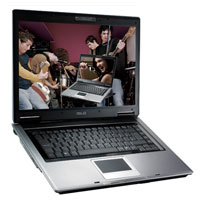
Asus F3JC
Specifications
Pricecompare
Reviews for the Asus F3JC
Source: Notebookreview.com
 Archive.org version
If you're on a low budget and don't want to compromise on build quality or weaker components, then you may just find a sweet spot for an Asus F3 series notebook. The F3Jc has everything I want and has awesome value for the money paid, you'll even get a free carry bag and optical Asus-branded Logitech notebook mouse. It does have some weaker points, such as noise and infrequent minor technical glitches, but otherwise well worth the buy.
umfangreicher Erfahrungsbericht eines Benutzers; online abrufbar
Preis/Leistung gut, Display gut, Verarbeitung gut, Ergonomie gut
Single Review, online available, Short, Date: 12/13/2006
Rating: price: 80% display: 80% workmanship: 80% ergonomy: 80%
Foreign Reviews
Source: PC Magazin
 DE→EN Archive.org version
Single Review, online available, Short, Date: 04/20/2007
Rating: price: 80% performance: 80% features: 90% display: 80% mobility: 80% workmanship: 80% ergonomy: 80%
Comment
Intel Graphics Media Accelerator (GMA) 950: Intel Graphics Media Accelerator 950 is an integrated (onboard) graphic chip on Mobile Intel 945GM chipset. It is a faster clocked version of the GMA 900 and supports no hardware T&L (Transform & Lightning) accelleration (which is required for some games).
These graphics cards are not suited for Windows 3D games. Office and Internet surfing however is possible.
» Further information can be found in our Comparison of Mobile Graphics Cards and the corresponding Benchmark List.
Intel Core Duo: Double Core processor with a very good relation of performance to current consumption. The 2 MB L2 Cache are used together by the double. The maximum capacity of 31 watts is only 4 watts more than with the Pentium M (predecessor). Both cores are lowered automatically and independently of each other by speed steps down to 1 GHz. In addition it now supports also SSE3 instructions. At least it is just as fast as a equivalent Pentium M. With applications, which were designed for multi-processors, the performance can be nearly twice as fast as with the Pentium M (e.g. CineBench around 86% fast)
T2250: » Further information can be found in our Comparison of Mobile Processsors.
15.40":
15-inch display variants are the standard and are used for more than half of all laptops.
The reason for the popularity of mid-sized displays is that this size is reasonably easy on the eyes, often allows high resolutions and thus offers rich details on the screen, yet does not consume too much power and the devices can still be reasonably compact - simply the standard compromise.
» To find out how fine a display is, see our DPI List.3 kg:
With this weight, a laptop is rather heavier than average. Devices in this range shine more with screen size and performance than with mobility.
Asus: ASUSTeK Computer Inc. is a major Taiwanese computer hardware manufacturer based in Taipei, founded in 1989. Under the Asus brand name, the company manufactures a wide range of products, including laptops, desktops, motherboards, graphics cards, monitors, smartphones and networking equipment, complete systems and PC components for end users.
Under the ROG (Republic of Gamers) brand name, ASUS manufactures gaming laptops known by gamers for their powerful specifications, dedicated graphics cards, high refresh rate displays and advanced cooling systems.
Beyond gaming, a wide range of notebooks are offered for different needs and budgets, from ultra-slim and lightweight ultrabooks to versatile 2-in-1 convertibles and budget-friendly options. In 2023, Asus had a 7% global market share of the PC market.
Customer satisfaction with ASUS notebooks concerns performance, the features, and the good price-performance ratio of ASUS notebooks. However, as with any brand, there are occasional reports of problems such as overheating, driver compatibility, or build quality issues.
» Further information can be found in our Notebook Purchase Guide.