 Deutsch
 Español
 Français
 Italiano
 Nederlands
 Polski
 Português
 Русский
 Türkçe
 Svenska
 Chinese
 Magyar
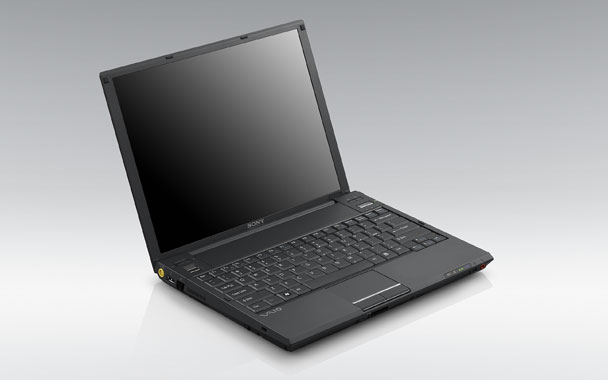
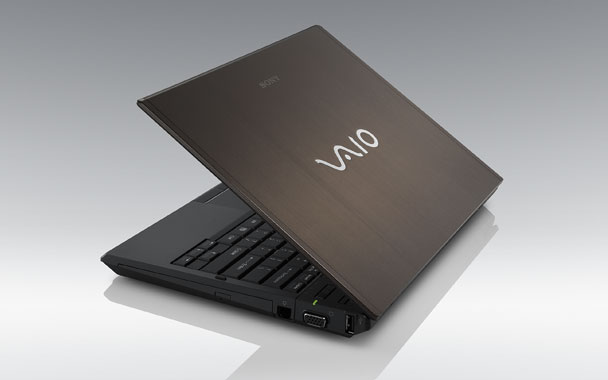
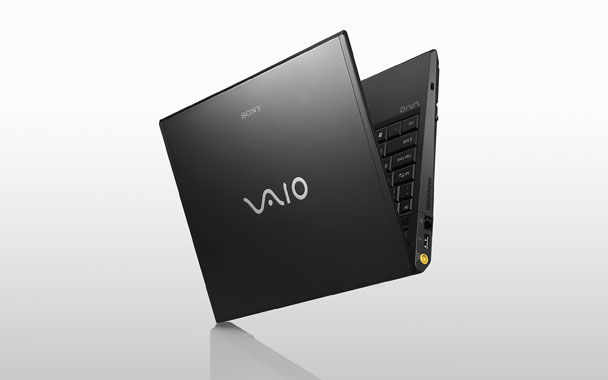
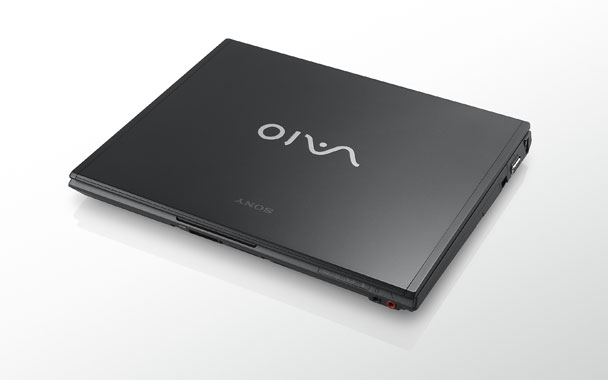
Sony Vaio VGN-G21XP
Specifications
Pricecompare
Average of 3 scores (from 4 reviews)
Reviews for the Sony Vaio VGN-G21XP
Source: Tom's Hardware
 DE→EN Archive.org version
Comparison, online available, Long, Date: 08/11/2008
Rating: price: 50% performance: 40% display: 80% mobility: 90% workmanship: 70% ergonomy: 50%
Source: Notebookjournal
DE→EN Archive.org versionSingle Review, online available, Long, Date: 05/15/2008
Rating: Total score: 70% price: 60% performance: 30% features: 30% display: 30% mobility: 90% workmanship: 90% ergonomy: 50% emissions: 40%
Source: Chip.de
DE→EN Archive.org versionSingle Review, online available, Medium, Date: 04/07/2008
Rating: Total score: 75% performance: 43% features: 56% display: 77% mobility: 100% ergonomy: 82%
Source: Connect - 5/08
Comparison, , Medium, Date: 04/07/2008
Rating: Total score: 86% performance: 79% features: 82% mobility: 90% ergonomy: 90%
Comment
Intel Graphics Media Accelerator (GMA) 950: Intel Graphics Media Accelerator 950 is an integrated (onboard) graphic chip on Mobile Intel 945GM chipset. It is a faster clocked version of the GMA 900 and supports no hardware T&L (Transform & Lightning) accelleration (which is required for some games).
These graphics cards are not suited for Windows 3D games. Office and Internet surfing however is possible.
» Further information can be found in our Comparison of Mobile Graphics Cards and the corresponding Benchmark List.
Intel Core 2 Duo: This is the Core Duo and Core Solo successor with a longer pipeline and 5-20% more speed without more power consumption. As an addition to the Core Duo design there exists a fourth decoder, an amplified SSE-unit and an additional arithmetical logical unit (ALU).
The Core 2 Duo for laptops is identical to the desktop Core 2 Duo processors but the notebook-processors work with lower voltages (0.95 to 1188 Volt) and a lower Frontside bus clock (1066 vs 667 MHz). The performance of equally clocked notebooks is 20-25% lower than Desktop PCs because of the lower Frontside bus clock and the slower hard disks.
U7500: » Further information can be found in our Comparison of Mobile Processsors.
12.10":
This range of display format is largely the upper limit for tablets and the lower limit for subnotebooks.
The advantage of subnotebooks is that the entire laptop can be small in size and therefore easily portable. The tiny display has the added advantage of requiring little power, which further improves battery life and thus mobility. The disadvantage is that reading texts is exhausting for the eyes. High resolutions, which one is used to from a standard laptop, are almost not usable.
The same applies to tablets in this size range.
» To find out how fine a display is, see our DPI List.Sony: Sony Corporation is one of the largest Japanese electronics companies. The company was founded in 1946 under a different name and initially produced rice stoves. The company launched the first transistor radio. In 1958, the company was renamed Sony. Sony is a combination of the Latin word sonus (sound) and the English word sonny (little boy). Today, its core business is consumer electronics. The company is engaged in the development, design, manufacture and sale of electronic equipment, instruments, devices, game consoles and software. Sony operates in the following segments: Gaming and Network Services, Music, Images, Home Entertainment and Sound, Imaging Products and Solutions, Mobile Communications, Semiconductors, Financial Services and Others.
77%: This rating is not earth-shattering. This rating must actually be seen as average, since there are about as many devices with worse ratings as better ones. A purchase recommendation can only be seen with a lot of goodwill, unless it is about websites that generally rate strictly.
» Further information can be found in our Notebook Purchase Guide.