 Deutsch
 Español
 Français
 Italiano
 Nederlands
 Polski
 Português
 Русский
 Türkçe
 Svenska
 Chinese
 Magyar
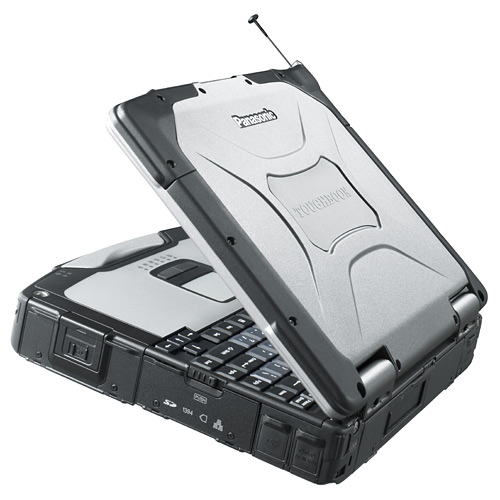
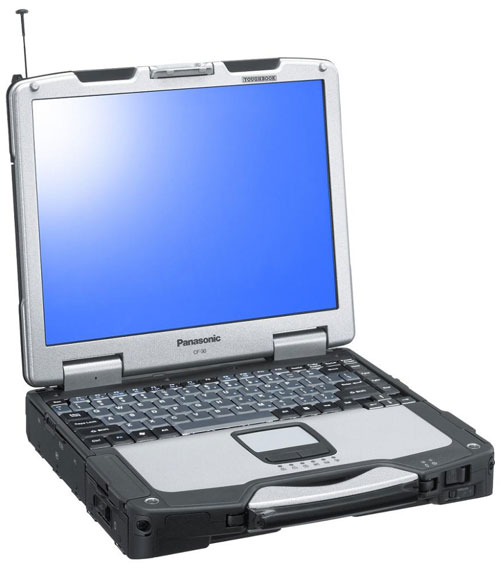
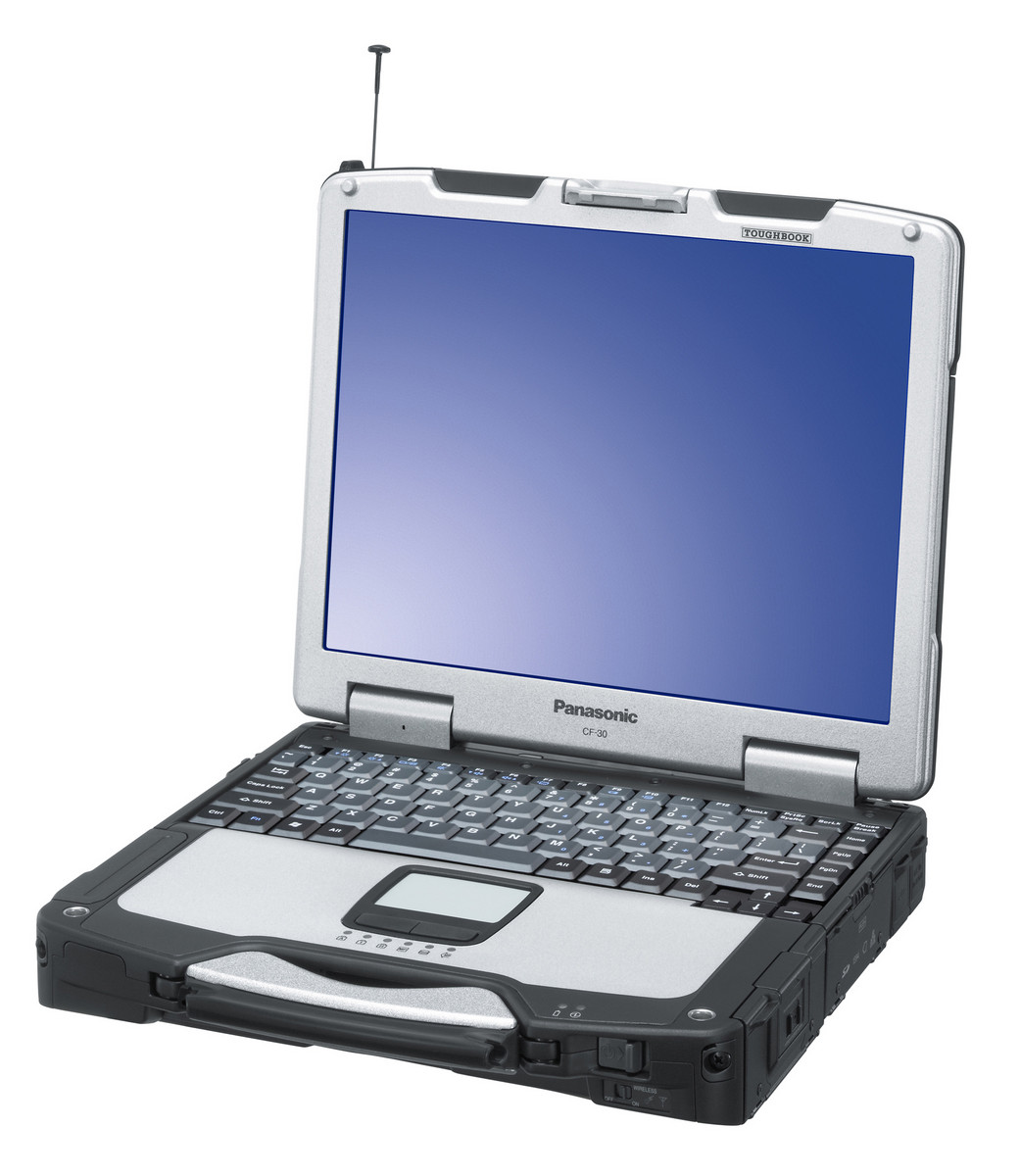
Panasonic Toughbook CF-30
Specifications
Pricecompare
Average of 1 scores (from 3 reviews)
Reviews for the Panasonic Toughbook CF-30
Source: Laptop Mag
 Archive.org version
For most users, it’s hard to justify spending upwards of $4,000 on a laptop with a low-res screen and merely average power. However, if you’re out in the elements and need a notebook that can take the heat (and dust and moisture), survive multiple drops, and get you through most of your workday on one charge, the Panasonic Toughbook 30 is as good as they come.
4 von 5, Display gut, Mobilität mäßig, Leistung schlecht
Single Review, online available, Long, Date: 09/24/2008
Rating: Total score: 80% performance: 40% display: 80% mobility: 60%
Source: Notebookreview.com
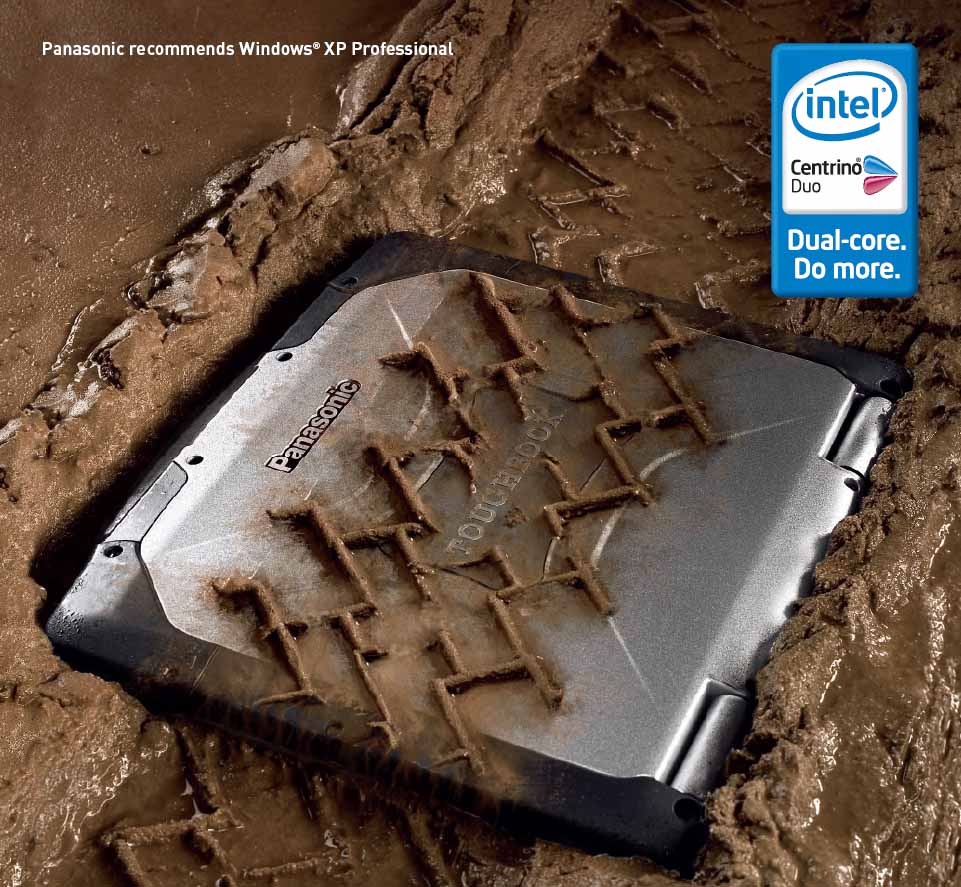
Archive.org versionPanasonic has been making fully rugged U.S. military standard 810F notebooks for a number of years, catering to those that need to take their computer into some of the most extreme environments in the world. Recently, Panasonic introduced the fully rugged Toughbook CF-30. It features a 13.3" XGA anti-glare and anti-reflective coating screen rated at 500 Nit (candelas per square meter, which measures brightness) and an industry first and only 1000 Nit touchscreen version, both sporting a 1.66GHz L2400 Low Voltage Core Duo processor, 512MB RAM, and 80GB HDD. The entire chassis with exception to the keyboard, and screen is made from magnesium alloy and comes with fully sealed keyboard, ports and hard drive making it ready for any conditions it faces regardless if its indoors, outdoors, snow, rain, dust... you get the idea.
Mobilität zufriedenstellend, Verarbeitung gut, Preis/Leistung schlecht, Leistung mangelhaft
User Review, online available, Long, Date: 10/15/2007
Rating: price: 40% performance: 50% mobility: 70% workmanship: 80%
Foreign Reviews

Comment
Intel Graphics Media Accelerator (GMA) 950: Intel Graphics Media Accelerator 950 is an integrated (onboard) graphic chip on Mobile Intel 945GM chipset. It is a faster clocked version of the GMA 900 and supports no hardware T&L (Transform & Lightning) accelleration (which is required for some games).
These graphics cards are not suited for Windows 3D games. Office and Internet surfing however is possible.
» Further information can be found in our Comparison of Mobile Graphics Cards and the corresponding Benchmark List.
Intel Core Duo: Double Core processor with a very good relation of performance to current consumption. The 2 MB L2 Cache are used together by the double. The maximum capacity of 31 watts is only 4 watts more than with the Pentium M (predecessor). Both cores are lowered automatically and independently of each other by speed steps down to 1 GHz. In addition it now supports also SSE3 instructions. At least it is just as fast as a equivalent Pentium M. With applications, which were designed for multi-processors, the performance can be nearly twice as fast as with the Pentium M (e.g. CineBench around 86% fast)
L2400: » Further information can be found in our Comparison of Mobile Processsors.
13.30":
There are hardly any tablets in this display size range anymore. For subnotebooks, on the other hand, it is the standard format.
The advantage of subnotebooks is that the entire laptop can be small and therefore easily portable. The smaller display also has the advantage of requiring less power, which further improves battery life and thus mobility. The disadvantage is that reading texts is more strenuous on the eyes. High resolutions are more likely to be found in standard laptops.
» To find out how fine a display is, see our DPI List.4 kg:
Only a few laptops are in this weight class because the mobility is rather limited due to the high weight.
Panasonic: Panasonic Corporation was founded in 1918 in Japan, making it one of the oldest electronics companies (although it started with light bulb sales). The company operates in several business areas, including electronics, home appliances, automotive technology, aerospace, energy, and environmental technology. Panasonic sells televisions, cameras, audio and video equipment, home appliances such as refrigerators and washing machines, batteries, solar panels and LED lighting worldwide. Panasonic is also a major supplier of components and systems to the automotive industry and has invested in artificial intelligence and robotics in recent years.
80%: This rating is not earth-shattering. This rating must actually be seen as average, since there are about as many devices with worse ratings as better ones. A purchase recommendation can only be seen with a lot of goodwill, unless it is about websites that generally rate strictly.
» Further information can be found in our Notebook Purchase Guide.