 Deutsch
 Español
 Français
 Italiano
 Nederlands
 Polski
 Português
 Русский
 Türkçe
 Svenska
 Chinese
 Magyar
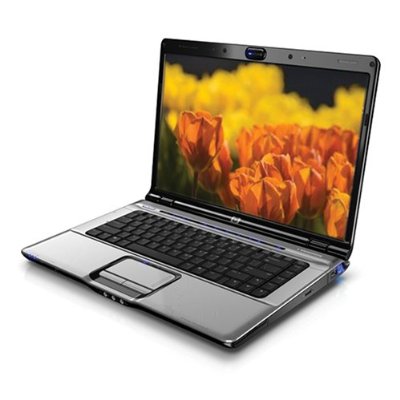
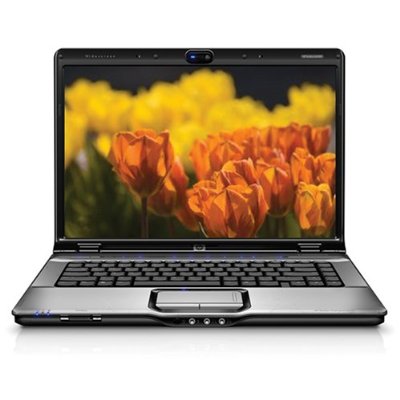
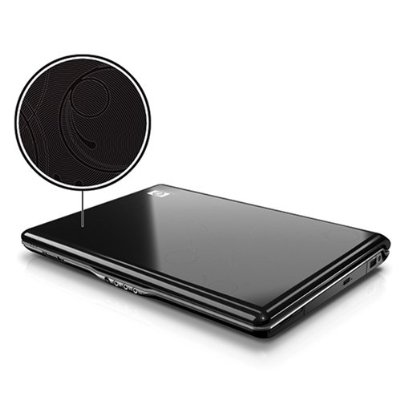
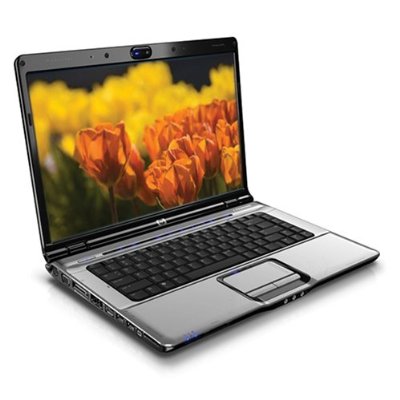
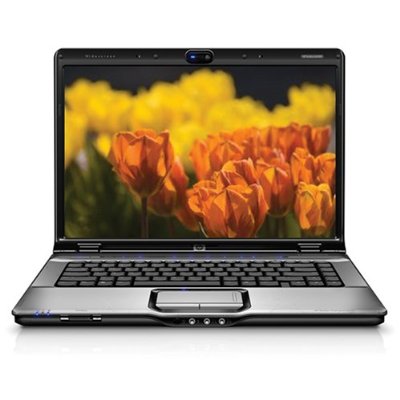
HP Pavilion dv6910us
Specifications
Pricecompare
Average of 1 scores (from 1 reviews)
Reviews for the HP Pavilion dv6910us
Source: Comp Reviews
 Archive.org version
HP's Pavilion dv6910us may have been cutting edge previously, but the system is really showing its age. To keep costs down, HP made a number of compromises on the laptop including using a less expensive and lower performance AMD processor and using a higher capacity but slower hard drive. This gives the dv6910us much lower performance than competiting budget laptop PCs. On the plus side, HP does include Bluetooth and three gigabytes of memory.
3 von 5, Leistung schlecht
Single Review, online available, Very Short, Date: 10/06/2008
Rating: Total score: 60% performance: 40%
Comment
NVIDIA GeForce 7150M: This is an integrated (shared memory) graphic card for laptops with AMD processors (socket S1), inserted upon nForce 630M. The difference to 7000M is that 7150M offers HD-video decoding for MPEG2, H.264 in 720p.
These graphics cards are not suited for Windows 3D games. Office and Internet surfing however is possible.
» Further information can be found in our Comparison of Mobile Graphics Cards and the corresponding Benchmark List.
AMD Turion 64 X2: AMD Turion 64 X2 is intended to be positioned against the Intel Core Duo was presented in 17. May 2006. The current consumption is not higher than with Centrino-Duo-notebooks (TL-45 with ATI Xpress and Mobility Radeon X300). This means, that approximative the same battery runtime and fan functions can be expected (with this chipset). However, the performance was 20% below the T2300 (1.66 GHz) due to the lower L2 Cache (Core Duo has 2048 Kbyte shared L2 Cache). Nevertheless, the performance is sufficient.
TL-60: First in 90nm, later in 65nm produced dual-core processor based on the K8 core. Compareable performance to a 1.8 GHz Core Duo CPU with 1MB Level 2 Cache (Celeron Dual Core e.g.).» Further information can be found in our Comparison of Mobile Processsors.
15.40":
15-inch display variants are the standard and are used for more than half of all laptops.
The reason for the popularity of mid-sized displays is that this size is reasonably easy on the eyes, often allows high resolutions and thus offers rich details on the screen, yet does not consume too much power and the devices can still be reasonably compact - simply the standard compromise.
» To find out how fine a display is, see our DPI List.2.8 kg:
With this weight, a laptop is rather heavier than average. Devices in this range shine more with screen size and performance than with mobility.
HP: Founded in 1939, the US company is a major server and printer manufacturer and one of the leading IT companies in the world. Until 2015, the company was called Hewlett-Packard Company. After a split, the computer division was renamed HP Inc.
In 2023, HP had an approximate market share of 22% of global PC sales, making it number 2 after Lenovo.
60%: Such a poor rating is rare. There are only a few notebooks that were rated even worse. The rating websites do not give a purchase recommendation here.
» Further information can be found in our Notebook Purchase Guide.