 Deutsch
 Español
 Français
 Italiano
 Nederlands
 Polski
 Português
 Русский
 Türkçe
 Svenska
 Chinese
 Magyar
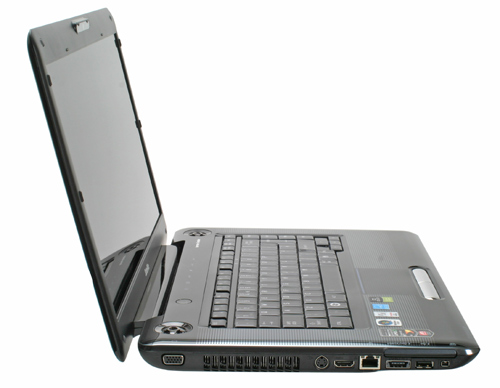
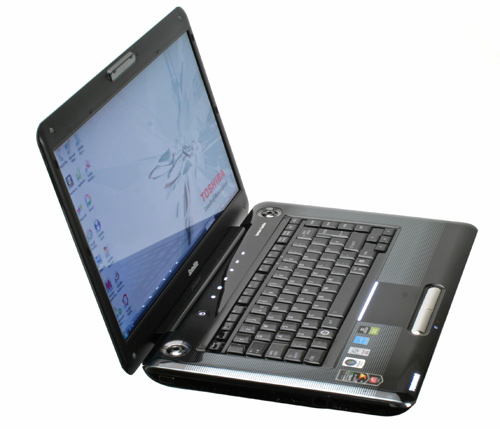
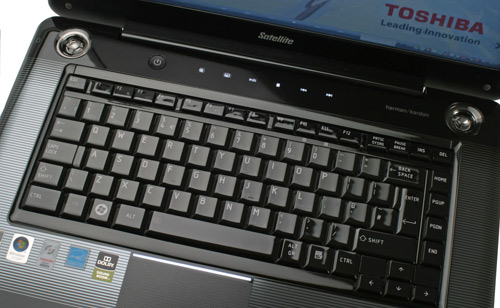
Toshiba Satellite A350D Series
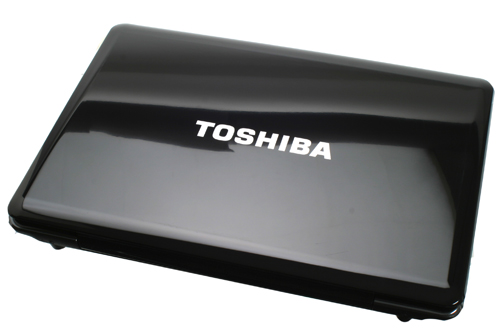 Processor: AMD Turion X2 RM-70, AMD Turion X2 Ultra ZM-80
Graphics Adapter: ATI Mobility Radeon HD 3650
Display: 16.00 inch
Weight: 3kg
Price: 800, 900 euro
Average of 4 scores (from 4 reviews)
Toshiba Satellite A350D-10O
Specifications
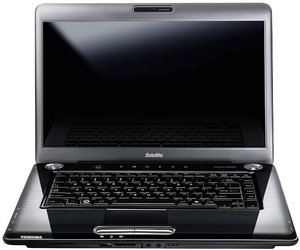 Notebook: Toshiba Satellite A350D-10O
Processor: AMD Turion X2 RM-70
Graphics Adapter: ATI Mobility Radeon HD 3650
Display: 16.00 inch, 16:9, 1366 x 768 pixels
Weight: 3kg
Price: 900 euro
Links: Toshiba homepage Toshiba notebook section Satellite A350D-10O (Model)
Pricecompare
Average Score:
Foreign Reviews
Source: ZDNet
 DE→EN Archive.org version
Single Review, online available, Medium, Date: 03/27/2009
Rating: Total score: 68% performance: 70% features: 70% mobility: 60%
Source: PC Welt
DE→EN Archive.org versionSingle Review, online available, Medium, Date: 02/12/2009
Rating: Total score: 41% performance: 16% features: 54% mobility: 11% ergonomy: 47%
Source: Notebookjournal
DE→EN Archive.org versionSingle Review, online available, Long, Date: 12/23/2008
Rating: Total score: 70% price: 60% performance: 40% features: 70% display: 30% mobility: 10% workmanship: 60% ergonomy: 70%
Toshiba Satellite A350D-202
Specifications
Notebook: Toshiba Satellite A350D-202 Processor: AMD Turion X2 Ultra ZM-80
Graphics Adapter: ATI Mobility Radeon HD 3650
Display: 16.00 inch, 16:9, 1366 x 768 pixels
Weight: 3kg
Price: 800 euro
Links: Toshiba homepage Toshiba notebook section
Pricecompare
Average Score:
Reviews
Source: Trusted Reviews
 Archive.org version
Toshiba's Satellite A350D-202 is an interesting alternative to its A350-11N, correcting some of the failings of 11N while shifting the focus to a machine that's more suitable as a desktop replacement and will even handle a bit of gaming. If this is what you're after, it's a good option, but the combination of worse CPU performance, mediocre battery life and a higher price mean there are pros and cons to consider first.
70, Preis 70, Leistung 70, Ausstattung 80
Single Review, online available, Long, Date: 05/01/2009
Rating: Total score: 70% price: 70% performance: 70% features: 80%
Comment
Toshiba: Toshiba Corporation is a Japanese conglomerate or technology group. The company was established in 1939 and in 1978 Toshiba became the official company name. The company's products and services include power, industrial and social infrastructure systems, elevators and escalators, electronic components, semiconductors, hard drives, printers, batteries, lighting, logistics and information technology. Toshiba was one of the largest manufacturers of personal computers, consumer electronics, home appliances and medical equipment.
Only some 3D games with very low demands are playable with these cards.
ATI Mobility Radeon HD 3650: The Hd 3650 is a middle class graphics card (in 2008) and compareable to an 8600M GT GPU from Nvidia. It is fabricated in 55nm process and due to Avivo video engine the graphic card can support the processor with several video operations (HD video too).
» Further information can be found in our Comparison of Mobile Graphics Cards and the corresponding Benchmark List.
AMD Turion X2: The Turion X2 (without 64) is based on the Turion X2 Ultra, but has only 1024 MB L2 Cache and is therefore slower (performance compareable to the old Turion 64 X2). Because of new parts from the K10 architecture, the CPU should be more energy efficient.
RM-70:
Griffin based entry-level dual core processor. The cores are still based on the old K8 architecture (memory controller is newer).
AMD Turion X2 Ultra: The AMD Turion X2 Ultra is part of the Puma platform and a mixture of the old K9 core (form the Turion 64 X2) and some parts of the K10 architecture (memorycontroller, hypertransport, crossbar switch from the Phenom). Because of the increased L2 cache ("Ultra" CPUs) and the improved memory controller, the performance increased a bit. Still a similar clocked Core 2 Duo is noticably faster.
ZM-80:
Mixture out of two K8 based cores and K10 uncores (e.g. memory controller). Offers improved power saving functions compared to older Turion CPUs but still not as good and fast as a Core 2 Duo. The ZM-80 is the slowest CPU of the ZM series and a entry level CPU in 2008.
» Further information can be found in our Comparison of Mobile Processsors.
16.00:
This range for display formats was and is a rarity. It is larger than the general standard of 15 inches, but not yet in the range of large workstations. One usually has higher screen resolutions available, but portability suffers from that.
» To find out how fine a display is, see our DPI List.
3 kg:
With this weight, a laptop is rather heavier than average. Devices in this range shine more with screen size and performance than with mobility.
3 kg:
62.25%: Such a poor rating is rare. There are only a few notebooks that were rated even worse. The rating websites do not give a purchase recommendation here.
» Further information can be found in our Notebook Purchase Guide.