


Samsung and Toshiba putting brakes on SSD production

Samsung and Toshiba putting brakes on SSD production
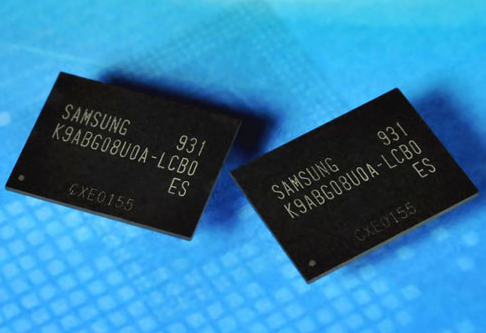
Industry sources reveal that Samsung and Toshiba are planning on slowing down the production of NAND flash until demand improves. So far, the demand for ultrabooks and SSDs have been disappointing in 2012

DigiTimes reports that Samsung Electronics and Toshiba are considering plans to slow down production on their most advanced NAND flash technologies until demand for solid state disks (SSDs) increases as per industry sources.

The sources said that Samsung's and Toshiba's transitions to 21nm and 19nm technology respectively have already boosted the production of NAND flash memory, but the demand is still lagging behind the production pace leading to an oversupply and price drops. In the wake of the turn of events, Samsung and Toshiba are both contemplating the possibility of postponing their scheduled 12-inch fab expansions as an effort to prevent further falls in chip prices.

Till now desktops and laptops have mostly been using mechanical hard disk drives (HDDs), while smaller devices like Smartphones have used flash-memory based SSDs. But with the introduction of thinner, lighter laptop designs like the MacBook Air and ultrabooks, SSDs are witnessing a significant rise in their usage. Apparently, the transition to SSDs isn't happening fast enough for Samsung and Toshiba. So far, the demand for ultrabooks and SSDs has been disappointing in 2012, which has resulted in a downward trend for chip prices.

As of June, prices for NAND flash chips showed some stability, as a result of Samsung's intentional reduction in its supply to China-based channel distributor's according to industry sources.

Samsung and Toshiba are two of the biggest NAND flash manufacturers and both have state of the art 12-inch fabs that produce NAND flash chips, but as long as there's a surcharge of supply, demand won't improve. So cutting down on the supply might be the only logical solution for both Samsung and Toshiba until demand improves. And by doing so they might turn in better profit margins.

Source(s)

2 comments

Got questions or something to add to our article? Even without registering you can post in the comments!
Read all comments / answer
#2 Re: Samsung and Toshiba putting brakes on SSD prodMemoryFest, 14:32 13.07
Obviously, from a business standpoint this is logical. Manufacturers of RAM (such as Samsung) have been experiencing low demand for years. As a result, it is not a profitable business to be in. I'm not sure there will be sufficient demand for RAM until DDR4 rolls out. Likewise, NAND needs to become cheaper to PRODUCE before prices decline at such an extreme rate. TLC NAND will reduce the price per GB, but reduce the number of NAND chips sold. Reducing production of MLC NAND could be an option. I believe many people are willing to pay a premium for the reliability of SLC NAND, just not the premium that enterprise solutions have been charging. $7/GB is a little overkill for an SLC drive, I would pay 2-3 times the MLC price for the reassurance of never having to worry about the life of the drive. I think that some demand will be realized as SSD's are accepted as reliable data storage throughout the entire storage industry, mainly large datacenters. Also, the implementation of new interfaces are important. Once there is a new SATA interface to match the new SAS 12GB/s interface and the ONFI 3.0 and Toggle DDR 2.0 specification NAND reach SSDs to support it, there should be more demand. There is another hindrance to demand; software.  Software is working against the hardware manufacturers. It used to be that every few years a new OS (Windows) came out that required the latest hardware to run with a reasonable user experience. Many people still use WinXP, simply because Vista and Win7 didn't offer any perceived revolutionary change that they needed. Now, in the Smartphone/Tablet age, desktop software is becoming more efficient, while smartphone and tablet software is getting bulkier. There has not been enough innovation in the software companies to efficiently make full use of the latest desktop hardware. The main exception being the gaming industry. Lastly, desktop and laptop manufacturers need to incorporate SSDs into more of their systems for demand to go up. Currently, it is only ultrabooks that have them by default, and on many other systems it is a ridiculous mark-up price. To replace a $70 HDD with a $150 SDD (MSRP), they charge you a $230 upgrade price. That's paying $150 extra to have a girl in China that gets paid $1 an hour to spend 5 minutes to swap out the drive. Many people won't upgrade their own computers after they purchase them though, so that ridiculous mark-up when purchasing a computer prevents the sale of a lot of SSDs (RAM as well). ...
#1 Re: Samsung and Toshiba putting brakes on SSD prodBrian, 02:00 10.07
I think what they should be contemplating on is lowering the prices of SSD and making them a little more AFFORDABLE! then the demand will rise correspondingly...
Read all 2 comments / answer

Comment this article:

> Notebook / Laptop Reviews and News > News > News Archive > Newsarchive 2012 07 > Samsung and Toshiba putting brakes on SSD production
Author: Pallab Jyotee Hazarika, 2012-07- 9 (Update: 2012-07- 9)