


 Deutsch
 Español
 Français
 Italiano
 Nederlands
 Polski
 Português
 Русский
 Türkçe
 Svenska
 Chinese
 Magyar
Lenovo Ideapad V Series
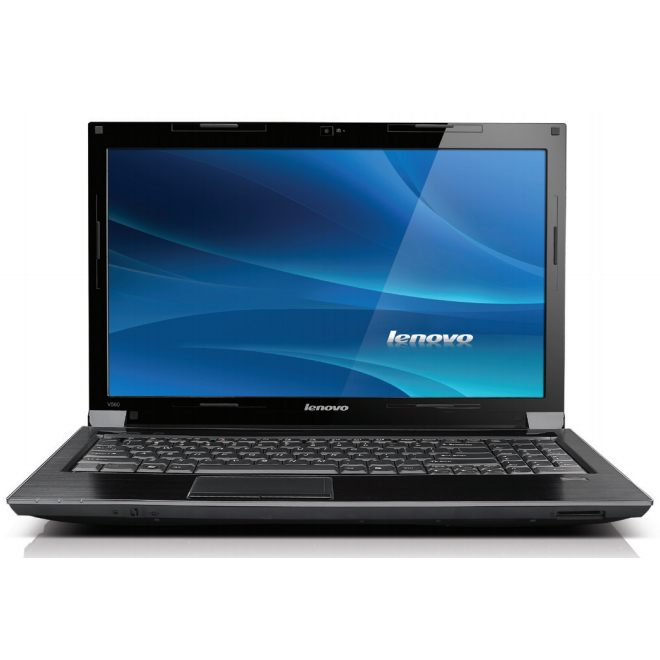 Processor: Intel Core i3 330M, Intel Core i3 370M
Graphics Adapter: NVIDIA GeForce 305M, NVIDIA GeForce 310M
Display: 13.30 inch, 15.60 inch
Weight: 1.75kg, 2.444kg
Price: 749, 750 euro
Average of 4 scores (from 3 reviews)
Lenovo Ideapad V360
Specifications
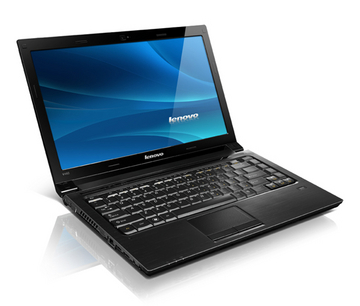 Notebook: Lenovo Ideapad V360
Processor: Intel Core i3 330M
Graphics Adapter: NVIDIA GeForce 305M
Display: 13.30 inch, 16:9, 1366 x 768 pixels
Weight: 1.75kg
Price: 750 euro
Links: Lenovo homepage
Pricecompare
Average Score:
Foreign Reviews
Source: Retera
 RU→EN Archive.org version
Single Review, online available, Medium, Date: 07/08/2010
Rating: Total score: 56% performance: 52% display: 38% mobility: 43% emissions: 33%
Lenovo IdeaPad V560
Specifications
Notebook: Lenovo IdeaPad V560Processor: Intel Core i3 370M
Graphics Adapter: NVIDIA GeForce 310M 1024 MB
Display: 15.60 inch, 16:9, 1366 x 768 pixels
Weight: 2.444kg
Price: 749 euro
Links: Lenovo homepage
Pricecompare
Average Score:
Reviews
Strutter. Lenovo beefs up an IdeaPad consumer with a few volatile business features. Is it the perfect line-up for office bargain hunters who don't want to give up boasting with aluminum? Find out more about the benefits and drawbacks of the pseudo-business book.
Foreign Reviews
Source: Notebookcheck
 DE→EN Archive.org version
Single Review, online available, Long, Date: 10/22/2010
Rating: Total score: 84% performance: 80% display: 78% mobility: 80% workmanship: 88% ergonomy: 88% emissions: 85%
Source: Notebookcheck
DE→EN Archive.org versionSingle Review, online available, Long, Date: 10/22/2010
Rating: Total score: 84% performance: 80% display: 78% mobility: 80% workmanship: 88% ergonomy: 88% emissions: 85%
Comment
Lenovo: Lenovo ("Le" from English legend, novo (Latin) for new) was founded in 1984 as a Chinese computer trading company. As of 2004, the company was the largest laptop manufacturer in China and, after acquiring IBM's PC division in 2005, the fourth largest in the world. In addition to desktops and notebooks, the company manufactures monitors, projectors, servers, etc, and specializes in developing, manufacturing and marketing consumer electronics, personal computers, software, enterprise solutions and related services.
In 2016, the company ranked first in the world in computer sales. It still held it in 2023 with about 23% global market share. Important product lines are Thinkpad, Legion and Ideapad.
In 2011, it acquired a majority stake in Medion AG, a European computer hardware manufacturer. In 2014, Motorola Mobility was purchased, which gave Lenovo a boost in the smartphone market.
Only some 3D games with very low demands are playable with these cards.
NVIDIA GeForce 305M: The GeForce 305M is a slower version of the GeForce 310M and has the same computing power as the 9400M (ION) integrated card (according to Nvidia). Still, due to the dedicated memory, it should be faster in games.
NVIDIA GeForce 310M: The GeForce 310M is the successor of the GeFore G210M and based on the same chip with very similar clock rates (shader speed +30MHz to 1530MHz).
» Further information can be found in our Comparison of Mobile Graphics Cards and the corresponding Benchmark List.
Intel Core i3:
330M:
The Core i3-330M is a slower clocked 350M and therefore also lacks the Turbo Boost feature and clocks with max. 2.13 GHz. Thanks to Hyperthreading, 4 threads can be processed simultaneously. An integrated graphics card (GMA HD 3150) and a DDR3 memory controller are also included in the package.
370M: The Core i3-370M is a fast clocked Core i3. The TurboBoost, AES, VTd, and Trusted Execution functions are deactivated in the i3-series. Therefore, it always clocks with max. 2.4 GHz (of course Speedstep is included). Thanks to Hyperthreading, 4 threads can be processed simultaneously. An integrated graphics card (GMA HD) and a DDR3 memory controller are also included in the package.
» Further information can be found in our Comparison of Mobile Processsors.
» To find out how fine a display is, see our DPI List.
No weight comment found (one expected)!
76.75%: This rating is not earth-shattering. This rating must actually be seen as average, since there are about as many devices with worse ratings as better ones. A purchase recommendation can only be seen with a lot of goodwill, unless it is about websites that generally rate strictly.
» Further information can be found in our Notebook Purchase Guide.