 Deutsch
 Español
 Français
 Italiano
 Nederlands
 Polski
 Português
 Русский
 Türkçe
 Svenska
 Chinese
 Magyar
HP Pavilion dv5z
Specifications

Pricecompare
Average of 1 scores (from 2 reviews)
Reviews for the HP Pavilion dv5z
Source: Laptop Logic
 Archive.org version
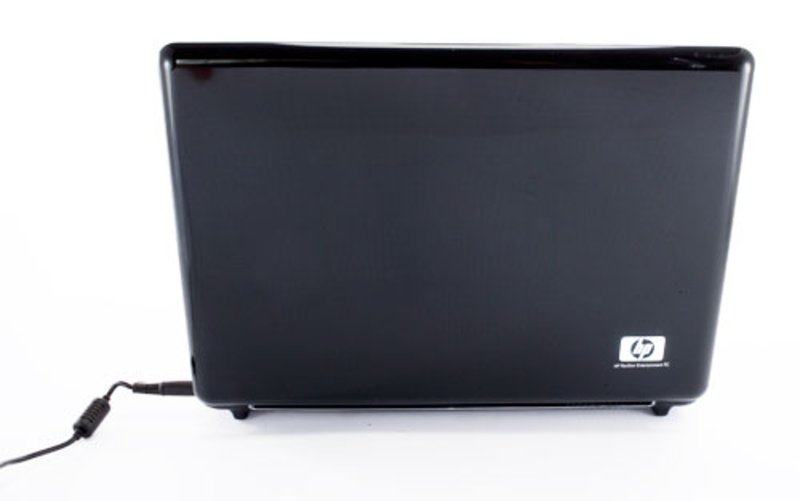
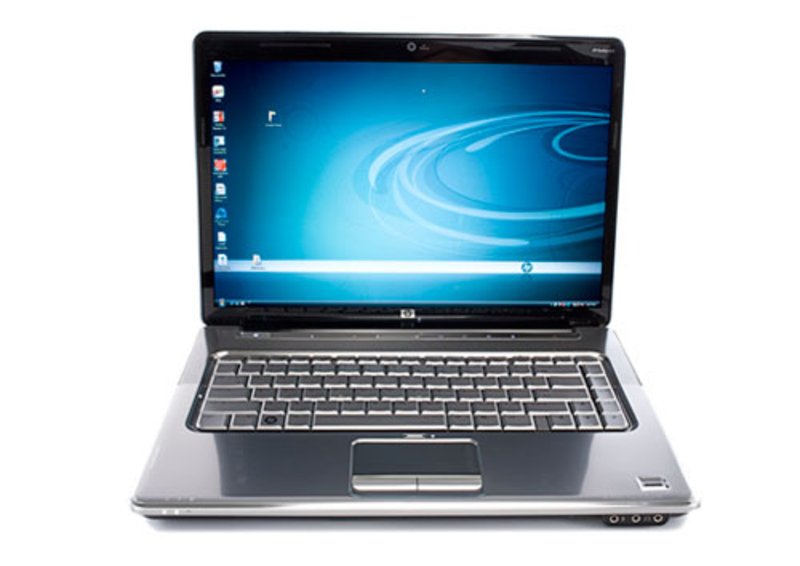
Well – it’s a good looker, if you like neutral and shiny. It does carry a lot of useful multimedia features. It has the oomph for average users and will scale well for feature sets with it’s eSATA, HDMI, expresscard and Blu-Ray drive options. However, this top of the line (current) cpu didn’t leave me impressed, and neither did the battery life, NOR the graphics option. At this price point, it’s hard for me to argue for it except for the reasons just stated – however, if you don’t absolutely need a dedicated docking port, blu-ray drive, TvTuner, eSATA and two headphone outputs…you could look elsewhere and get a little more performance. The features rock, the performance doesn’t. Other than that – if you’re not concerned about absolutely bleeding edge, don’t mind a mini-heater most times, and need a feature rich laptop – this model is a catch.
3.5 von 5, Ausstattung sehr gut, Leistung mäßig, Display gut, Emissionen schlecht, Mobilität mangelhaft
Single Review, online available, Medium, Date: 08/28/2008
Rating: Total score: 70% performance: 60% features: 90% display: 80% mobility: 50% emissions: 40%
Source: Notebookreview.com
Archive.org versionAs I mentioned in our First Look, there are a lot of reasons to be excited about this notebook. First, we're just glad to see HP release a new notebook chassis design since they were using the same old dv6000 series design for several years. More importantly, we're in complete awe over the performance of the integrated graphics on this machine. Sure, you can get better gaming performance if you spend more money for a notebook with a good dedicated graphics card, but you would have to purchase a mid-range or high performance dedicated card to surpass the performance of the integrated graphics in the dv5z. For the first time consumers shopping for a budget notebook don't have to sacrifice performance in order to have a low-cost laptop. In the end, the HP Pavilion dv5z left me more than a little frustrated. The simple reality is that this budget notebook packs the best integrated graphics solution we've ever seen inside its sleek chassis. However, battery life was far too limiting. In fact, this notebook would have received an Editor's Choice Award if it could have managed at least 3 hours of battery life ... but 2 hours and 22 minutes is just unacceptable.
Leistung sehr gut, Mobilität schlecht
User Review, online available, Medium, Date: 07/08/2008
Rating: performance: 90% mobility: 40%
Comment
ATI Radeon HD 3200: Onboard (shared Memory) graphics chip (on RS780M chipset) based on the HD 2400 graphics core. It also features the UVD video engine to decode HD videos. Beware: Under Windows XP the HD 3200 may have no 2D accelleration because of a driver problem.
Only some 3D games with very low demands are playable with these cards.
» Further information can be found in our Comparison of Mobile Graphics Cards and the corresponding Benchmark List.
AMD Turion X2 Ultra: The AMD Turion X2 Ultra is part of the Puma platform and a mixture of the old K9 core (form the Turion 64 X2) and some parts of the K10 architecture (memorycontroller, hypertransport, crossbar switch from the Phenom). Because of the increased L2 cache ("Ultra" CPUs) and the improved memory controller, the performance increased a bit. Still a similar clocked Core 2 Duo is noticably faster.
ZM-80:
Mixture out of two K8 based cores and K10 uncores (e.g. memory controller). Offers improved power saving functions compared to older Turion CPUs but still not as good and fast as a Core 2 Duo. The ZM-80 is the slowest CPU of the ZM series and a entry level CPU in 2008.
» Further information can be found in our Comparison of Mobile Processsors.
15.40":
15-inch display variants are the standard and are used for more than half of all laptops.
The reason for the popularity of mid-sized displays is that this size is reasonably easy on the eyes, often allows high resolutions and thus offers rich details on the screen, yet does not consume too much power and the devices can still be reasonably compact - simply the standard compromise.
» To find out how fine a display is, see our DPI List.2.7 kg:
With this weight, a laptop is rather heavier than average. Devices in this range shine more with screen size and performance than with mobility.
HP: Founded in 1939, the US company is a major server and printer manufacturer and one of the leading IT companies in the world. Until 2015, the company was called Hewlett-Packard Company. After a split, the computer division was renamed HP Inc.
In 2023, HP had an approximate market share of 22% of global PC sales, making it number 2 after Lenovo.
70%: This rating is poor. More than three quarters of the models are rated better. That is rather not a purchase recommendation. Even if verbal ratings in this area do not sound that bad ("sufficient" or "satisfactory"), they are usually euphemisms that disguise a classification as a below-average laptop.
» Further information can be found in our Notebook Purchase Guide.