 Deutsch
 Español
 Français
 Italiano
 Nederlands
 Polski
 Português
 Русский
 Türkçe
 Svenska
 Chinese
 Magyar
HP G32 Series
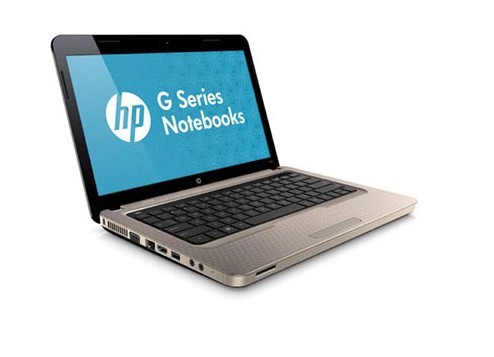 Processor: AMD Turion II P520, Intel Core i3 370M
Graphics Adapter: ATI Mobility Radeon HD 5470, ATI Radeon HD 4250
Display: 13.30 inch, 14.00 inch
Weight: 2.1kg, 2.2kg
Price: 600, 620 euro
Average of 1 scores (from 2 reviews)
HP G32-240US
Specifications
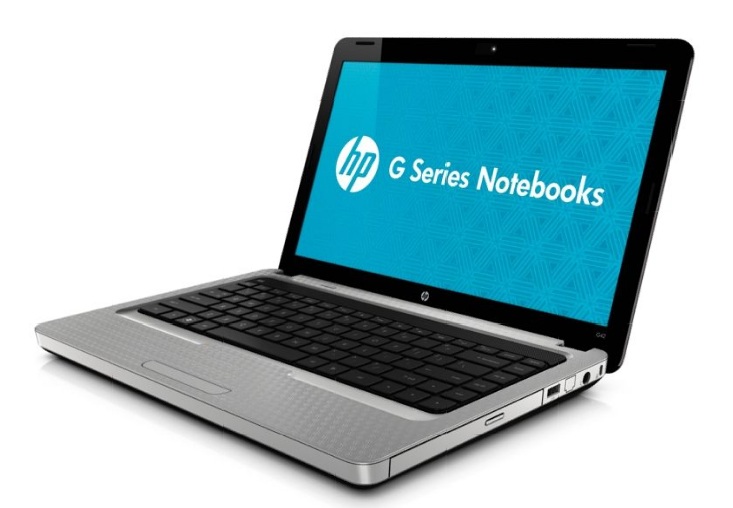 Notebook: HP G32-240US
Processor: AMD Turion II P520
Graphics Adapter: ATI Radeon HD 4250
Display: 14.00 inch, 16:9, 1366 x 768 pixels
Weight: 2.2kg
Price: 620 euro
Links: HP homepage
Pricecompare
Average Score:
Reviews
Source: Comp Reviews
 Archive.org version
HP's G42-240US may be a very affordable and more compact laptop but it does feature some quirks. Performance is good from the Turion II processor and the faster 7200rpm hard drive but the battery life falls a bit short of the competition. The trackpad and keyboard design will also confuse some users making it more difficult to use. Still, it is a decent system for those wanting to spend under $600
Single Review, online available, Short, Date: 10/12/2010
Rating: Total score: 60%
HP G32-203TX
Specifications
Notebook: HP G32-203TXProcessor: Intel Core i3 370M
Graphics Adapter: ATI Mobility Radeon HD 5470
Display: 13.30 inch, 16:9, 1366 x 768 pixels
Weight: 2.1kg
Price: 600 euro
Links: HP homepage
Pricecompare
Foreign Reviews
Source: IT.com.cn
 zh-CN→EN Archive.org version
Single Review, online available, Long, Date: 09/30/2010
Comment
HP: Founded in 1939, the US company is a major server and printer manufacturer and one of the leading IT companies in the world. Until 2015, the company was called Hewlett-Packard Company. After a split, the computer division was renamed HP Inc.
In 2023, HP had an approximate market share of 22% of global PC sales, making it number 2 after Lenovo.
Only some 3D games with very low demands are playable with these cards.
ATI Radeon HD 4250: Onboard graphics card (in the RS880M chipset) for AMD processors with Avivo HD support and technically a higher clocked HD 4200.
ATI Mobility Radeon HD 5470: Entry level DirectX 11 chip with GDDR5 support but only 80 shader cores. Supports Eyefinity (up to 4 monitors) and 8-ch HD audio over HDMI. Performance on par with the old GeForce 8600M GT.
» Further information can be found in our Comparison of Mobile Graphics Cards and the corresponding Benchmark List.
AMD Turion II:
P520: Entry level Dual-Core CPU with a TDP of 25 Watt. Offers a similar performance as a 2.1 - 2.3 GHz Core 2 Duo with 2 MB Level 2 Cache.
Intel Core i3:
370M: The Core i3-370M is a fast clocked Core i3. The TurboBoost, AES, VTd, and Trusted Execution functions are deactivated in the i3-series. Therefore, it always clocks with max. 2.4 GHz (of course Speedstep is included). Thanks to Hyperthreading, 4 threads can be processed simultaneously. An integrated graphics card (GMA HD) and a DDR3 memory controller are also included in the package.
» Further information can be found in our Comparison of Mobile Processsors.
14.00:
14 inch display size represents a middle ground between the small subnotebook formats and the screens of the standard 15 inch laptops.
The reason for the popularity of mid-sized displays is that this size is reasonably easy on the eyes, provides good resolutions with usable detail sizes, yet does not consume too much power and the devices can still be reasonably compact.
In the past, 14-inch devices were very rare, but now they are the standard for laptops after the 15-inchers.
» To find out how fine a display is, see our DPI List.
No weight comment found (one expected)!
60%: Such a poor rating is rare. There are only a few notebooks that were rated even worse. The rating websites do not give a purchase recommendation here.
» Further information can be found in our Notebook Purchase Guide.