 Deutsch
 Español
 Français
 Italiano
 Nederlands
 Polski
 Português
 Русский
 Türkçe
 Svenska
 Chinese
 Magyar
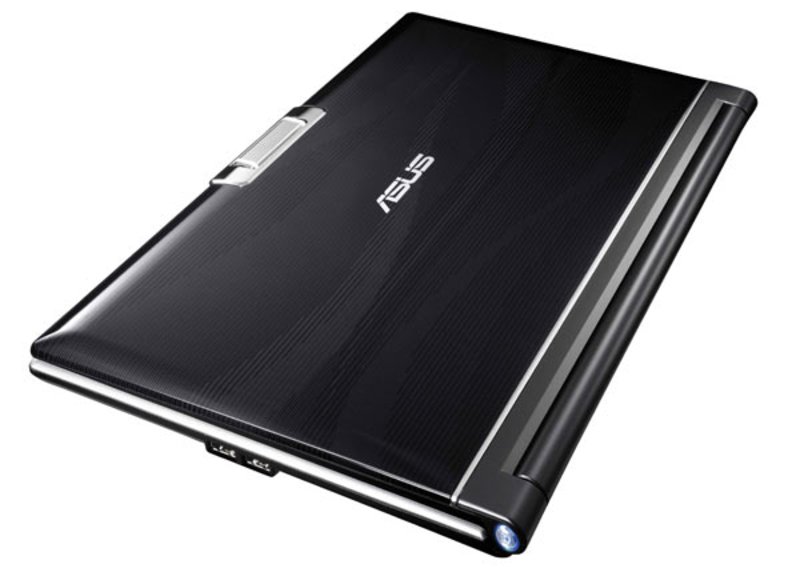
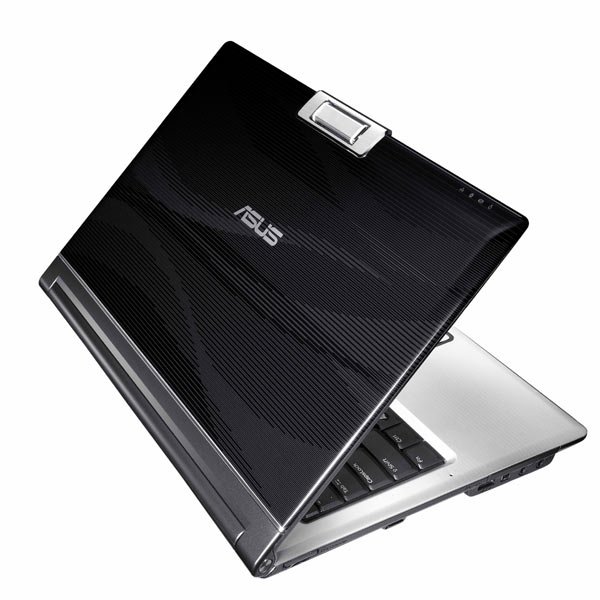
Asus F8 Series
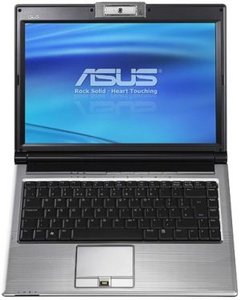 Processor: Intel Core 2 Duo P8600, Intel Core 2 Duo T7500, Intel Core 2 Duo T9300
Graphics Adapter: ATI Mobility Radeon HD 2400, ATI Mobility Radeon HD 3650, NVIDIA GeForce 9500M GS
Display: 14.10 inch
Weight: 2.4kg, 2.65kg
Price: 1000, 1100, 1460 euro
Average of 5 scores (from 7 reviews)
Asus F8SN
Specifications
Notebook: Asus F8SNProcessor: Intel Core 2 Duo T9300
Graphics Adapter: NVIDIA GeForce 9500M GS 512 MB
Display: 14.10 inch, 16:10, 1440 x 900 pixels
Weight: 2.65kg
Price: 1460 euro
Links: Asus homepage Asus notebook section
Pricecompare
Average Score:
Reviews
Mobile Gaming Notebook. The Asus F8SN is a powerful 14" notebook with GeForce 9500M GS video card and Core 2 Duo T9300 "Penryn" processor. This review uncovers among others the disadvantages of this powerful equipment inside a small case.
Foreign Reviews
Source: Notebookjournal
 DE→EN Archive.org version
User Review, online available, Medium, Date: 06/10/2008
Rating: price: 80% performance: 80% display: 50% mobility: 50% emissions: 90%
Source: c't - 12/08
Comparison, , Medium, Date: 05/15/2008
Rating: emissions: 60%
Source: Notebookjournal
DE→EN Archive.org versionSingle Review, online available, Long, Date: 03/18/2008
Rating: Total score: 90% price: 80% performance: 90% features: 50% display: 50% mobility: 50% workmanship: 70% ergonomy: 70% emissions: 60%
Source: Notebookcheck
DE→EN Archive.org versionSingle Review, online available, Long, Date: 03/14/2008
Rating: Total score: 84% performance: 95% display: 74% mobility: 72% workmanship: 81% ergonomy: 84% emissions: 85%
Asus F8P
Specifications
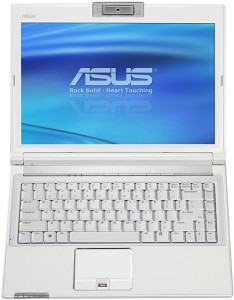 Notebook: Asus F8P
Processor: Intel Core 2 Duo T7500
Graphics Adapter: ATI Mobility Radeon HD 2400
Display: 14.10 inch, 16:10, 1280 x 800 pixels
Weight: 2.4kg
Price: 1100 euro
Links: Asus homepage Asus notebook section
Pricecompare
Average Score:
Reviews
Source: Notebookreview.com
 Archive.org version
There's little debate that for the average user, the Asus F8P is a respectably powerful device. Even for users requiring higher-than-average computing power, it holds its own. What's more ambiguous are the F8P's styling choices: the machine's looks are definitely love-it-or-hate-it. To my eye at least, the all black version has a more refined, less outlandish feel, with its more muted appearance potentially having broader appeal. Stylistic considerations aside, the F8P strikes a good balance between performance and portability, providing enough of both to make this a viable single-computer solution for many users. Battery life could be better and high screen gloss is an irritation, but beyond these issues the F8P is a polished, solid total package. Ultimately, if you're comfortable with the way it looks, the F8P is a computer that proves to be comfortable for the way most of us use our notebooks.
Verarbeitung zufriedenstellend, Display mäßig
User Review, online available, Medium, Date: 03/01/2008
Rating: display: 60% workmanship: 70%
Foreign Reviews
Source: Com! - 8/08
Comparison, , Medium, Date: 07/01/2008
Rating: Total score: 86% price: 90% performance: 100% features: 100% mobility: 68% ergonomy: 76%
Asus F8VA
Specifications
Notebook: Asus F8VAProcessor: Intel Core 2 Duo P8600
Graphics Adapter: ATI Mobility Radeon HD 3650
Display: 14.10 inch, 16:10, 1440 x 900 pixels
Weight: 2.4kg
Price: 1000 euro
Links: Asus homepage Asus notebook section F8VA (Model)
Pricecompare
Average Score:
Reviews
Source: APC Mag
Archive.org versionIt should be obvious by now that the F8VA is capable of dual duties; desktop replacement and media machine alike. But the sad fact is that it doesn’t excel at either. As a desktop machine the price is too high, and it’s too heavy to take on the road. The battery won’t last the trip either. Yet as a multimedia machine, it needs a bigger screen to make the most of the Blu-ray drive and speedy processing power. However, if you need a laptop that spends equal time in both the study and the lounge room, overlooking these minor flaws shouldn’t be too hard if it saves you from buying two separate machines.
(von 10): 7, Preis 7, Ergonomie 7, Leistung 8, Mobilität sehr schlecht
Single Review, online available, Medium, Date: 11/14/2008
Rating: Total score: 70% price: 70% performance: 80% mobility: 30% ergonomy: 70%
Comment
Asus: ASUSTeK Computer Inc. is a major Taiwanese computer hardware manufacturer based in Taipei, founded in 1989. Under the Asus brand name, the company manufactures a wide range of products, including laptops, desktops, motherboards, graphics cards, monitors, smartphones and networking equipment, complete systems and PC components for end users.
Under the ROG (Republic of Gamers) brand name, ASUS manufactures gaming laptops known by gamers for their powerful specifications, dedicated graphics cards, high refresh rate displays and advanced cooling systems.
Beyond gaming, a wide range of notebooks are offered for different needs and budgets, from ultra-slim and lightweight ultrabooks to versatile 2-in-1 convertibles and budget-friendly options. In 2023, Asus had a 7% global market share of the PC market.
Customer satisfaction with ASUS notebooks concerns performance, the features, and the good price-performance ratio of ASUS notebooks. However, as with any brand, there are occasional reports of problems such as overheating, driver compatibility, or build quality issues.
Only some 3D games with very low demands are playable with these cards.
NVIDIA GeForce 9500M GS: Middle class GPU that ist about 10% faster than a similar clocked GeForce 8600M GT graphics adapter. Therefore, the card does not deliver enough performance for very high details with DirectX 10 effects of demanding games like Crysis.
ATI Mobility Radeon HD 2400: This DirectX 10 graphic card from ATI is the direct competitor to the NVIDIA GeForce 8400M GS graphic card for laptops. It features the Avivo HD video engine. The performance is not enaough for DX 10 games and high settings.
ATI Mobility Radeon HD 3650: The Hd 3650 is a middle class graphics card (in 2008) and compareable to an 8600M GT GPU from Nvidia. It is fabricated in 55nm process and due to Avivo video engine the graphic card can support the processor with several video operations (HD video too).
» Further information can be found in our Comparison of Mobile Graphics Cards and the corresponding Benchmark List.
Intel Core 2 Duo: This is the Core Duo and Core Solo successor with a longer pipeline and 5-20% more speed without more power consumption. As an addition to the Core Duo design there exists a fourth decoder, an amplified SSE-unit and an additional arithmetical logical unit (ALU).
The Core 2 Duo for laptops is identical to the desktop Core 2 Duo processors but the notebook-processors work with lower voltages (0.95 to 1188 Volt) and a lower Frontside bus clock (1066 vs 667 MHz). The performance of equally clocked notebooks is 20-25% lower than Desktop PCs because of the lower Frontside bus clock and the slower hard disks.
T9300:
The T9300 is a fast middle class dual core CPU for laptops and similar to the T9400 but with a lower FSB.
T7500:
The Core 2 Duo T7500 is a Merom based Core 2 Duo with 4MB Level 2 Cache. It is positioned in the middle class (in 2009) and performs on par with a modern P7550 or Turion II Ultra M640/M660.
P8600:
Fast but still not overpriced dual core CPU. For most games and multimedia applications sufficient and due to the 25W TDP even for smaller notebooks useable.
» Further information can be found in our Comparison of Mobile Processsors.
» To find out how fine a display is, see our DPI List.
2.4 kg:
2.65 kg:
With this weight, a laptop is rather heavier than average. Devices in this range shine more with screen size and performance than with mobility.
82.8%: This rating is slightly above average, there are somewhat more devices with worse ratings. However, clear purchase recommendations look different.
» Further information can be found in our Notebook Purchase Guide.